Fly trap
A narrow entrance into a glass chamber
Contents
- 1Opening at the top of the inward-rising base
- 2Glass body and trapping chamber
- 3Glass feet and access beneath the vessel
- 4Neck and glass stopper
A funnel fly trap holds insects inside a vessel with a narrow entrance. In domestic glass fly traps, they enter underneath and climb through the inward-rising base. They are drawn by a sweet liquid poured into the base, in which they end up drowning. Feet keep this route clear, while a stopper closes the neck above. The Yale Peabody Museum holds a Victorian example made entirely of glass.
What it is
A funnel fly trap is a vessel whose entrance narrows before opening into a larger chamber. Domestic glass versions resemble bulbous bottles with an opening in the base. On vessel HST.010236 at the Yale Peabody Museum, the base rises into the body to form an upward passage. Feet hold the vessel above the surface it stands on, leaving access underneath. A stopper closes the neck; the museum specifies that the whole object is glass.
The chamber holds insects after they enter. Flypapers and sticky strips, by contrast, immobilise them on an adhesive surface. The vessel also needs to open for emptying: accumulated insects and soiled contents make cleaning necessary.
How it works
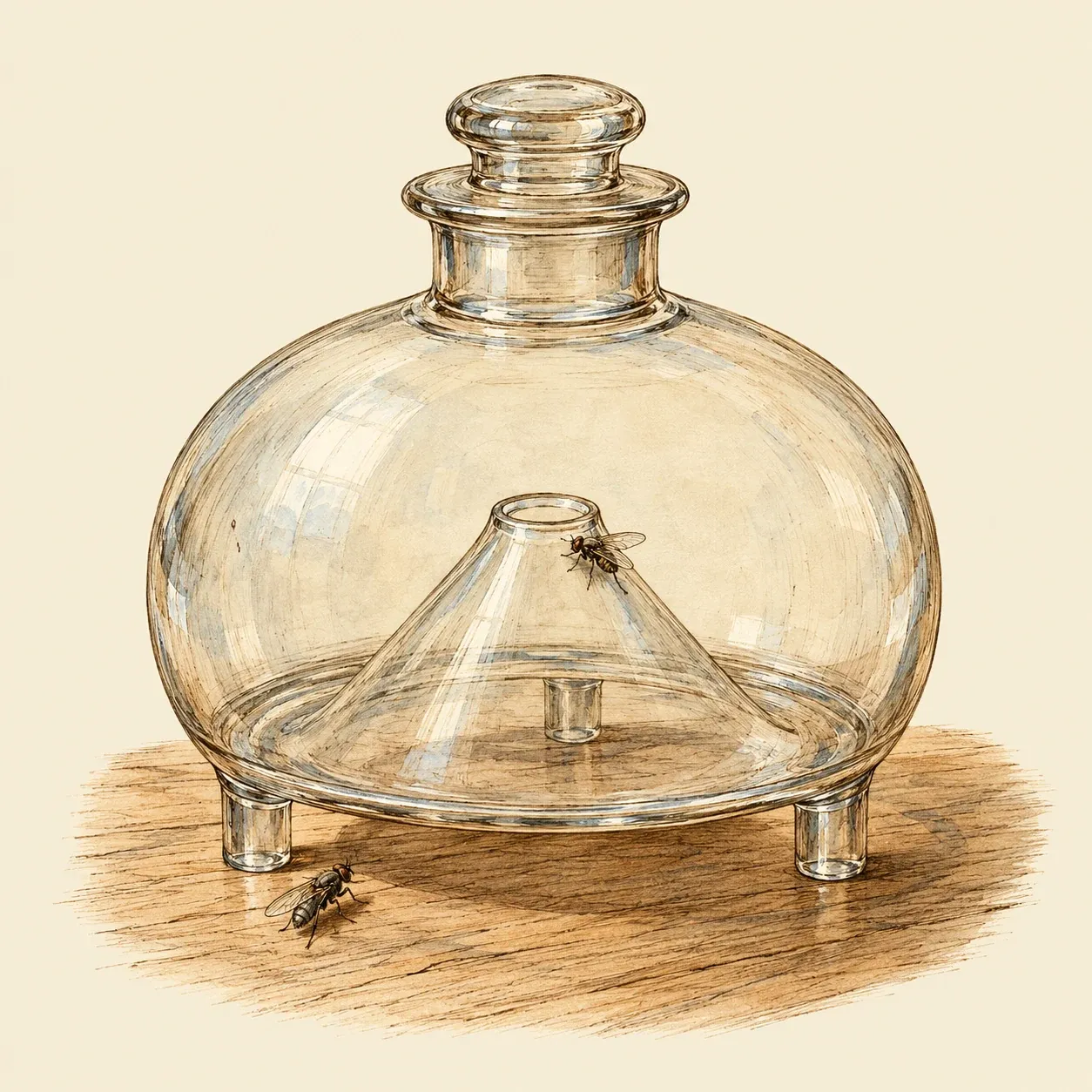 The opening in the inward-rising base leads into the chamber.
The feet leave a gap beneath the vessel. A fly entering this space can climb through the lower entrance into the body. The passage opens at the top of the inward-rising base, in the middle of the chamber. The body provides a much wider space than the entrance opening. The upper neck stays closed with its stopper.
The bait goes inside. Around the raised entrance, the bottom of the vessel forms a ring-shaped reservoir, and a sweet liquid is poured into it. Busselton describes a honey solution or another attractant in this inner reservoir; the Henrico County Historical Society and Yale name sugar water. Yale also reports an advertisement from around 1880 suggesting ale as bait. Drawn by the bait, flies enter from below and come out above the liquid, through the opening at the top of the inward-rising base.
Busselton explains that flies are retained because they have difficulty heading back down. Yet the entrance stays open, with no flap or moving part. The Revue d’ethnoécologie says the flies end up drowned; Yale’s account describes insects drowning or failing to find the way out. Dead flies foul the bait, so the trap has to be emptied and refilled.
How to do it
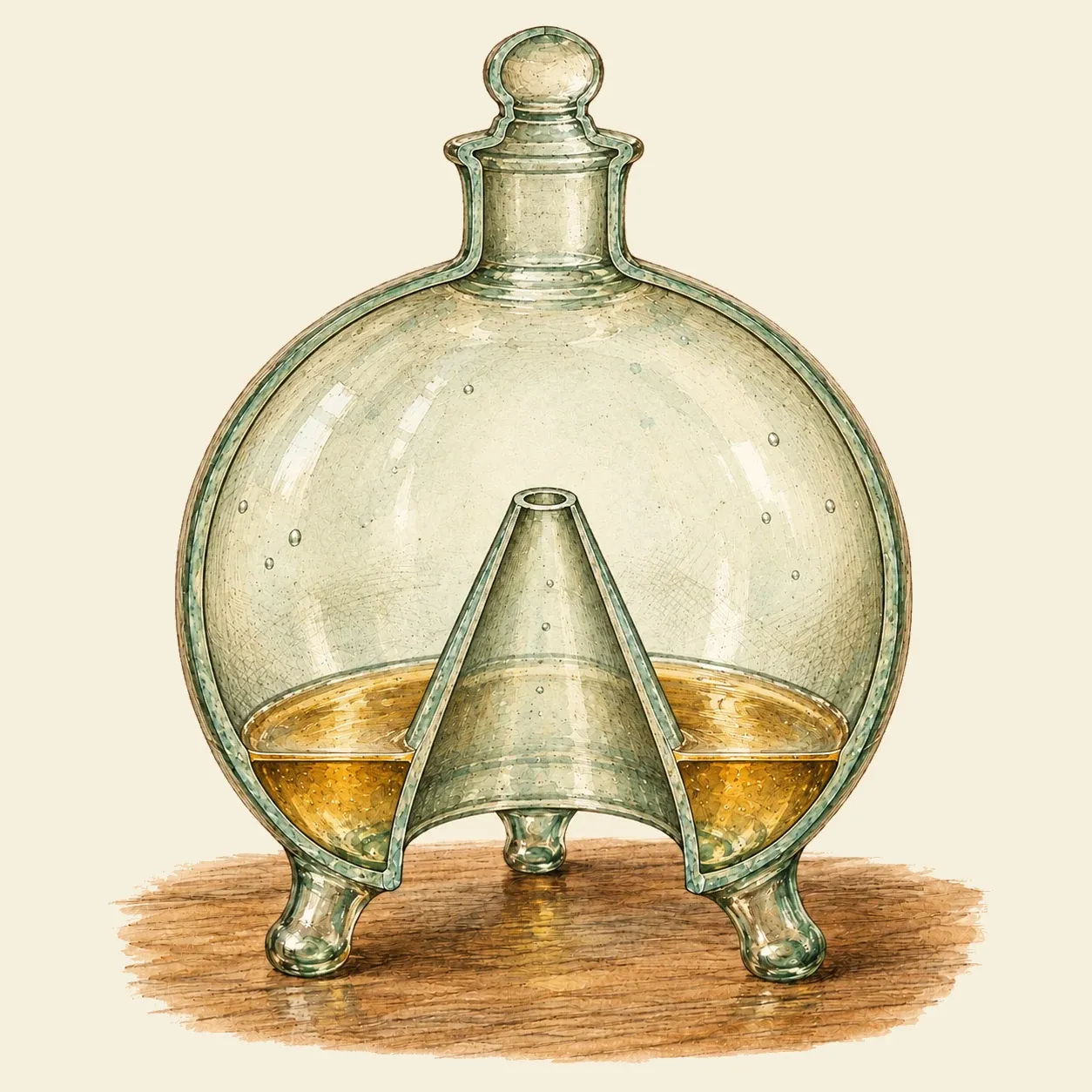 The base rises open into the body, the feet leave clearance and the stopper closes the neck.
Early vessels were blown by hand before production shifted to mass manufacture. The Yale example combines a body, an inward-rising base, feet, a neck and a stopper, all made of glass. Making it is work for a professional glass workshop: the base must leave an open entrance, the feet must provide clearance and the stopper must close the neck. Shaping and fitting these parts requires a skilled glassworker. Hot glass can cause burns; splinters and sharp edges make cutting and drilling dangerous. Do not attempt to blow glass or cut or drill a bottle at home.
A passive demonstration can use just a transparent container and a removable, shop-bought funnel, both intact and free of sharp edges. Rest the funnel on the rim of the container; keep the assembly stable, empty and easy to take apart. The eye can follow the passage from the narrow opening into the interior space. Keep this demonstration free of animals, liquids and bait. Do not breed, catch or handle flies.
History and evolution
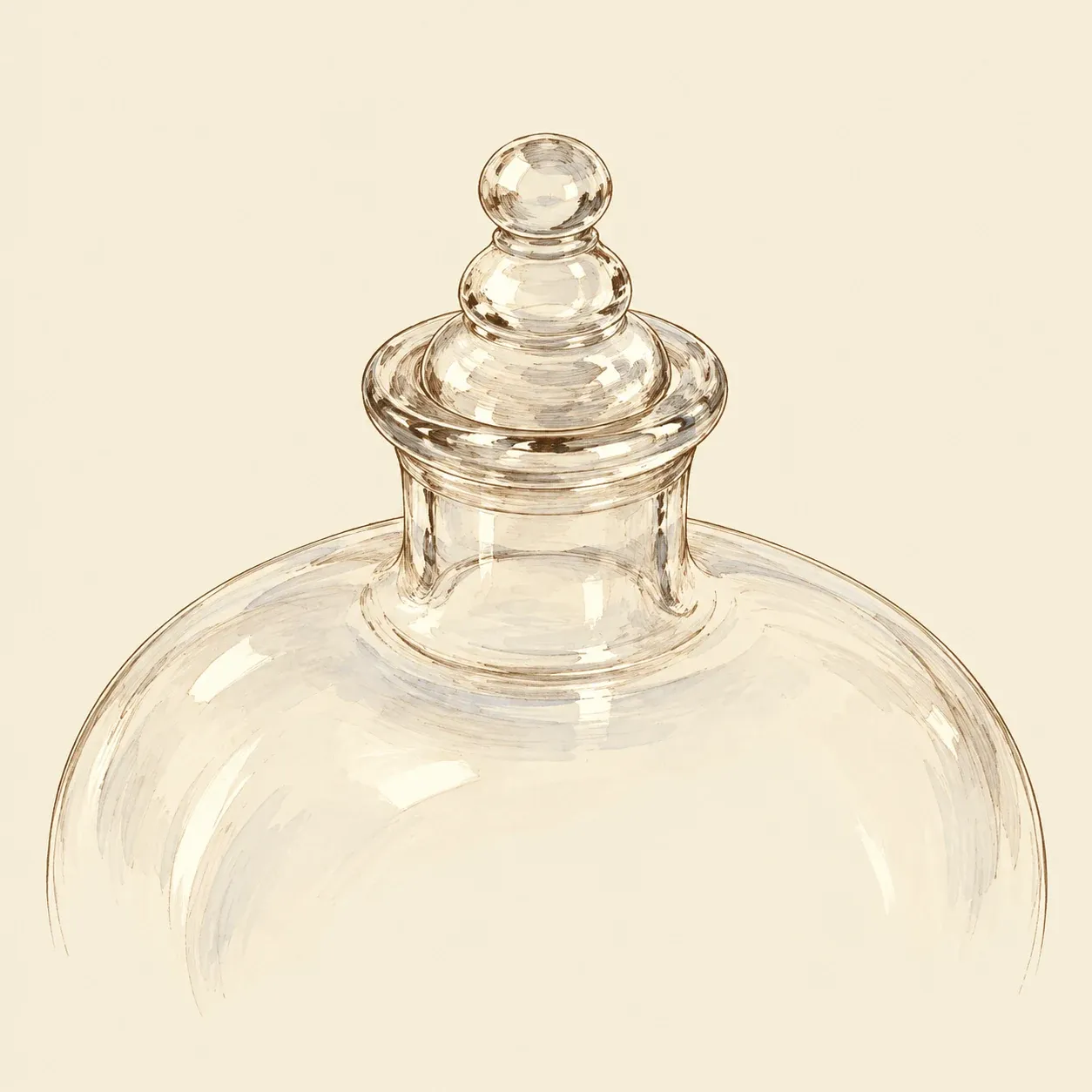 The stopper closes the vessel’s upper neck.
The Henrico County Historical Society dates a blown-glass trap to the late eighteenth or early nineteenth century. The Busselton Historical Society places the use of this family of traps in the early nineteenth century and describes the change from hand blowing to mass production.
The Yale vessel is Victorian. It bears a patent-application inscription; the museum also presents an advertisement from around 1880 for a comparable trap. According to Yale, this type was common in the nineteenth and early twentieth centuries, either standing on a surface or hanging up. Busselton describes its later replacement by sticky traps, insecticides, insect screens and electrical devices.