Internet
Networks joined through shared protocols
Contents
- 1Sending computer
- 2Origin network
- 3Router between networks
- 4Destination network
- 5Teleprinter terminal at the receiving site
The Internet joins separate computer networks through shared rules for addressing and forwarding data. Robert Kahn proposed an open architecture for it around 1972 and worked out the protocol design with Vinton Cerf from 1973. Gateways, later called routers, pass packets from one network to the next; email and the Web run over this system.
What it is
The Internet is a set of computer networks joined together. One network may serve a laboratory, another a city, and each keeps its own equipment and management. To exchange data with the others, each one uses IP, the Internet Protocol, which sets a common format for the packets carried and for their addresses. Routers pass the packets from one network to the next, so two distant computers can communicate without sharing a local network.
Email, file transfers and Web pages all travel over it. The Web, developed at CERN from 1989, is a service that links documents to one another, and it arrived when the Internet was already running. Radio, cable and satellite links carry the signals, and IP lets networks built on different kinds of link work together.
How it works
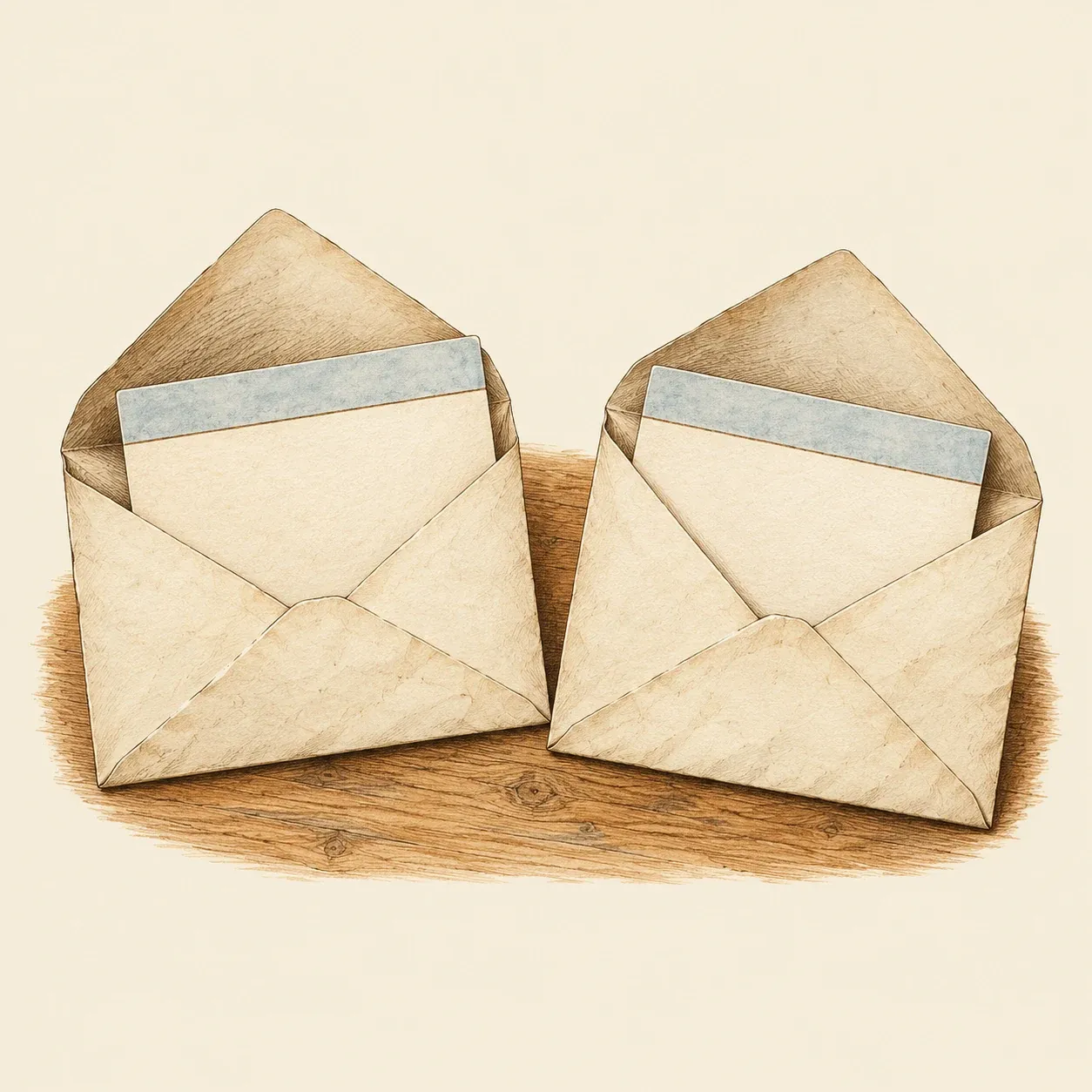 A packet carries data together with a header used to forward it.
Software on the sending computer prepares the data. IP places it in a datagram, usually called a packet, with a header that includes the source and destination addresses. The local network carries the packet to the recipient, or to a router that can send it on. Each kind of link uses its own physical signals, and the IP format is the part that every network shares.
A router reads the destination address and consults its routing information to choose the next hop. It works from the header alone. At each crossing the packet is wrapped in the frame of the local network. The data it carries stay the same; each router only updates a few fields of the IP header, such as the time-to-live counter. Several networks may lie between two computers. The path follows the connections available and the choices made by each network, so even a nearby destination can be several hops away.
IP guarantees neither delivery nor order. Applications that need reliable delivery use TCP, which runs on the two end computers: it keeps track of the data, puts it back in order and has missing pieces sent again. Other applications use UDP. The service also depends on the computers, software and links along the way staying in operation.
How to do it
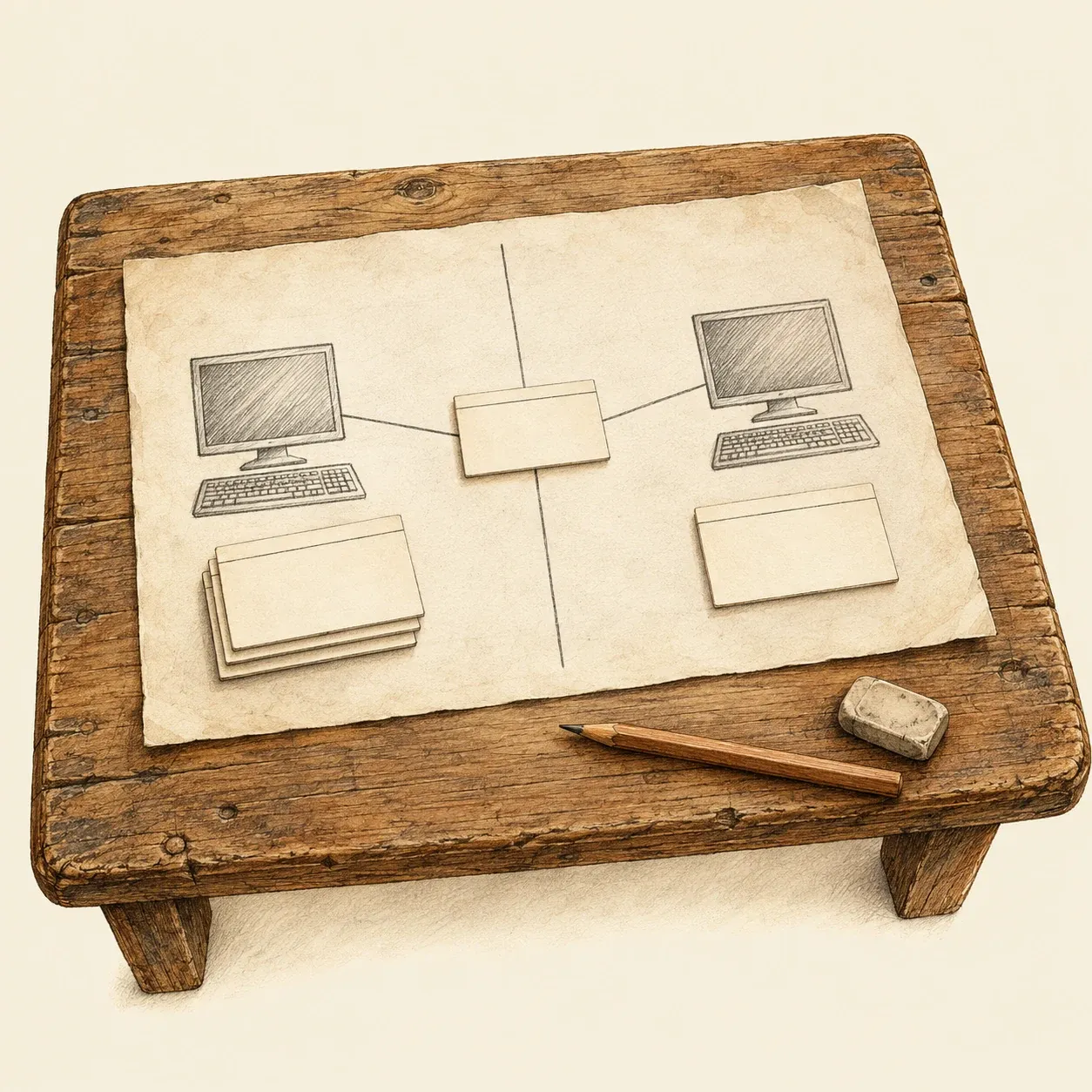 Cards play the datagrams and pencil lines the links; the router is the only way from one area to the other.
A tabletop model shows how networks are joined, with no equipment at all. Draw two separate areas for two networks, put a computer in each and draw a router on the border between them. Draw a line from the router into each area, running to that area’s computer. Make cards with one space for a destination address and another for the data. The cards are datagrams, the lines are links, and the router is the only way from one area to the other.
Give the cards to one person playing the sending computer. A second person plays the router: they read each destination and pass the card into the right network, leaving the message unread. The receiver collects the contents. Now take one card out before it arrives and swap the order of two others. The receiver ends up with a message that is incomplete and out of order. In a second round, add acknowledgements and resending to show reliable transport at the two ends. The router takes no part in that work.
The activity needs no computer commands. If you look at real equipment, use only devices you own or have explicit permission to use, and leave their settings as they are. Do not probe neighbouring computers or tamper with a network in service.
History and evolution
Research on packet switching grew during the 1960s, in the United States and at Britain’s National Physical Laboratory among other places. ARPANET, funded by the American agency ARPA, connected its first computers in 1969 so that sites could share computing resources. Its early host protocol, NCP, worked within ARPANET and offered no way to connect it to networks of other designs.
The Internet Society dates Robert Kahn’s idea of open-architecture networking to 1972, shortly after he arrived at the agency. His November 1972 paper already discussed connecting separate networks. In spring 1973 he asked Vinton Cerf to work with him on the protocol design. According to the Computer History Museum, the two presented their first paper on TCP at a meeting at the University of Sussex in September 1973. Their journal paper, received on 5 November 1973 and published in May 1974, set out a common host protocol and gateways between different networks. The museum also records internetworking work of the same period on France’s CYCLADES, Britain’s NPL network and at Xerox PARC, all of which influenced TCP/IP.
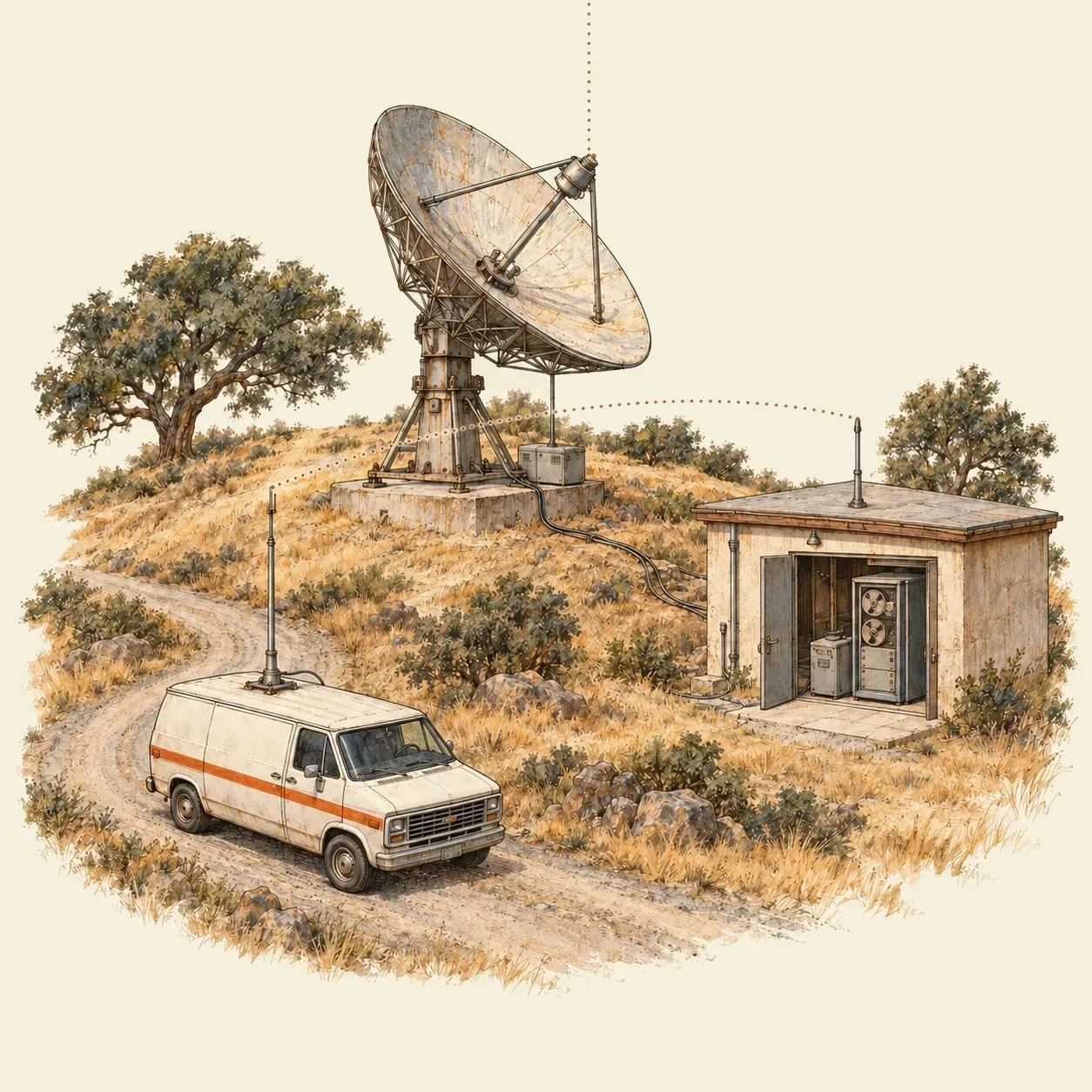 In 1977 gateways joined a packet radio network, a satellite network and ARPANET.
On 22 November 1977 a van belonging to SRI International, driving around the San Francisco Bay Area, sent data over a packet radio network, a satellite network and ARPANET. The data travelled between SRI in Menlo Park and the University of Southern California in Los Angeles by way of London. Gateways built by BBN connected ARPANET to the radio and satellite networks. The protocol was later split in two: IP for addressing and forwarding packets, TCP for reliable transport. Following preparations described by Jon Postel, ARPANET switched from NCP to TCP/IP on 1 January 1983.
Research networks grew, and commercial networks joined them. In 1989 Tim Berners-Lee invented the World Wide Web at CERN so that scientists could share information automatically. On 30 April 1993 CERN put the Web software in the public domain.