World Wide Web
Documents joined by addresses and links
Contents
- 1Client browser
- 2Resource address
- 3HTTP request
- 4Server and HTML document
- 5Response to the browser
The World Wide Web connects documents through links followed in a browser. Tim Berners-Lee proposed it at CERN in 1989, bringing together resource addresses, an exchange protocol and a document language. Working software in 1990 made it possible to move between information held on different computers.
What it is
The Web is a system of documents and other resources connected through addresses. A link on a page leads to another page, perhaps held on a different computer. A browser displays the document and lets the reader choose links. A server supplies the requested resources. Information can therefore be read across different machines without learning the particular commands each machine uses.
Internet provides communication between networks. The Web adds a shared way to address, request and present information. Email also travels over the Internet, using different rules. A web page can contain text, pictures and links. A search engine helps people find pages, but following a known address does not require one.
How it works
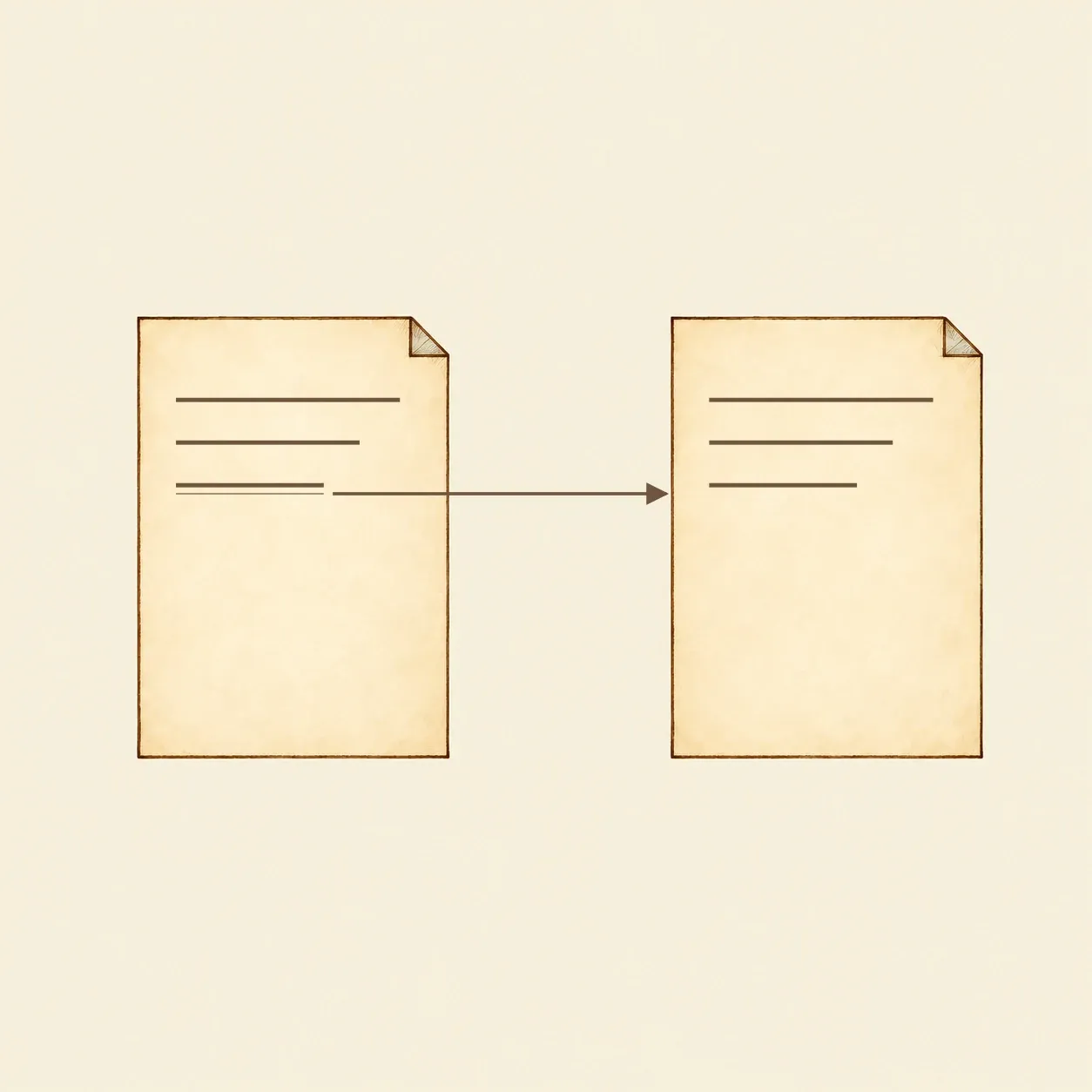 A link connects a visible passage with another resource’s address.
A URL says how to reach a resource. A simple HTTP address identifies the protocol, a host name and a path. The server determines what that path means; it need not correspond to a physical file. Links can contain complete addresses or references resolved relative to the document containing them.
HTTP governs exchanges between client and server. The browser sends a request. The GET method asks for a representation of the named resource. The server returns a status, information about the content and, where appropriate, the content itself. In HTTP/1.0, documented in 1996, 200 reports success and 404 reports that a resource was not found. These codes describe the exchange rather than the reliability of what a page says.
HTML uses tags to structure a document. A heading, a paragraph and a link each have their own role. The a element carries a link, with its destination in the href attribute. The browser interprets this structure for display. The clickable words can differ from the address behind them. Transferred document data and the page seen on screen are related but distinct things.
How to do it
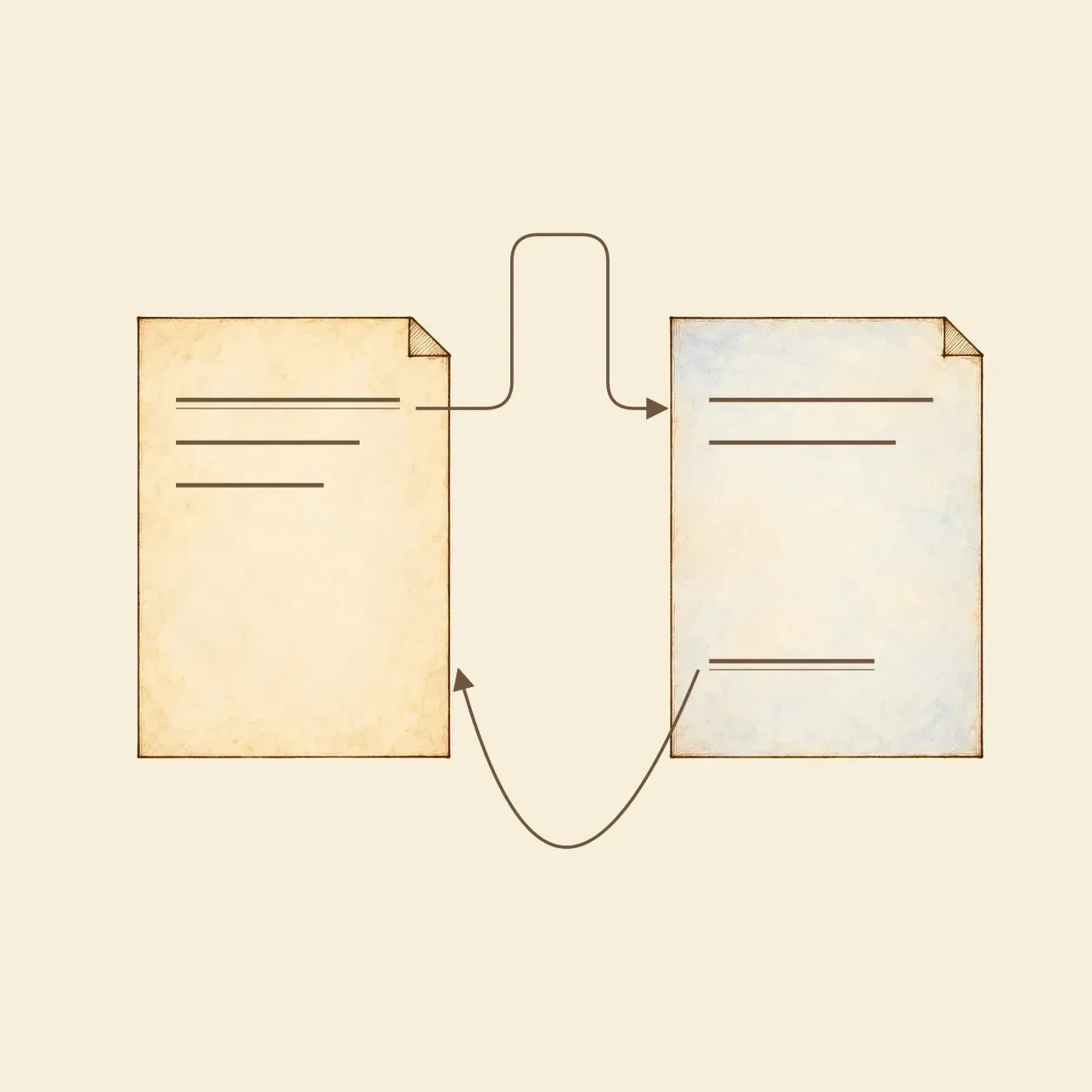 Two local documents are enough to try links in both directions.
Use a computer with a browser and a plain text editor. Make a folder containing a.html and b.html, saving both as plain text with their .html extensions intact. Put this in the first file:
<!doctype html>
<meta charset="utf-8">
<title>A</title>
<p>A <a href="b.html">B</a></p>
In the second file, change A to B, change the link destination to a.html and its visible text to A. Open a.html in the browser, follow B, then follow A back. Next change the destination to absent.html. The browser can no longer find the file. Restore the name and reload the page.
This uses a file: address to read local documents. There is no HTTP exchange. Explore that exchange separately on paper: draw a request travelling from client to server, then a response travelling back, with the HTML document inside it. Keep the written link, the request it triggers and the data received as separate parts of the sequence.
History and evolution
Linked text predates the Web. Vannevar Bush described the Memex proposal in 1945; Doug Engelbart and Ted Nelson later developed hypertext ideas and systems. Berners-Lee built ENQUIRE at CERN in 1980 to connect pieces of information. These earlier efforts form the background to his distributed document system.
In March 1989 he proposed a linked information system for CERN. Robert Cailliau joined a revised proposal in 1990. Berners-Lee wrote the WorldWideWeb browser-editor and a server on a NeXT computer; the software could be demonstrated by the end of that year. Nicola Pellow developed a text browser that could run on more kinds of machine, and in August 1991 the project and its files were announced in public Internet newsgroups.
Mosaic made graphical browsing more accessible in 1993. On 30 April that year CERN made its web software freely usable. The W3C was founded in 1994 to develop shared specifications. Formats and protocols continued to change, while addressable documents and the links between them remained central to the Web.