Vulcanised Rubber
Sap made tough with sulphur
- 1Tapping cut
- 2Latex cup
- 3Sheets of raw rubber
- 4Sulphur
- 5Two-roll mill
- 6Vulcaniser
Vulcanised rubber is rubber whose long molecules have been tied together, first by heating natural rubber with sulphur, so that it stays elastic in heat and cold instead of turning sticky or brittle. Charles Goodyear in the United States and Thomas Hancock in Britain worked out the process in the early 1840s, and it made rubber usable for tyres, hoses, seals and footwear.
What it is
Natural rubber comes from latex, a milky fluid that flows from cuts in the bark of certain tropical trees, today mostly the Pará rubber tree, Hevea brasiliensis. Dried and pressed, it is waterproof and stretchy, but raw rubber goes soft and tacky on a hot day, stiff and cracked in frost, and it slowly stretches out of shape under load.
Vulcanisation fixes these faults. The rubber is mixed with a small amount of sulphur and heated. The result is the material of tyres, hoses, conveyor belts, gaskets, boots and rubber bands, which springs back to its shape over a wide range of temperatures.
How it works
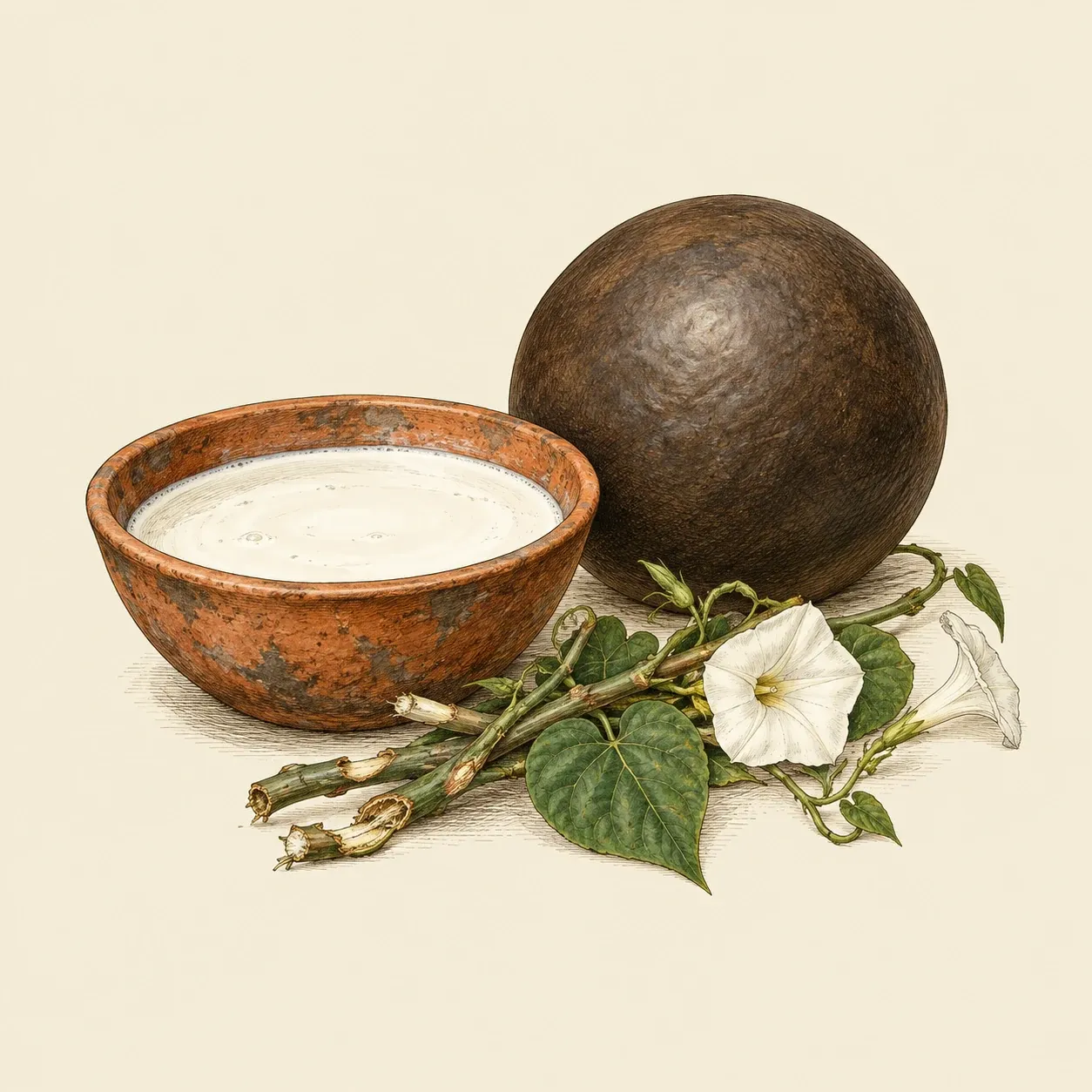 Mesoamerican rubber was made by mixing latex from Castilla elastica with the juice of a morning-glory vine.
Rubber is made of very long chain molecules, each a string of thousands of small units. In raw rubber the chains lie tangled like cooked spaghetti. Pulled, they straighten out; let go, they curl up again, which is why rubber is elastic. They are not tied to one another, though, so under a steady pull or in warmth they slide past each other, and the material flows and sticks.
Sulphur atoms, at the temperature of vulcanisation, attach to sites along the chains and form bridges between neighbouring chains, of one or several sulphur atoms each. A few bridges along each chain turn the tangle into a single loose network. It can still stretch a long way, because the chain segments between bridges can uncoil, but it cannot flow, and it returns to its shape when released.
The number of bridges sets the hardness. Soft rubber needs only a small proportion of sulphur. With much more, the network becomes so dense that the product, ebonite or hard rubber, is rigid and brittle. Heated with sulphur alone, rubber cures slowly; since the early twentieth century, accelerators, with zinc oxide and stearic acid as activators, have made it faster and more even.
How it is made
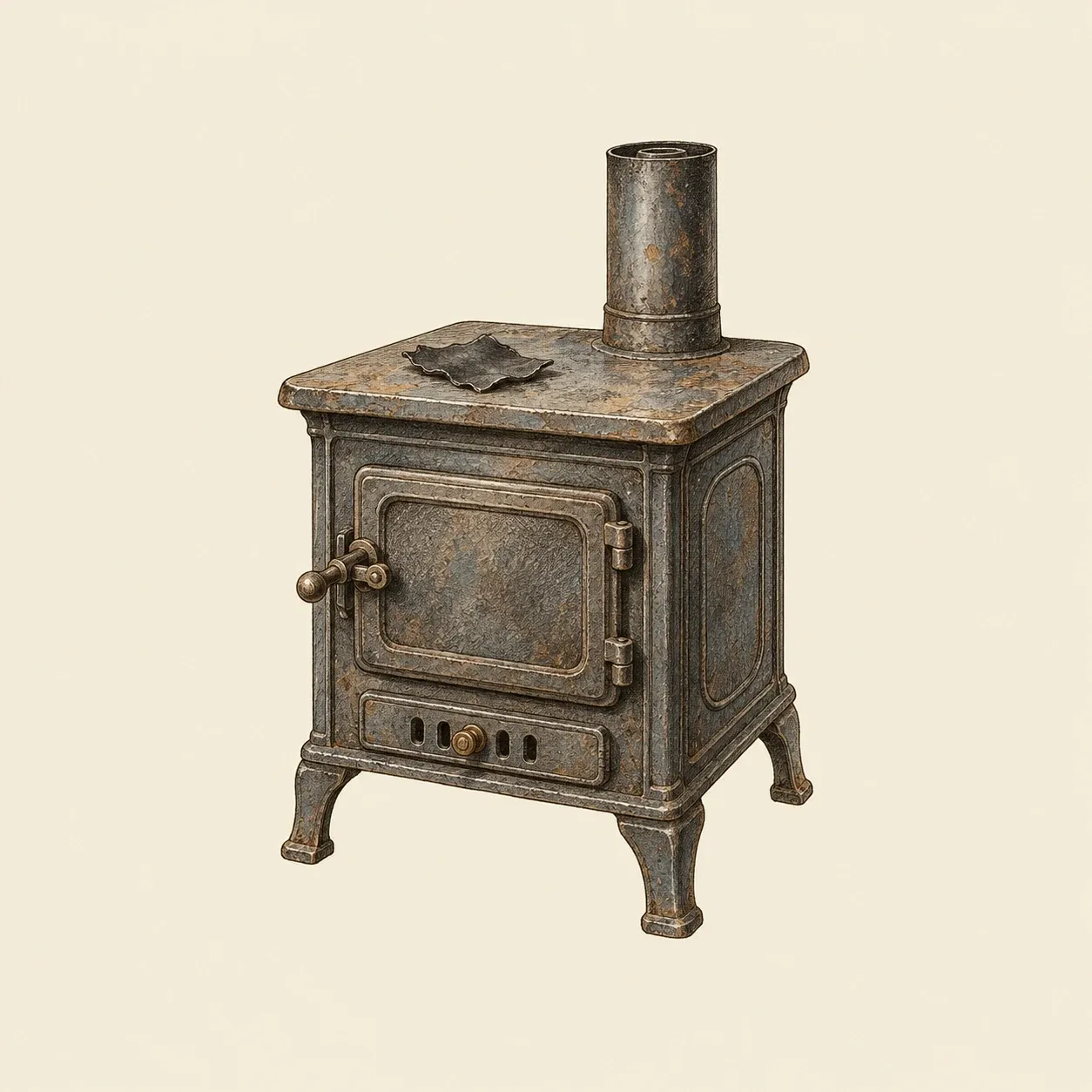 Goodyear said he found the effect when a mixture of rubber and sulphur touched a hot stove and charred without melting.
Rubber goods are made in factories, with heated presses, ventilated mixing rooms and fume extraction. Hot sulphur catches fire easily and burns to toxic sulphur dioxide, curing compounds give off irritating fumes, and modern accelerators irritate skin and lungs, so vulcanising is not a home process. The usual steps are these.
Tapping. A thin sliver of bark is shaved off in a sloping cut every second day or so, deep enough to open the latex vessels without reaching the cambium, the thin growing layer under the bark. The latex runs along the cut into a cup.
Coagulating. The latex is diluted and set with a weak acid such as formic or acetic acid; the rubber separates as a soft curd. It is pressed into sheets and dried, often in smoke, which also keeps mould away.
Mixing. The raw rubber is worked between heavy rolls until it softens, and the sulphur, fillers and accelerators are kneaded in.
Shaping and curing. The compound is moulded, extruded or spread on cloth, then heated in a press or a steam vessel until the bridges form.
A simple, qualitative comparison shows the change. Cut a rubber band open into a strip, and cut a strip of the same width, thickness and length from raw, unvulcanised crepe rubber sold for craft work (some crepe soles are vulcanised, so check the label). Hang the same small weight on each overnight, take it off and wait ten minutes: the band usually returns close to its length, while the raw strip tends to stay longer. Then leave both in a freezer for an hour, warm them in water at about 40 °C, and compare how stiff and how sticky they feel. Different products contain different fillers, so treat the result as a tendency.
Safety. Do not heat sulphur or try to vulcanise rubber at home: the fumes are poisonous, and molten sulphur burns and can catch fire. In factories, mixing rolls can crush and drag in hands, and presses and steam vulcanisers are hot and under pressure, so they need guarded machines and trained operators. Natural rubber and latex cause allergies in some people: anyone with a latex allergy should not handle the samples, and others should wear nitrile gloves. Test the water temperature before putting your hands in it.
History and evolution
People in Mesoamerica were processing rubber by about 1600 BC. They mixed latex from Castilla elastica with juice pressed from a morning-glory vine, which made it more elastic, and made balls weighing up to 7 kg for a ritual ball game, as well as sandal soles and bindings. Spanish observers described rubber in the sixteenth century. In Europe and North America its use grew in the early nineteenth century, but goods made of raw rubber went soft in summer and cracked in winter.
In 1837 Thomas Hancock patented a machine to knead raw rubber, and in the 1830s several people found that sulphur made it less sticky. Charles Goodyear, a hardware merchant beset by debts, whose backing collapsed again in the panic of 1837, spent years trying treatments. In 1839, by his own account, a lump of rubber mixed with sulphur touched a hot stove and charred at the edge without melting. It took him about five years to make the process reliable. In Britain, Hancock was shown samples of the American sulphur-treated rubber in 1842 and worked out a process of his own. He filed a patent for vulcanising on 21 November 1843; Goodyear’s US patent 3,633 followed on 15 June 1844. The name comes from Vulcan, the Roman god of fire, and was suggested by Hancock’s friend William Brockedon. Goodyear spent years in patent lawsuits and died in 1860 without having profited from his discovery.
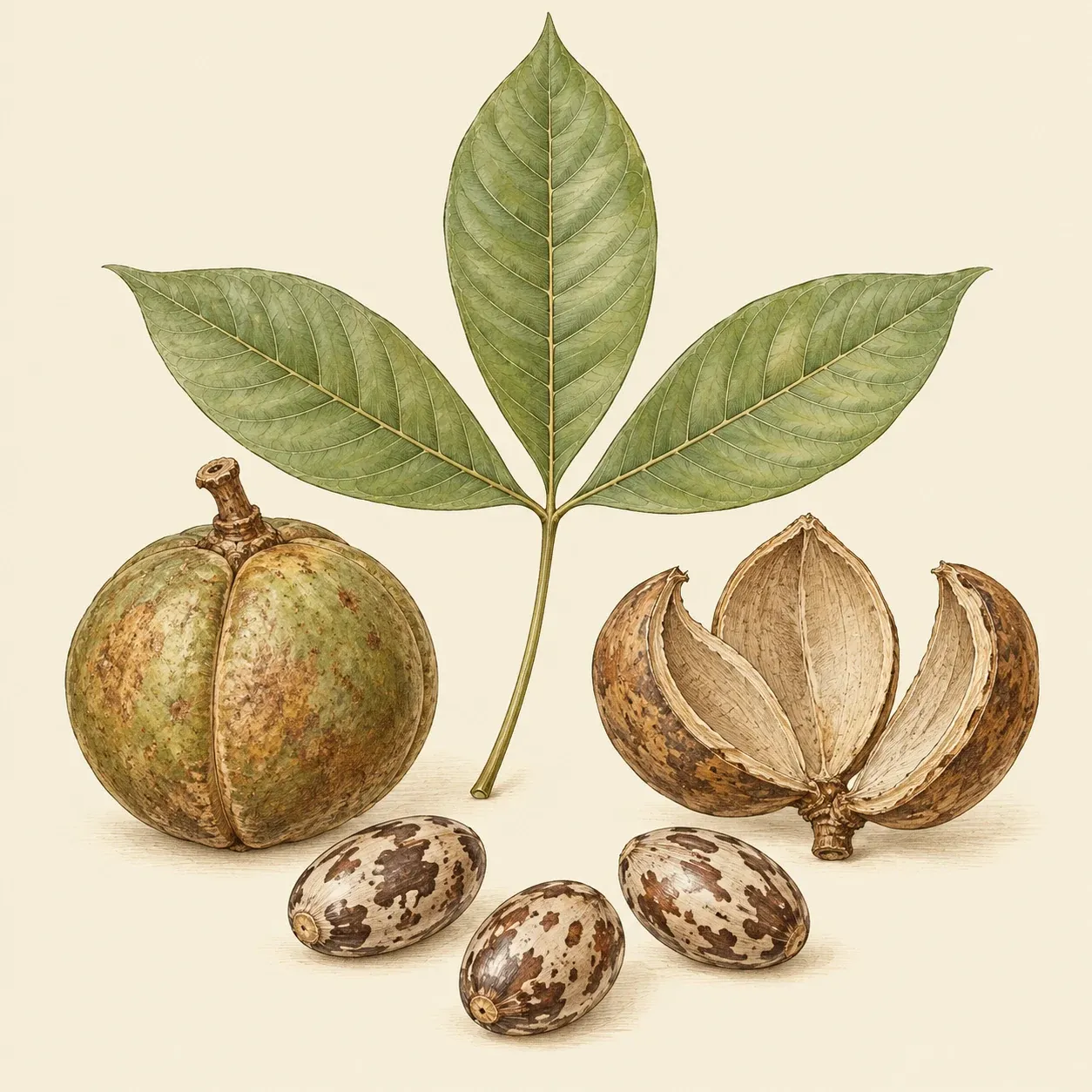 Fruit, seeds and leaf of the Pará rubber tree: each capsule holds three seeds, like those Wickham shipped to Kew in 1876.
Demand for tyres, belts and insulation drove a rush for wild rubber in the Amazon basin. In 1876 Henry Wickham shipped about 70,000 Hevea seeds from Brazil to the Royal Botanic Gardens at Kew in London, and seedlings were sent on to British colonies in Asia. In 1900 Asian plantations produced about 4 tonnes, against about 27,000 tonnes gathered in the Amazon; by 1916 they supplied most of the world’s rubber. Many synthetic rubbers made later from oil are vulcanised with sulphur in much the same way; others, such as neoprene, are cured with metal oxides.