Bricks
Standard blocks of earth
Plate
- 1Prepared clay
- 2Wooden mould
- 3Green bricks drying
- 4Fire tunnel
- 5Bricks set in the kiln
Anatomy
Loading the figure…
A brick is a block of clay shaped to a set size, dried in the sun or fired in a kiln, so that walls can be built from identical, easily handled units. Shaped mud bricks were in use in the Near East before 7500 BCE; fired bricks came thousands of years later and went on to carry cities, aqueducts and factory chimneys.
What it is
A brick is a small block of earth made to a regular shape and size. Mud bricks are only dried in the sun; fired bricks are baked in a kiln until the clay turns to a hard ceramic. Both are laid in courses with mortar, and because every brick has the same size, the builder can work out quantities in advance and keep the courses level.
The plate shows the work of a hand brickyard before machines: clay prepared beside a moulding table, green bricks drying in rows, and a small updraft kiln shown in section.
How it works
Clay is made of tiny flat mineral grains. Wet, they slide over each other and the mass can be shaped; as it dries, the water between them leaves, the grains pack together and the block hardens and shrinks. Pure clay shrinks so much that it cracks, so brickmakers mix in sand, crushed pottery or chopped straw. In ancient Mesopotamia straw or dung was the usual temper, and one estimate puts the need at about 60 kg of straw per hundred bricks.
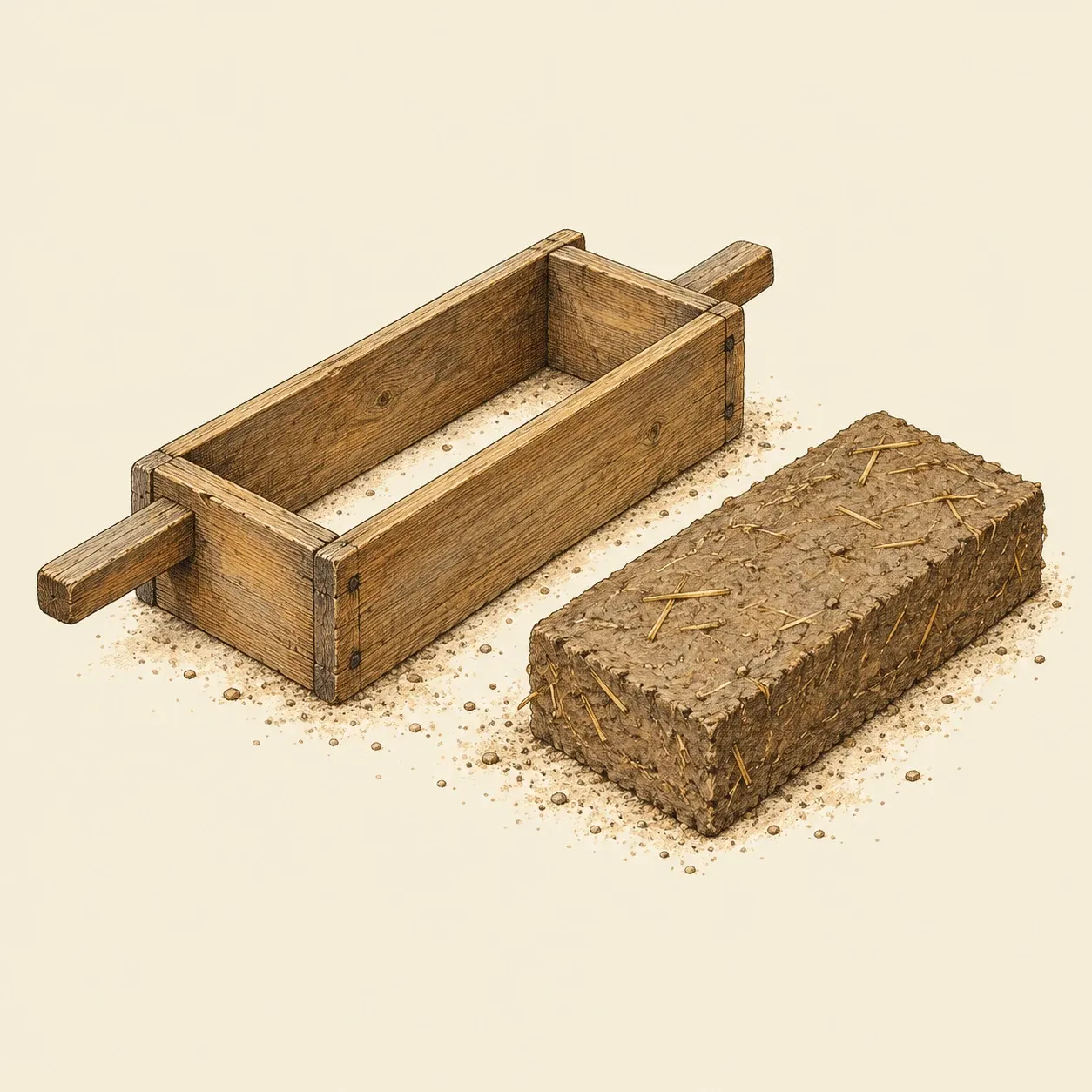 A bottomless wooden mould, sanded inside, gives every brick the same size.
A sun-dried brick stays soft enough to return to mud if it is soaked, so mud-brick walls need a stone footing, wide eaves and regular repair. Firing changes the clay itself. The clay minerals first lose the water bound inside them, and towards 900 to 1,000 °C their grains begin to fuse together. The fired brick will no longer soften in water, and its colour, usually red, comes from the iron in the clay.
In an updraft kiln like the one drawn, fires burn in tunnels at the base. The hot gases rise through a perforated floor and through the gaps left between the green bricks, which are set in an open lattice, and leave at the top. Firing has to start slowly. Water still trapped in the clay turns to steam, and a brick heated too fast can crack or burst.
How to build it
Sun-dried bricks need nothing more than suitable earth, water, straw, a mould and a few dry weeks.
Test the earth. Dig below the topsoil, which holds roots and humus. Make a few trial bricks: if they crack as they dry, the earth has too much clay and needs sand; if they crumble at the corners, it needs more clay.
Mix and temper. Break up the earth, soak it, and tread chopped straw into it until it forms a stiff paste with no lumps. A bucket of loose straw to five of earth is a reasonable first trial; adjust it after the test bricks, since some good soils need little or no straw. Leave the mix covered for a day so the water spreads evenly.
Make the mould. Join four planks into a bottomless frame, for example 30 × 15 × 10 cm inside, with handles at the ends. Wet it and dust it with sand so the clay will release.
Mould the bricks. Set the mould on flat sanded ground, throw in a lump of clay hard enough to fill the corners, strike off the top with a wet stick, and lift the mould straight up. Place the next brick a finger’s width away.
Dry them. Keep the bricks out of strong sun and rain for the first days, then stand them on edge so air reaches every face. Depending on the weather they need one to four weeks before they can be stacked; break a test brick to check that no darker, damp core remains. For fired bricks, take a few small, bone-dry samples to a pottery studio and fire them in its kiln.
Safety. A soaked mud brick weighs several kilograms: lift with bent knees and keep stacks low and stable. Dry clay dust contains fine silica, so dampen the earth before breaking it up, clean up with water rather than by sweeping, and wear a well-fitting P2 or P3 dust mask whenever dust cannot be avoided. Fence or fill any pit you dig, as water collects in it. Kiln firing involves high heat and fumes; leave it to someone trained, and never fire bricks that are still damp.
History and evolution
Sun-dried earth was already used for walls in the Near East in the ninth millennium BCE, and among the oldest shaped mud bricks are those of Tell Aswad in Syria, from before 7500 BCE. At Nemrik in northern Iraq, eighth-millennium walls were built of long cigar-shaped bricks about 51 cm long. The bricks of Jericho, from the eighth and seventh millennia BCE, were shaped by hand and pressed with rows of thumbprints that helped the mortar grip.
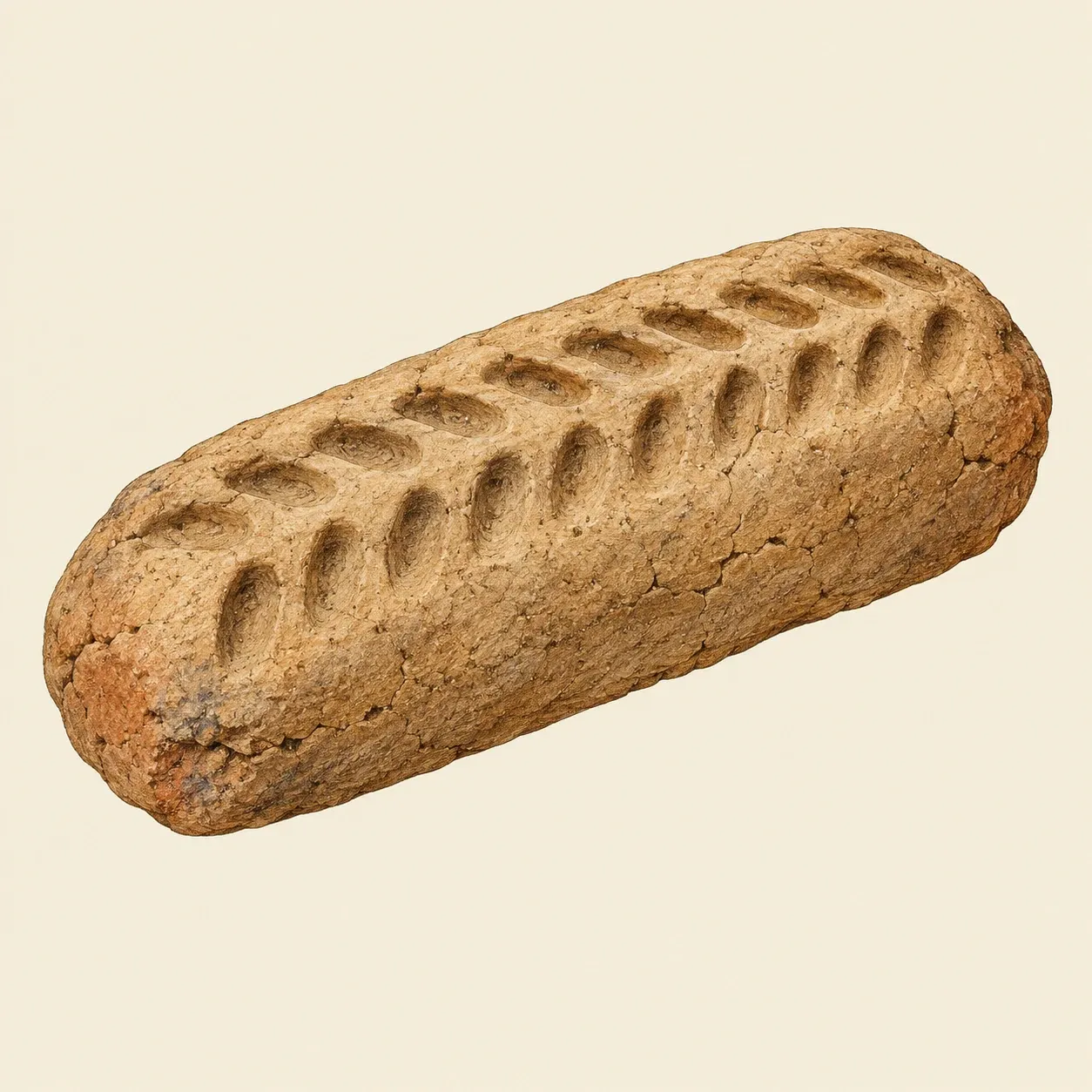 A hand-shaped brick from Jericho: the thumbprints gave the mortar something to hold.
Bricks made in rectangular wooden moulds spread across Mesopotamia in the sixth millennium BCE. Fired bricks came later and were at first kept for special uses, because fuel was scarce: in Mesopotamia they appear in the Uruk period of the fourth millennium BCE, though some writers date the first ones earlier, and they were made in China at Chengtoushan around 4400 BCE. A Sumerian text of about 2100 BCE describes Gudea, ruler of Lagash, pouring clay into the mould and lifting out the first brick of a new temple. Cities of the Indus valley built with fired bricks of regular size from the third millennium BCE; many are close to a ratio of 1:2:4 for thickness, width and length, although excavators recorded several sizes.
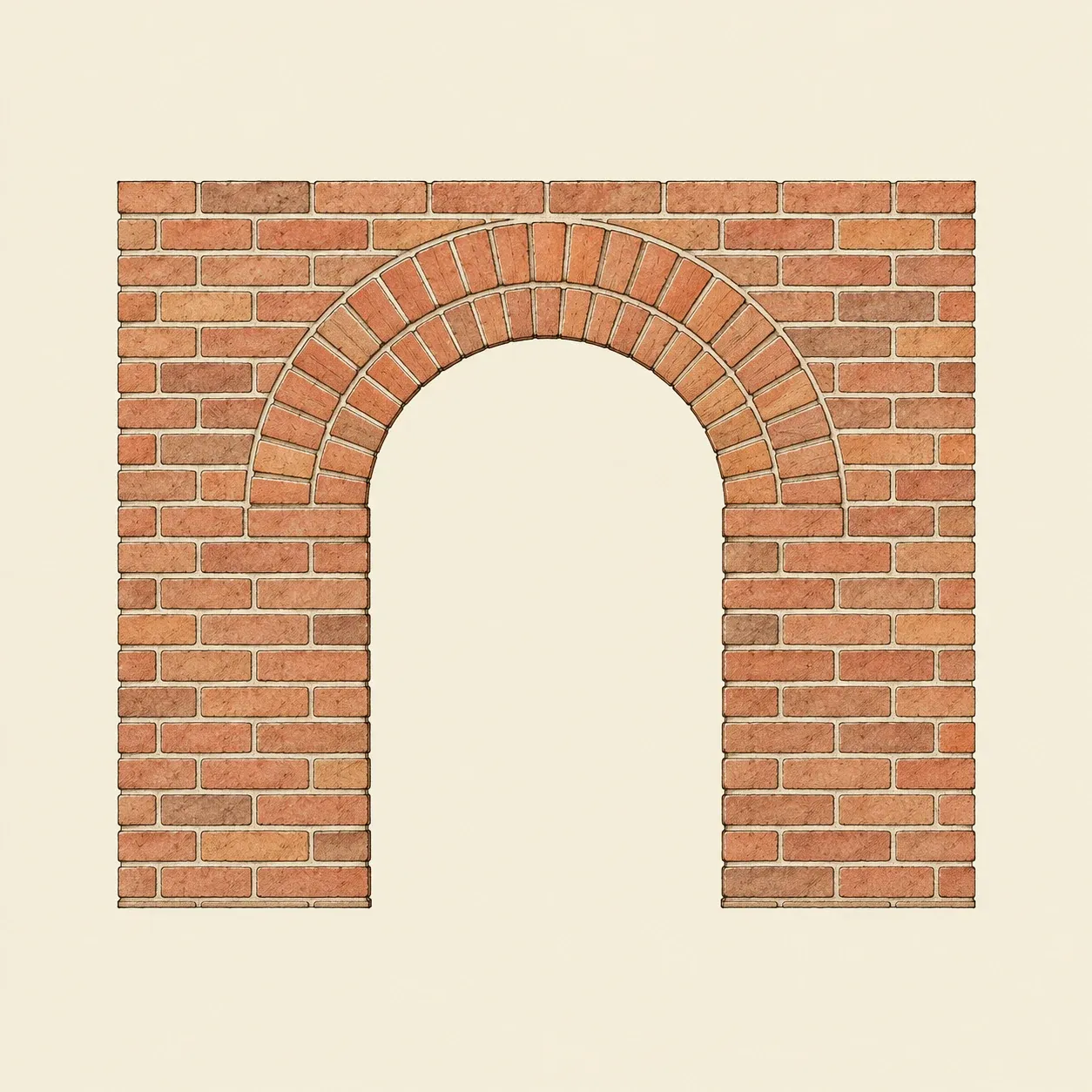 In an arch, each brick is set on end so that every joint points to the centre and the load passes from brick to brick.
Rome produced standard fired bricks in great numbers by the first century CE, and after a long gap northern Europe took up brick again in the Middle Ages, where good building stone was rare.
Industrial brickmaking began in the nineteenth century with machines that pressed clay into moulds. In 1858 Friedrich Hoffmann patented a ring kiln that never had to go cold: the fire moved from one chamber to the next, while the hot gases dried and warmed the bricks ahead of it. In the kiln at Palmerston North in New Zealand, the fire took about six weeks to travel round its fourteen chambers. The standard metric British brick measures 215 × 102.5 × 65 mm.