Gunpowder
The explosive behind guns and mining
- 1Mill house
- 2Water wheel
- 3Wooded bank between the buildings
- 4Powder keg with copper hoops
- 5Horn powder flask
- 6Saltpetre crystals
Gunpowder, or black powder, is a mixture of saltpetre, charcoal and sulfur that burns extremely fast, giving off hot gas and a cloud of solid smoke. Chinese alchemists came across it in the ninth century, and over the following five hundred years it became the propellant of rockets, guns and cannon, then a tool for mining and building.
What it is
Gunpowder is the oldest known chemical explosive. It is a black or dark grey powder made of three substances: saltpetre (potassium nitrate), charcoal and sulfur. Most fuels need air to burn, but gunpowder carries its own oxygen, so it burns in a closed space. In a fraction of a second, much of its mass becomes hot gas, and the pressure of that gas can drive a bullet out of a barrel or split rock.
Until the nineteenth century it was the only explosive in common use and the propellant of every gun. Today it is called black powder, to set it apart from the smokeless powders that replaced it in firearms from the 1880s. It is still used in fireworks, in safety fuses, in muzzle-loading guns and in some quarrying.
The plate shows an eighteenth-century powder works from the outside. The mills stood far apart along a river that drove their wheels, with earth banks and trees between them, so that an explosion in one was less likely to set off the next. On the Brandywine in Delaware, many had heavy stone walls on three sides and a light roof and river front, so that the blast of an explosion went out over the water. Beside the scene are a keg with copper hoops, chosen because copper is far less likely than iron to strike sparks, a horn flask in which soldiers and hunters carried their powder, and crystals of saltpetre.
How it works
Burning is a reaction between a fuel and oxygen. In a wood fire the oxygen comes from the air, and the fire can only burn as fast as air reaches the wood. In gunpowder the oxygen is held in the saltpetre, which is mixed closely with the fuel. When the powder is heated, the saltpetre breaks down and gives up its oxygen right against the fuel particles, and the reaction does not wait for air.
Each ingredient has its own job. Saltpetre is the oxidiser, and it makes up most of the mass. Charcoal is the main fuel; it is porous, so a little of it offers a large surface to the oxygen. Sulfur is a fuel too, but it matters mostly because it lowers the temperature at which the mixture catches fire and makes it burn faster. The purity of the saltpetre and the kind of wood the charcoal came from changed how a powder behaved, which is why powder makers took such care over both.
The products are partly gases, mainly carbon dioxide, nitrogen and carbon monoxide, and partly solid potassium salts. A little under half the mass becomes gas. The rest leaves as thick white smoke and as a residue that fouls the barrel of a gun, which had to be cleaned often.
Gunpowder deflagrates: it burns very fast, but the reaction passes from grain to grain by heat. Loose powder in the open burns with a flash and a cloud of smoke. Confined in a barrel, the gas cannot escape, the pressure rises, the powder burns faster still, and the gas drives the shot out. High explosives such as TNT or dynamite detonate instead. A shock wave races through them at several kilometres per second, faster than sound travels in the material, and the reaction is over almost at once, with a shattering blow. Gunpowder gives a longer, softer push. That suits a propellant, which has to speed up a bullet without bursting the barrel, and it is why quarrymen long used it to split and lift blocks of stone that dynamite would have shattered.
A spark, a flame, friction, a blow or static electricity can set gunpowder off, and explosions in powder mills killed many workers. Making, storing and transporting it are controlled by explosives laws almost everywhere.
History and evolution
Chinese alchemists of the Tang dynasty heated saltpetre, sulfur and many other substances in their search for elixirs of long life. A Taoist text usually dated to the mid-ninth century warns alchemists against certain mixtures containing saltpetre: some who had heated them burned their hands and faces, and even their house. Historians debate whether an earlier text of 808 already describes a similar mixture. The mixture came to be called huoyao, “fire medicine”.
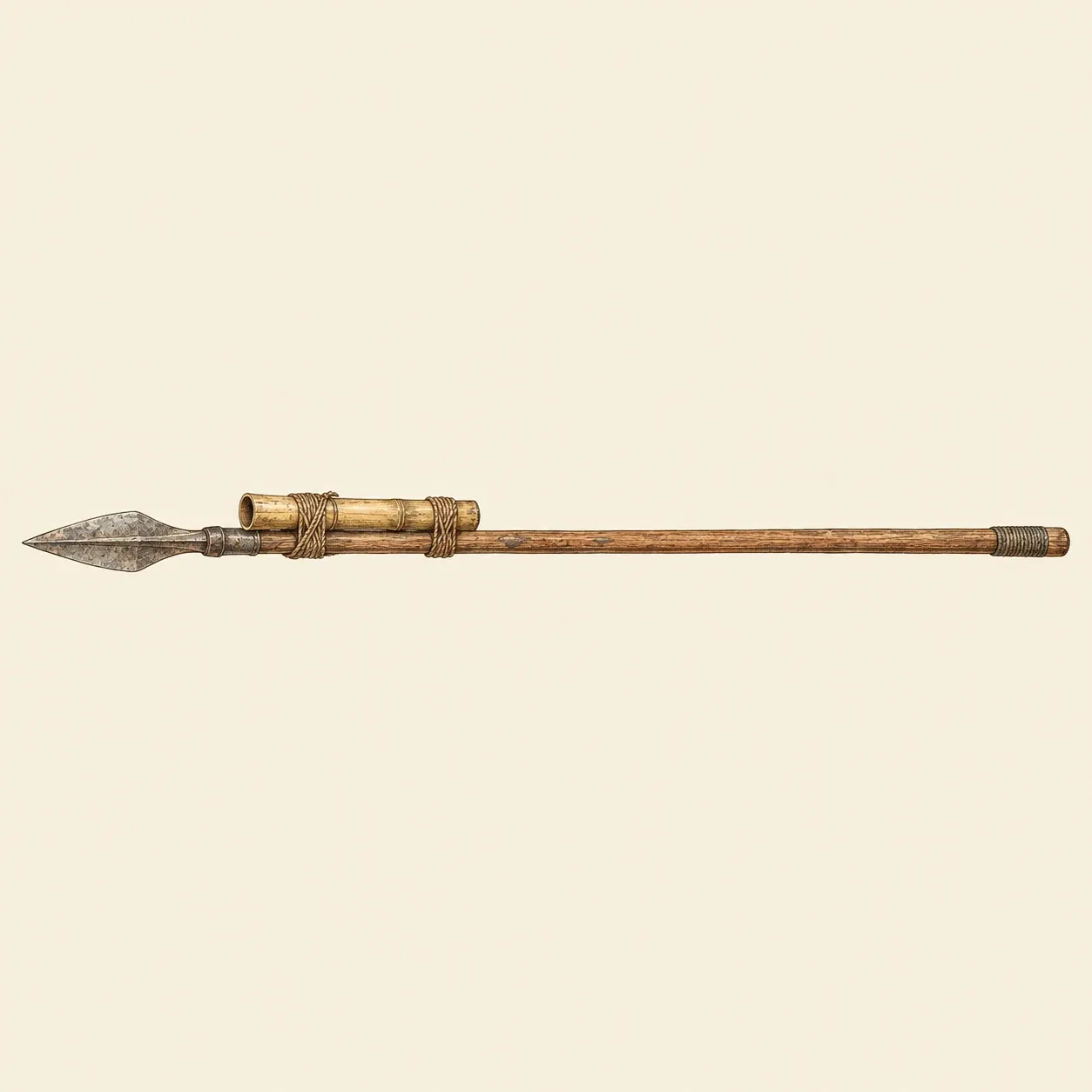 The fire lance, a tube of powder lashed to a spear, threw out flame for a few seconds at close range.
Chinese armies soon took it to war. The Wujing Zongyao, a military compendium completed in 1044, describes incendiary and smoke weapons and contains the oldest surviving written formulas. A silk banner from Dunhuang, painted in the mid-tenth century, shows a fire lance, and Song troops used fire lances at the siege of De’an in 1132. In the thirteenth century, Jin and Song defenders hurled gunpowder bombs from their walls at besieging Mongol armies, and the tube of the fire lance was made of metal and loaded with projectiles. The bronze hand cannon found in Heilongjiang province carries no date, but its find site links it to fighting recorded in 1288, which makes it one of the oldest guns known to survive.
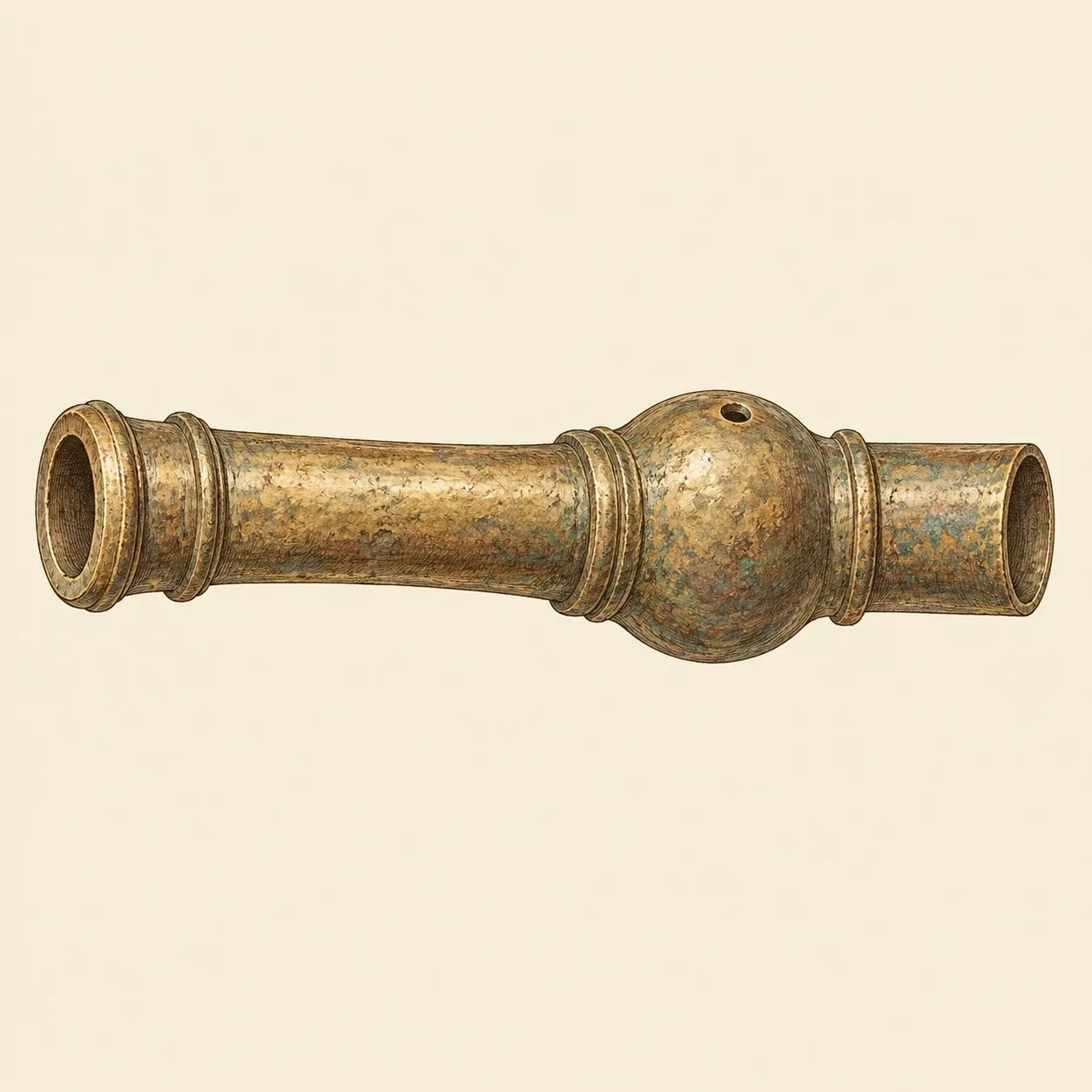 Early Chinese hand guns were short bronze tubes fixed to a wooden pole.
Knowledge of the powder spread west across the Mongol empire and the Islamic world in the thirteenth century. In the Mamluk sultanate, the treatise of the Syrian Hasan al-Rammah, written in the late thirteenth century, describes incendiaries and rockets, and the English friar Roger Bacon mentioned the powder in 1267. The first European records and pictures of guns date from the 1320s: in 1326 the city of Florence ordered metal cannon and their ammunition, and a treatise that Walter de Milemete wrote for the young Edward III in 1326–1327 contains a drawing of a gun. Twenty years later the English probably used a few small guns at the battle of Crécy. By the fifteenth century, siege guns could bring down high medieval walls in weeks, and military engineers answered with low, thick walls and angled bastions.
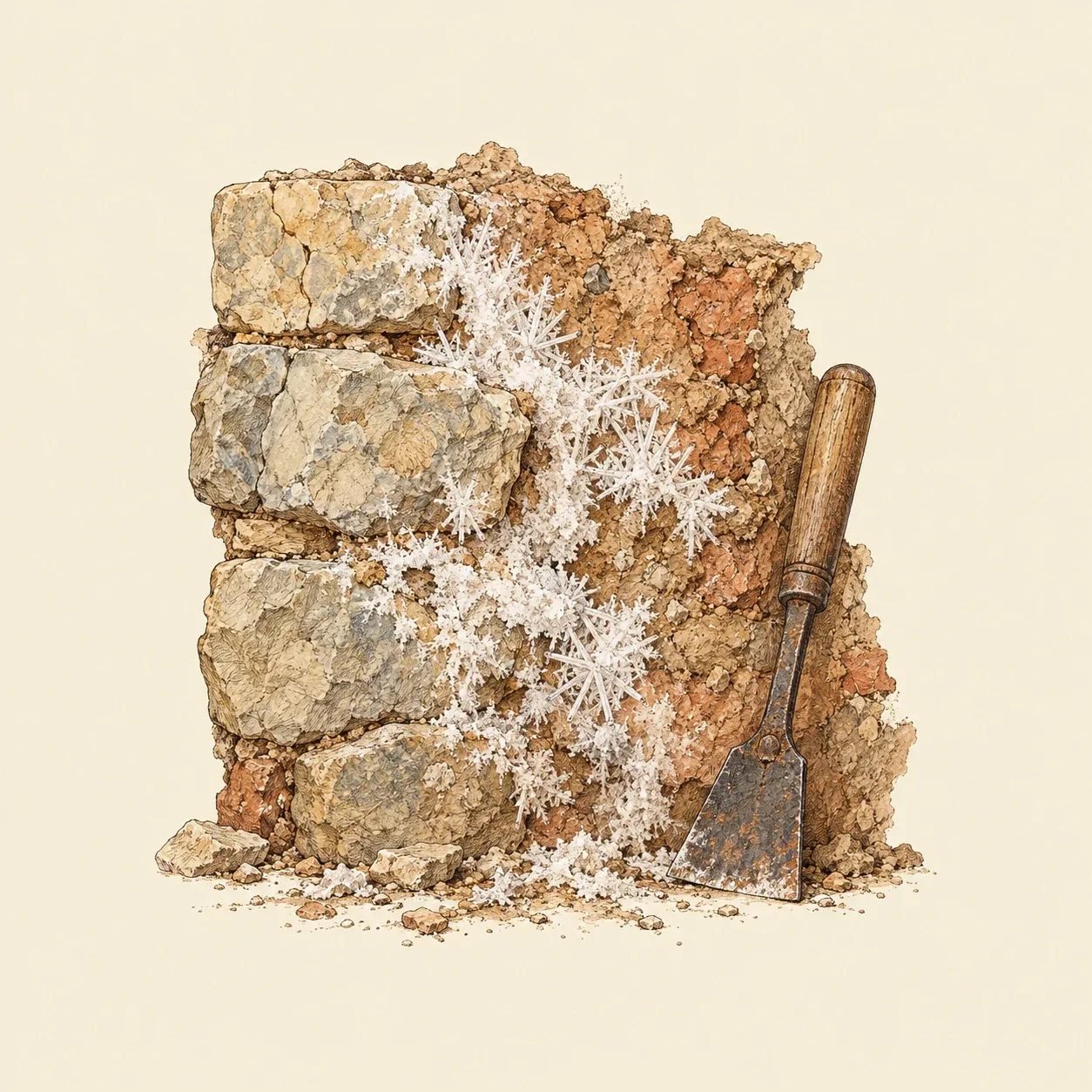 Saltpetre forms slowly where organic waste rots in damp soil, and for centuries it was scraped from walls and floors like these.
Saltpetre was the ingredient that was hard to get. In Europe, saltpetre men had the right to dig up the floors of stables, dovecotes and cellars, and later governments set up nitre beds where it formed in heaps of earth and manure. In the seventeenth century the European trading companies bought large quantities in India, in Gujarat, Bihar and Bengal. In 1775 the chemist Antoine Lavoisier became one of the four commissioners of the new French royal powder administration and, from his laboratory at the Paris Arsenal, worked to improve the supply and quality of French powder. In the nineteenth century, deposits of sodium nitrate in the Chilean desert supplied the explosives and fertiliser industries, until German chemists learned to make nitrogen compounds from the air in the early twentieth century.
Powder mills were among the most dangerous workplaces of the industrial age. The du Pont mills on the Brandywine in Delaware, opened in 1802, had 288 explosions and at least 228 deaths before they closed in 1921. Workers were searched at the gates for matches and for metal on their clothes and shoes. Gunpowder dug canals, tunnels and mines: one of the earliest records of blasting in a mine comes from Banská Štiavnica, in the Kingdom of Hungary, in 1627. From the 1870s dynamite replaced it for most blasting work, and smokeless powders made from nitrocellulose replaced black powder in firearms in the 1880s and 1890s. It survives in fireworks, in fuses and among people who shoot historical guns.