Quarantine
Keeping apart those who may carry a disease until it would have shown
Contents
- 1Gate of the courtyard, its own entrance
- 2High wall separating it from the next courtyard
- 3Wide portico where goods were aired
- 4Bales of wool and cloth opened on trestles
- 5Rooms where travellers served their quarantine
Quarantine keeps people, animals or goods that may have been exposed to a contagious disease apart from everyone else for a fixed time, long enough for the disease to show itself. In 1374 an ordinance for the town of Reggio, in northern Italy, kept people who had nursed plague patients apart for ten days, and in 1377 Ragusa, today Dubrovnik, ordered travellers from plague areas to spend thirty days apart before entering the city. Ports around the Mediterranean then built lazarettos, and the forty days many of them imposed gave the practice its name.
What it is
Quarantine is the separation, for a fixed period, of people, animals or goods that may have been exposed to a contagious disease. Those held in quarantine are not known to be ill. They are kept apart for long enough that, if they carry the disease, it will show itself before they mix with others. Isolation is the related measure for people already known to be sick. The word comes from the Italian quaranta, forty, the number of days that many Mediterranean ports imposed on ships and travellers from places struck by plague.
The oldest known rule that set a fixed waiting period dates from 1374: an ordinance for the town of Reggio, in northern Italy, kept those who had nursed plague patients apart for ten days. In 1377 Ragusa, the Adriatic trading republic that is now Dubrovnik in Croatia, imposed the first fixed period on travellers, thirty days. Over the next centuries, port cities built lazarettos, enclosed stations where travellers and their goods spent their quarantine under guard. The lazaretto that Dubrovnik began in 1627 at Ploče, where the land and sea trade routes met, had several walled courtyards, each with its own entrance, wide porticoes and rooms for lodging travellers and cleaning goods. Travellers spent up to forty days there, depending on the news of disease in the lands they came from.
How it works
Quarantine depends on the time between catching a disease and falling ill. A person held apart for longer than that time who stays well was probably not infected and can be released. A person who falls ill during quarantine has had contact only with others held in the same place. The forty days used against plague were longer than its incubation period and left time for the infected fleas that spread it, and for the plague bacillus itself, to die. Why forty was chosen is not known: historians point to the old Hippocratic idea that an acute illness declares itself within forty days, and to the religious meaning of the number.
In Venice, the arrival of a ship suspected of carrying plague was signalled by a flag that lookouts on the bell tower of San Marco watched for. Its captain was rowed to the office of the health magistrates and questioned through a window, at a distance. He had to show that his crew and passengers were in good health and say where his cargo came from. If there was any doubt, the ship went to the quarantine station, where people were held apart and the vessel was fumigated. From the sixteenth century, ships also carried a bill of health, a certificate stating that the last port they had left was free of disease. A clean bill let a ship enter without quarantine.
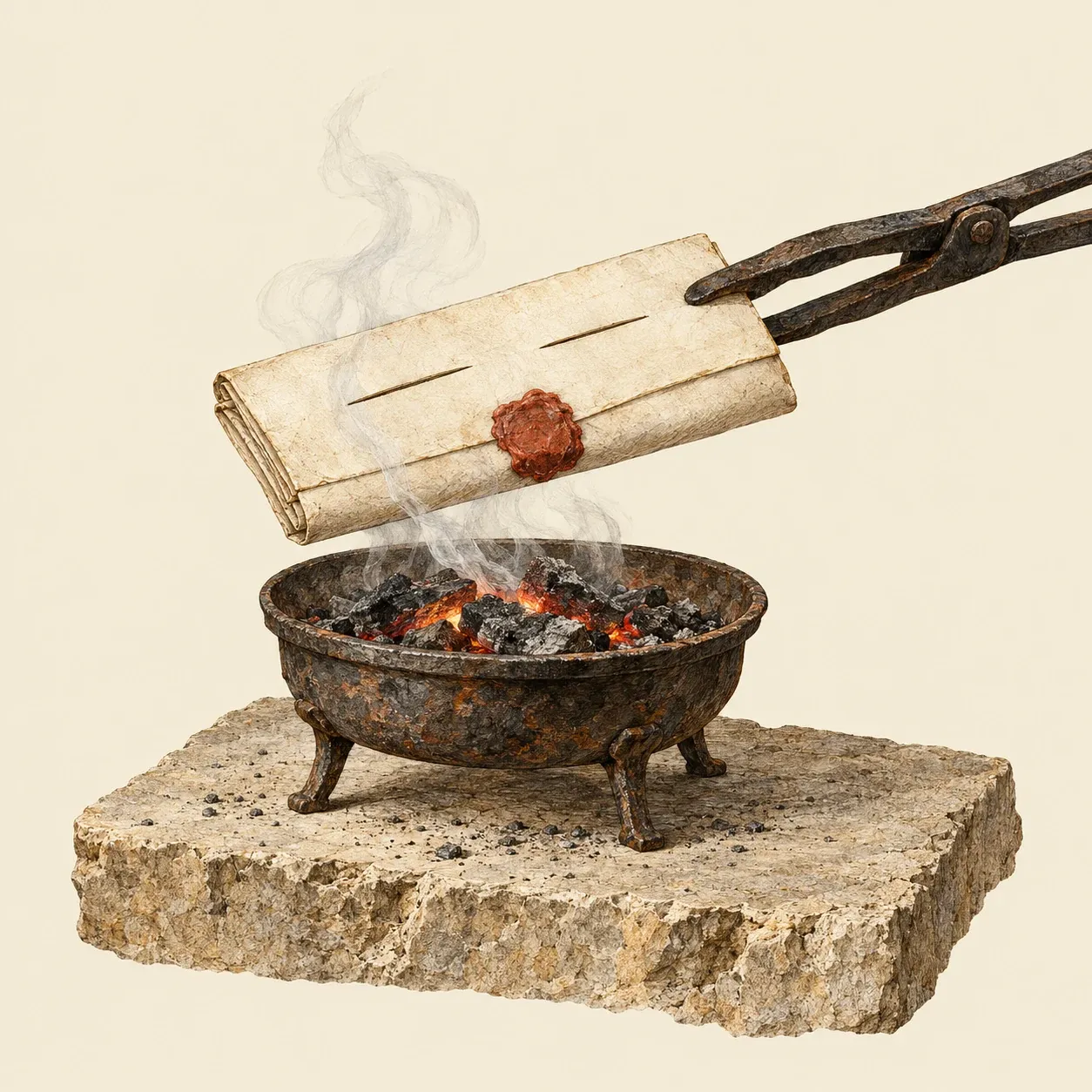 Letters were slit open and held in smoke, because officials believed plague could cling to paper.
Goods were treated as carefully as people. Wool, yarn, cloth, leather and blankets were thought most likely to carry plague, so they were opened and aired under the porticoes of the lazaretto. Wax and sponges were left in running water. Letters were disinfected too. A French traveller who watched the work at the quarantine office of Valletta, in Malta, saw letters taken up with pincers and cut through twice with a chisel so that the smoke could reach inside, and later covers from Malta still show such slits. Opened letters could be read, and the disinfection of mail was accused of serving as cover for political spying.
Quarantine works only against diseases that people or goods carry with them. Used alone, it did almost nothing to stop yellow fever or cholera in the nineteenth century, and a strict cordon of guards and ships protected only small islands well.
How to do it
This tabletop game shows why the length of a quarantine matters. It uses paper tokens and dice and involves no real illness. Real quarantine is decided by public health authorities and carried out by trained health workers.
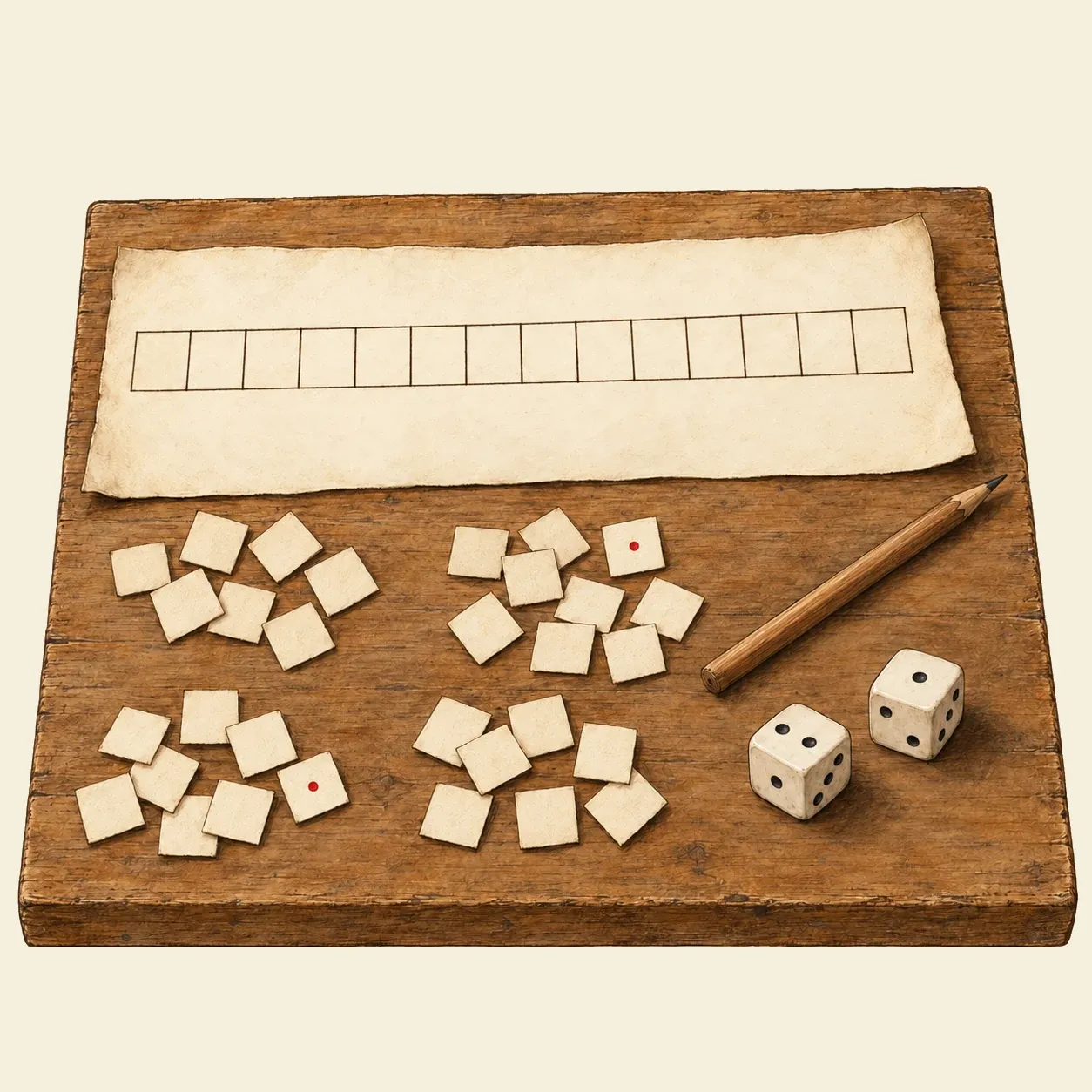 A red dot on the back of a token marks an infected traveller.
Cut thirty small squares of paper. They are travellers arriving by ship. On the back of six of them, draw a red dot: these travellers are infected. For each of the six, roll two dice and write the total, a number from 2 to 12, on a separate list. Each total is the day on which one infected traveller falls ill. Shuffle all thirty tokens face down. On a sheet of paper, draw a row of fourteen squares, one for each day of quarantine.
Choose a quarantine length, for example 3 days. Turn over every token and give each red dot one of the numbers on your list. An infected traveller whose number is 3 or less falls ill during the quarantine and is caught. One whose number is higher leaves the lazaretto in good health and falls ill later in the city. Count the travellers caught and those missed. Repeat with 7 days and then with 14. Then work out the cost of each choice: thirty travellers held for 3 days make 90 traveller-days, for 14 days, 420. The game shows why a quarantine must last longer than the longest incubation, and why merchants and cities often argued over each day.
History and evolution
Separating the sick is far older than quarantine. The Book of Leviticus orders people with leprosy to live apart from others, and in the seventh century armed guards stood between plague-stricken Provence and the diocese of Cahors to stop people crossing. During the Black Death of 1347 to 1352, some Italian city-states shut their gates to strangers, set armed guards along the roads and held the sick in makeshift camps. None of these measures fixed how long a person had to wait. The first known rule to do so is an ordinance that Bernabò Visconti, lord of Milan, sent to the town of Reggio in January 1374: the sick had to leave for the fields or woods until they died or recovered, and anyone who had attended them had to keep away from other people for ten days.
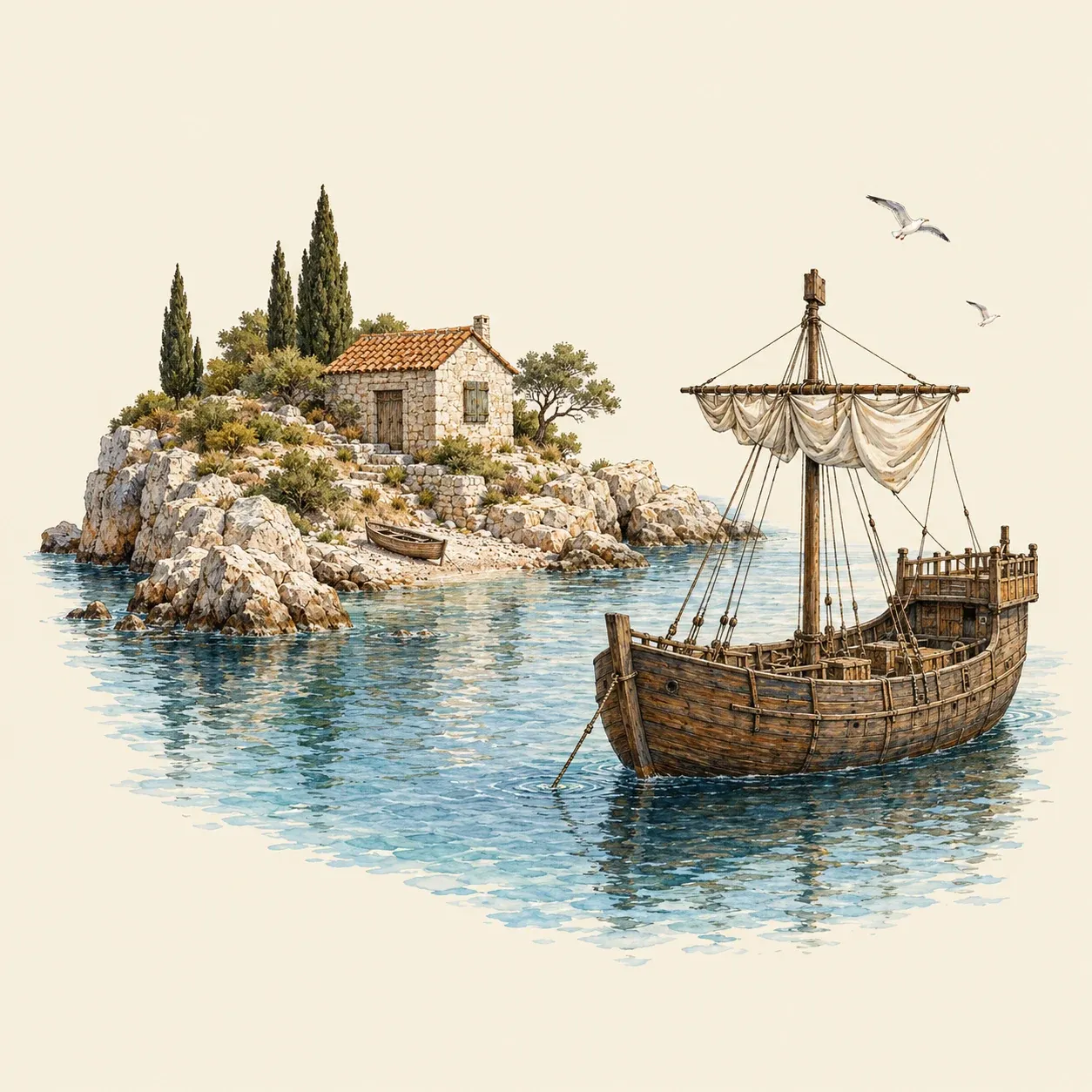 Ragusa first sent travellers and goods from plague areas to small islands near the city.
On 27 July 1377 the Great Council of Ragusa passed a decree, recorded in its book of laws, under the title “Whoever comes from plague places shall not enter Ragusa or its district”. Travellers and goods from infected places had to spend thirty days apart first. Anyone who broke the rule was fined and sent into isolation himself. No citizen could visit those in isolation, and only people named by the Council could bring them food. At first the city used small islands nearby. Later, suspected people were lodged in houses at Danče, where a lazaretto grew, and in 1627 work began on the large lazaretto at Ploče, completed by 1647.
Venice opened the first permanent lazaretto in 1423 on the island of Santa Maria di Nazareth; its name, the Nazarethum or Lazarethum, gave the word lazaretto. Over the next hundred years other ports followed, among them Genoa, Pisa and Marseille. In England, the Quarantine Act of 1710 made a forty-day quarantine compulsory for people and goods from plague areas. Each state set its own rules and periods, which confused travellers and burdened trade. France proposed common rules in 1834, but the first International Sanitary Conference met in Paris only in 1851. From the late nineteenth century people with tuberculosis were isolated in sanatoria, and in 2003 health authorities in several countries asked people exposed to SARS to stay in quarantine.