Blast Furnace
Liquid iron from a shaft that never goes out
Contents
- 1Charging mouth at the top of the stack
- 2Masonry stack
- 3Bellows worked by hand
- 4Tuyère
- 5Hearth with molten iron under the slag
- 6Tap hole and channel for the iron
A blast furnace is a tall shaft furnace that turns iron ore into liquid cast iron and can work for long periods without stopping. The iron melts in it and gathers in the hearth under a layer of slag. Cast iron was in use in China by the fifth century BCE at the latest, the oldest furnace yet excavated, at Jiudian in Henan, dates from the fourth or third century BCE, and blast furnaces reached Europe in the Middle Ages.
What it is
A blast furnace is a furnace in the form of a tall shaft, filled from the top and blown with air from below, in which iron ore becomes liquid iron. The bloomery that came before it gave a spongy lump of solid iron at the end of each smelt, which had to be taken out before the next smelt, sometimes through the top or an arch at the base, sometimes by breaking the furnace open. A blast furnace runs hotter, and its iron melts and collects in the hearth, so the furnace can go on working while its liquid iron is drawn off. A furnace could work day and night for long periods without being stopped.
What it makes is cast iron, also called pig iron. It holds a lot of carbon, which lets it melt at a much lower temperature than pure iron and run into a mould, but makes it hard and brittle. Cast iron can be poured straight into pots, pans, stoves and cannon, or refined into wrought iron and steel, which hold far less carbon.
A blast furnace is an industrial plant. The gas that leaves its top is rich in carbon monoxide, a poison with no colour or smell, and the iron and slag that run from it are liquid and far hotter than any kitchen fire. Gas leaks at blast furnaces have put workers in hospital even in modern steelworks. No small version of it is safe to run.
How it works
Inside the furnace, two streams pass each other. The solid charge sinks slowly down the shaft, while the hot gas from the fire in front of the tuyères, the nozzles through which the bellows blow near the bottom, rises through it and takes the oxygen from the ore on its way up. Charcoal was the fuel of the first furnaces.
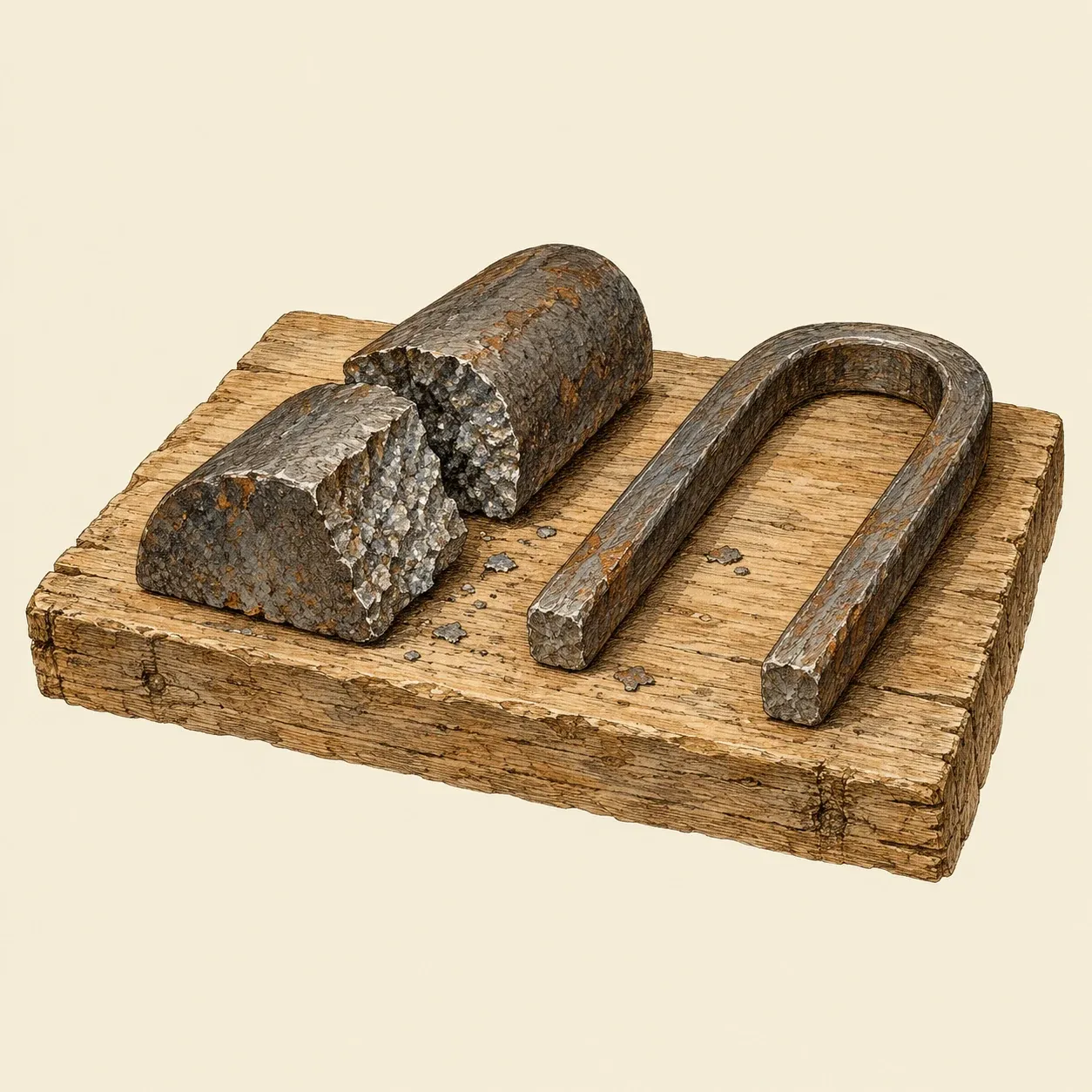 Grey cast iron breaks with a grey, grainy fracture; wrought iron, with little carbon, bends without breaking.
The iron freed from the ore stays among the glowing fuel and takes up carbon, which lowers its melting point, so it melts and trickles down into the hearth instead of staying solid as in a bloomery. The earthy matter of the ore melts into slag, a glassy melt lighter than iron, which floats on top of it. Both leave the furnace as liquids, and the spent gas leaves at the top.
The shape of the inside follows this flow. The shaft widens downwards, which helps the charge sink without jamming, then narrows again above the hearth, where much of the charge has melted and takes less room. Liquid iron is denser than slag and gathers in the bottom of the hearth, below the level of the tuyères.
History and evolution
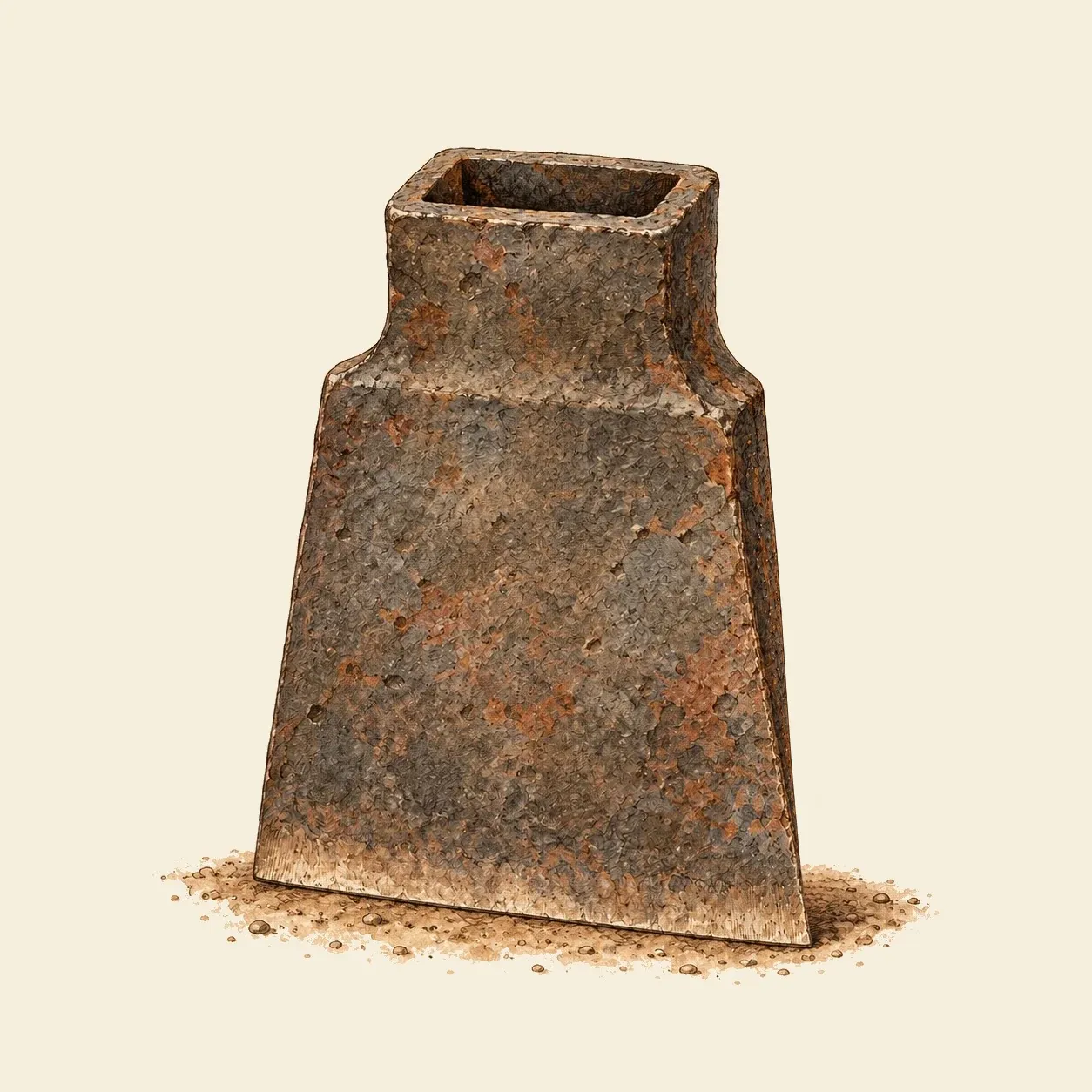 A cast-iron adze of the Warring States period. Chinese foundries cast tools like this in quantity.
In China, iron was being cast in moulds by the fifth century BCE at the latest, and cast-iron hoes, adzes and sickles of that period have been found in Hubei and Henan. The oldest furnace excavated so far, at Jiudian in Xiping County, Henan, dates from the late Warring States period, in the fourth or third century BCE; it was built of clay against a hillside. Ironworks of the Han dynasty, which ruled from 206 BCE to 220 CE, have been excavated from Henan in the north to Xuxiebian in Sichuan, with the remains of their blast furnaces and of the fineries where the cast iron was refined.
In Europe, blast furnaces were at work by the thirteenth century. Excavations have found early ones at Lapphyttan in Sweden, at Dürstel in Switzerland and in the Märkisches Sauerland in Germany. These furnaces had bellows driven by water wheels, and their cast iron was carried to a finery hearth to be made into wrought iron. Over the following centuries the blast furnace spread across Europe and the bloomery slowly disappeared.
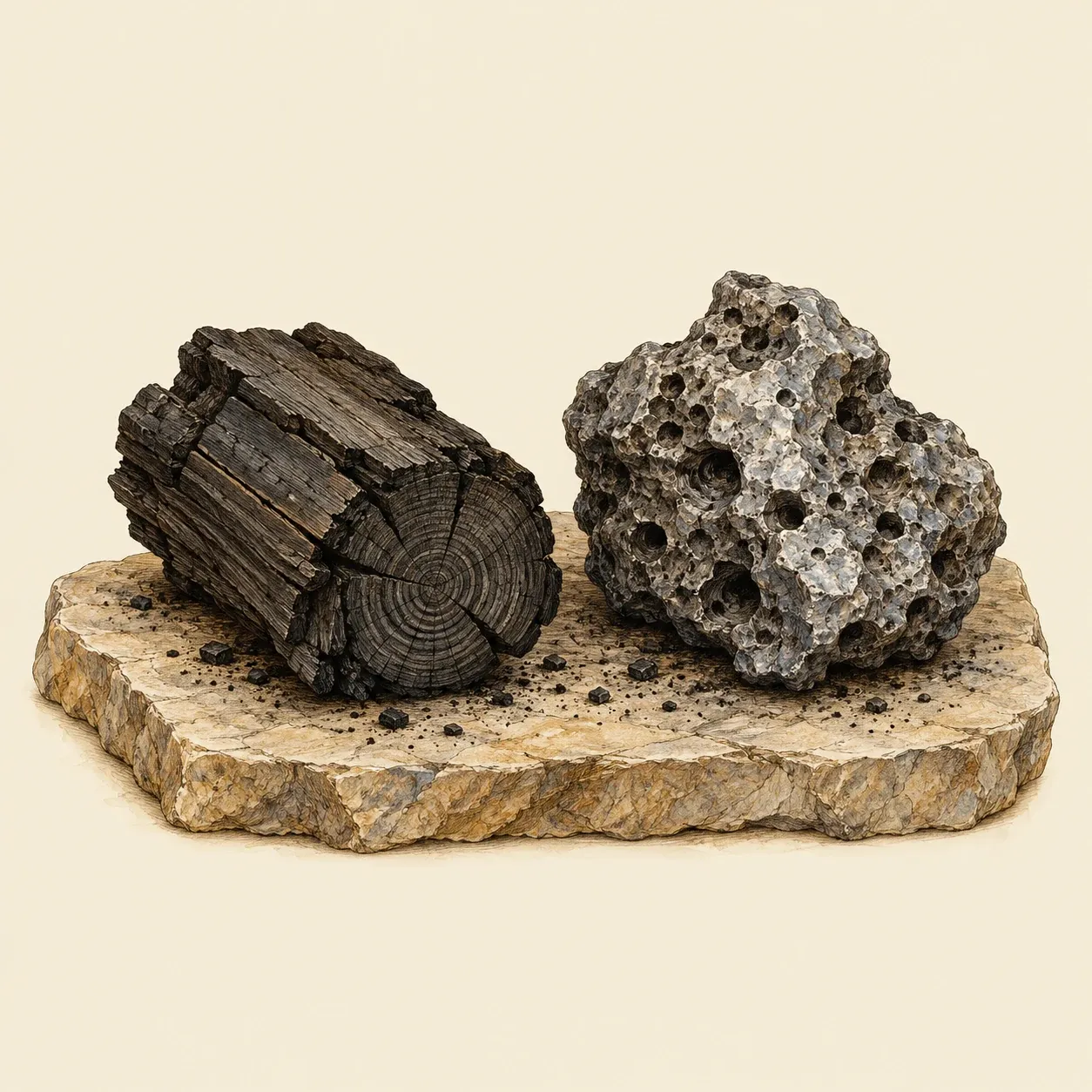 Charcoal keeps the grain of the wood it came from; coke, made from coal, is grey, porous and hard.
In 1709, at Coalbrookdale in Shropshire, Abraham Darby I smelted iron in a blast furnace with coke, coal baked to drive off its tar and gases. Others had tried coke before him; Darby made it work at a profit, and iron could now be made where there was coal rather than woodland.
The next large gain came from heating the air. In 1828 James Beaumont Neilson, who worked at the Glasgow gas works, patented the hot blast, in which the air was warmed before it entered the tuyères. It saved a large share of the fuel and spread quickly through the Scottish ironworks. Later furnaces grew far larger, and the gas from their tops was collected and burned as fuel in the works.