Battery recycling
Lead and lithium won back from spent cells
Contents
- 1Used battery, collected whole
- 2Polypropylene chips from the case
- 3Metallic lead from grids and posts
- 4Lead paste from the plates
- 5Refined lead in ingots
Battery recycling recovers the metals and other materials of used batteries and keeps their lead, acid and flammable cells out of ordinary waste. From lead-acid batteries the industry recovers lead, plastic and acid; from lithium-ion batteries, cobalt, nickel, copper and lithium. In Britain, factory regulations of 1903 for accumulator works already covered the recovery of lead from old plates.
What it is
A used battery is a package of valuable and often hazardous materials. A car’s lead-acid battery holds plates of lead and lead compounds standing in sulfuric acid inside a plastic case. A lithium-ion battery holds cells whose electrodes contain lithium together with metals such as cobalt, nickel and copper, soaked in a flammable electrolyte. Recycling recovers these metals for new batteries and other products and keeps lead, acid and cells that can catch fire out of household waste and landfills.
The two kinds have very different histories. Lead-acid batteries are among the most completely recycled products there are. Lithium-ion recycling is much younger and is growing with the number of electric cars and devices.
How it works
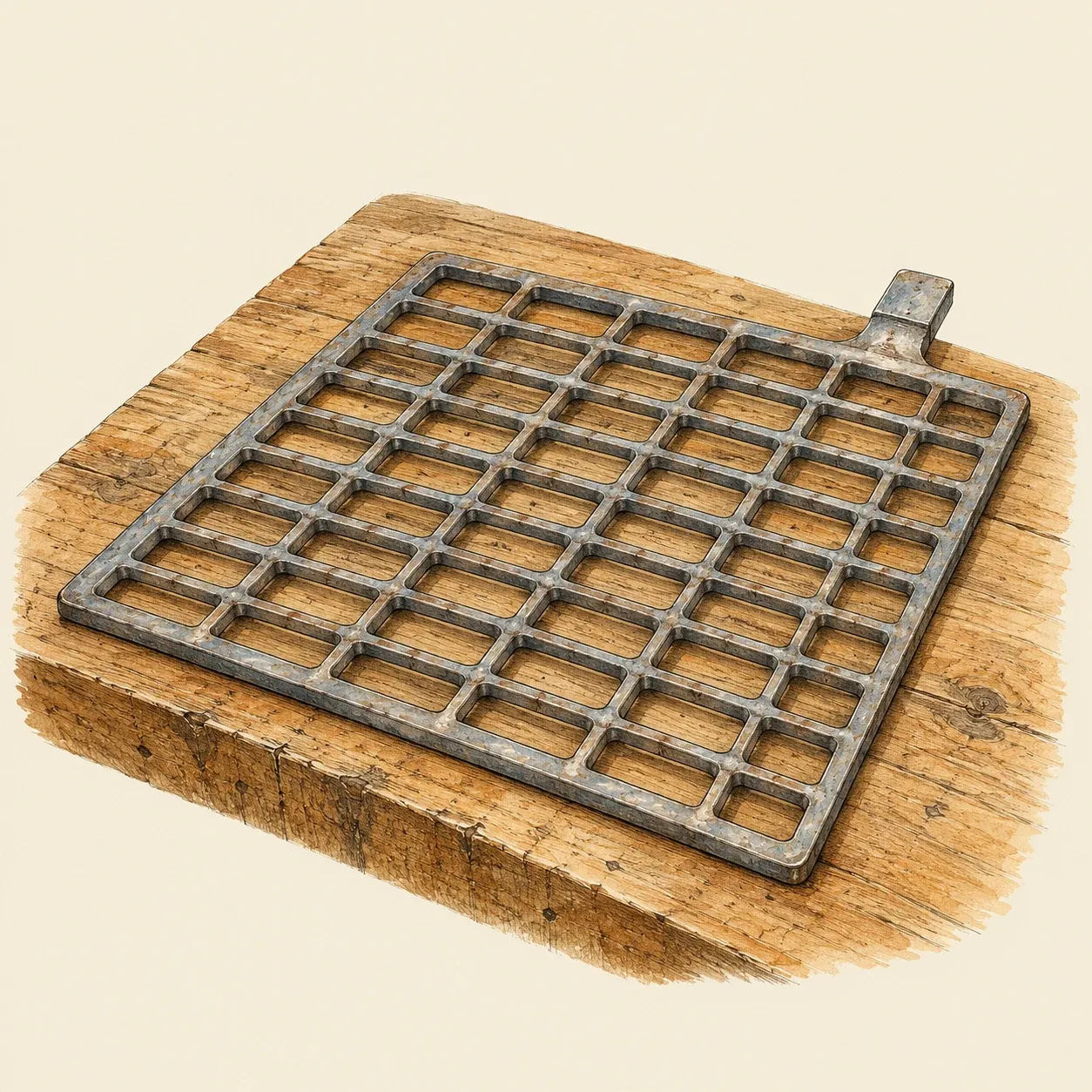 The grid of a battery plate is a lead alloy lattice that once held the active paste.
Lead-acid batteries are collected whole by scrap dealers, garages and shops and go to licensed recycling plants, which recover the lead of the plates, posts and connectors, the plastic of the case and the acid. Most of the recovered lead goes back into new batteries.
The work gives off lead dust and fumes, so a lawful plant works in enclosed buildings with gas cleaning, checks the air and the blood of its workers, and disposes of its waste under control. The World Health Organization warns that battery recycling can cause serious environmental contamination and human exposure to lead, and asks health services and governments to push for better regulation of the trade.
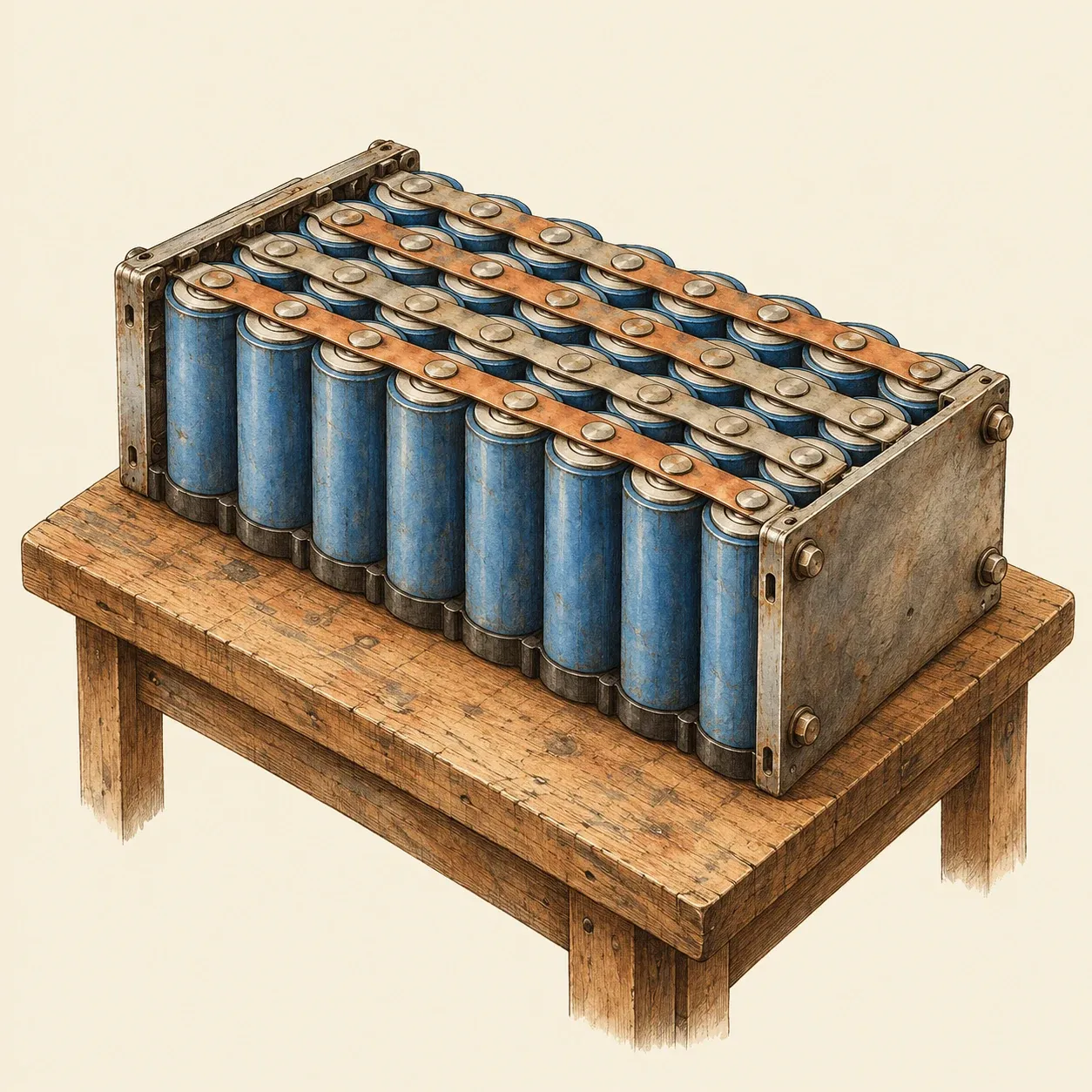 An electric-car battery module holds many small cells, and a damaged cell can catch fire.
Lithium-ion recycling is a younger industry. Its plants aim to recover cobalt, nickel, copper and lithium for new battery materials, and the ReCell Center of the US Department of Energy studies ways of reusing the cathode material itself. All face the same danger: a damaged or charged cell can short-circuit, overheat and catch fire.
Lithium-ion batteries thrown away with ordinary waste are a hazard on the way. In 2021 the US Environmental Protection Agency compiled the publicly reported fires they had caused or probably caused at American waste facilities, sorting plants among them, and a study for the British waste industry estimated that they start a large share of the waste fires in the United Kingdom. Both reports say that many such fires go unreported. Used batteries of every kind belong at a collection point, and their recycling is work for licensed plants with trained staff, protective equipment and pollution controls.
History and evolution
Regulations made by the British Home Office on 21 November 1903 for factories making electric accumulators already covered the recovery of lead from old plates. The rules came into force on 1 January 1904, and that day the London journal The Electrical Engineer summarised them for its readers. In 1912 the doctors Thomas Legge and Kenneth Goadby named the old accumulator plates handled in accumulator works and lead works as a source of lead dust and fumes. In December 1914 the physician Alice Hamilton, reporting on lead poisoning in American storage-battery works for the federal Bureau of Labor Statistics, reprinted these rules and found that repair shops threw old rejected battery plates in a heap in a corner until there were enough to sell to a refinery. The historian Leif Fredrickson, who studied lead in Baltimore, describes the recovery of lead from old batteries growing in the 1910s and 1920s, and James Morton Turner, a historian of batteries, dates the recycling of lead-acid batteries to the 1920s. Turner writes that for decades many small lead recycling works operated in and around American cities.
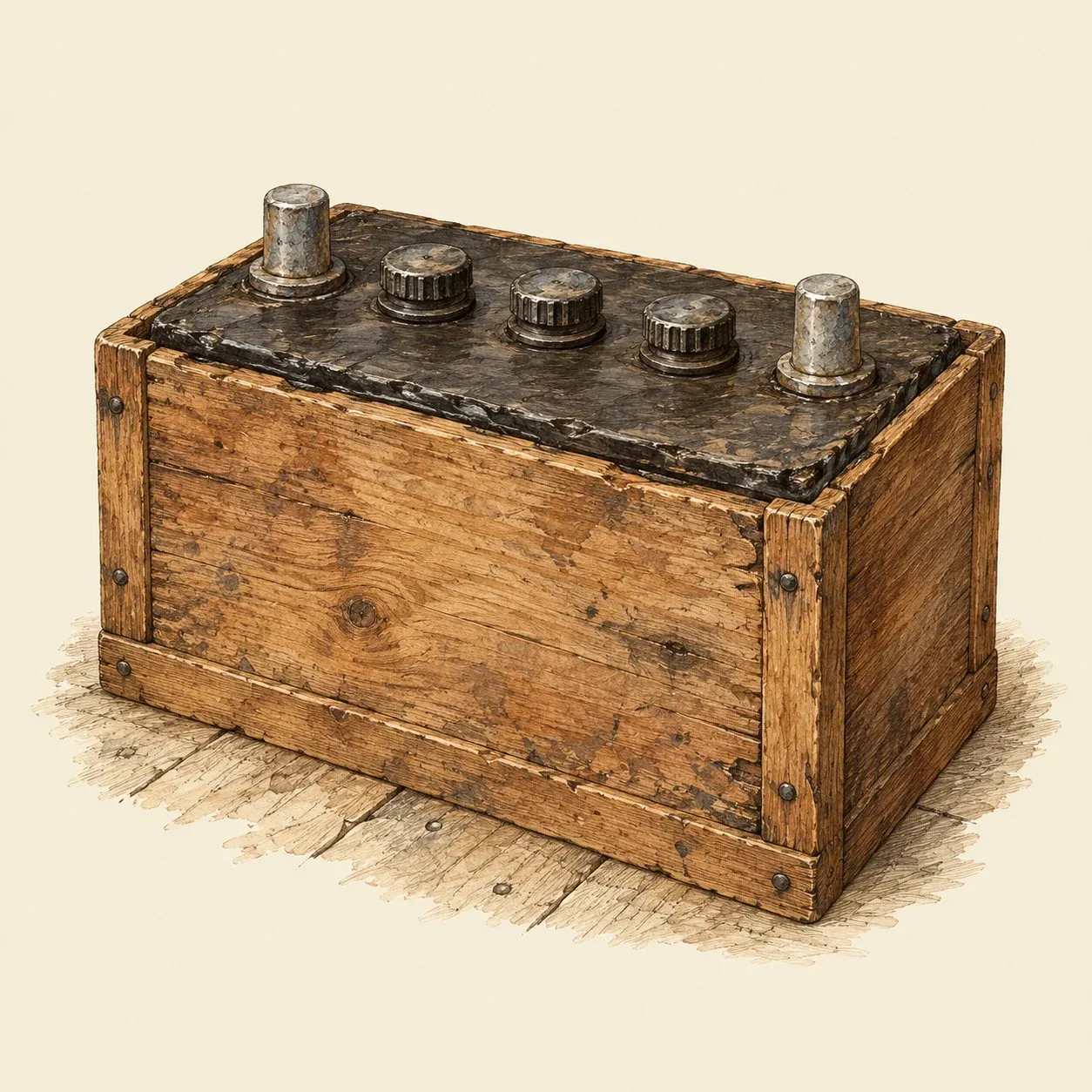 Early car batteries often had wooden cases; scrap dealers kept the lead and gave the wood away.
The trade had a cost. In Baltimore, a girl taken to the Johns Hopkins Hospital turned out to have lead poisoning, and the source was traced to the wooden casings of old batteries. Junk dealers who recovered the lead were giving the casings away to poor families, who burned them for heat during the Depression, and children in the neighbourhood were poisoned. The city stopped the dealers from handing out the casings, and a welfare council supplied other fuel. Turner adds that later environmental laws forced recyclers to install pollution controls, and many small works closed.
Industrial recycling of lithium-ion batteries is recent. Umicore opened a plant for recycling rechargeable lithium-ion batteries at Hoboken, in Belgium, in 2011. In the European Union, a regulation adopted in 2023 covers batteries through their whole life, from design to collection and recycling.