Lead Smelting
Lead from galena, and the silver hidden in it
Contents
- 1Galena, lead sulphide ore
- 2Stone wall of the bole
- 3Foundation of logs
- 4Burning layers of brushwood and ore
- 5Channel carrying the molten lead
- 6Casting pit
Lead smelting draws lead out of galena, a grey lead sulphide that often carries some silver. The ore gives up its lead in a fire that need not be very hot, and cupellation then separates the silver. The oldest object proved to be of smelted lead, from Ashalim Cave in the Negev, dates from 4300 to 4000 BCE. Lead fumes and dust are poisonous.
What it is
Lead is a heavy, soft, grey metal that melts at 327 °C. Its main ore is galena, a lead sulphide that forms shiny grey cubes and often contains a little silver. Smelting removes the sulphur and leaves the metal, which could then be cast into sheets, pipes, weights and vessels.
For most of history lead and silver were produced together. Silver was often won from lead ore: the silver-lead mines of medieval Devon, for instance, smelted their ore to lead and then refined the silver out of it by cupellation. Ancient and medieval smelting released lead fumes and dust, and land around open smelting sites was left too toxic for grazing. The World Health Organization states that no level of exposure to lead is known to be without harm, and children are the most vulnerable.
How it works
Galena can be smelted in a fire that never gets hot enough to melt its slag into glass, such as an open hearth fanned by the wind. In these fires, part of the galena burned to lead oxide in the air. This oxide then reacted with the galena that had not burned, and the two together gave metallic lead and sulphur dioxide. Molten lead is very heavy and runs down through the fire. The slag kept some lead, and smelters melted it again in a hotter furnace with charcoal to recover it.
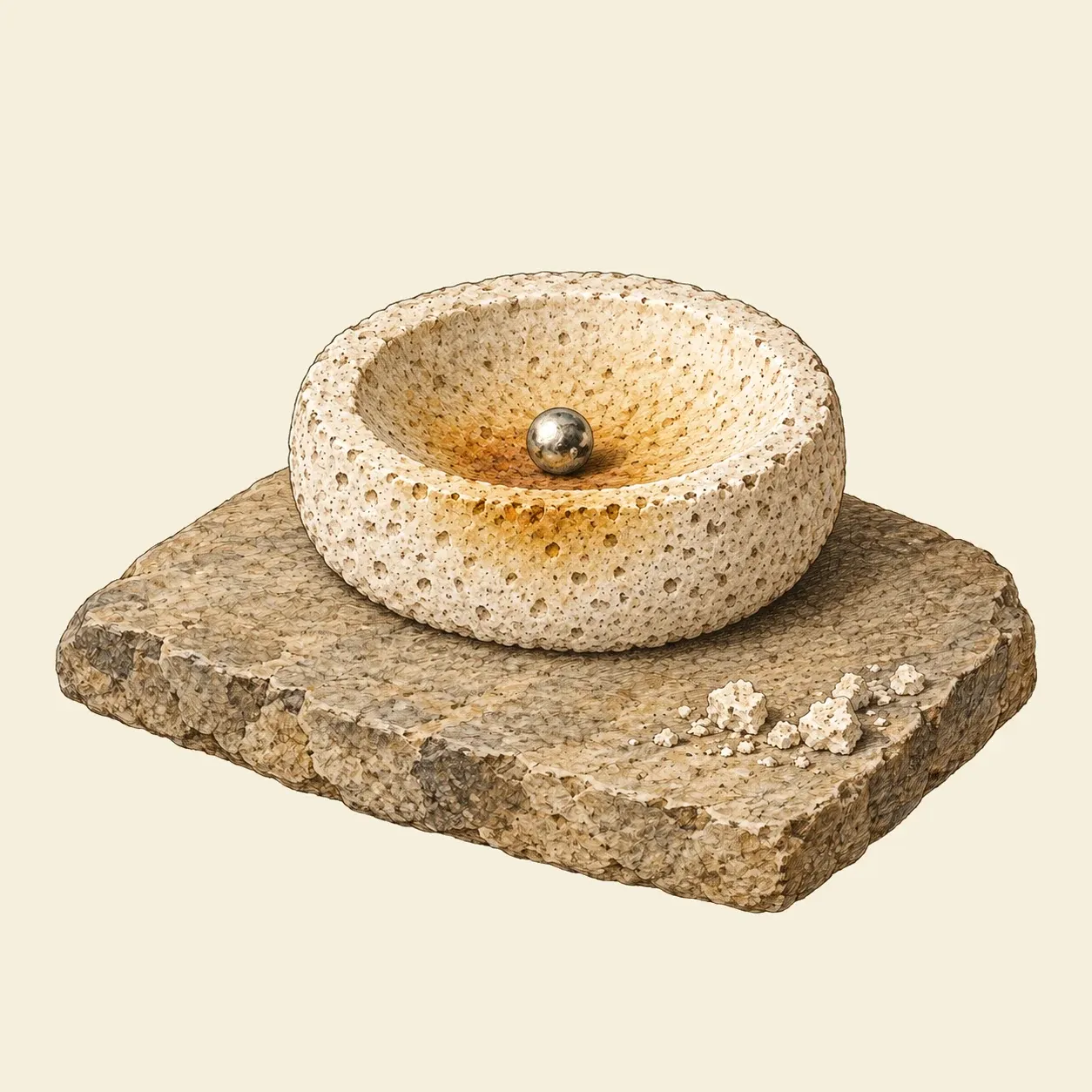 A small bone-ash assay cupel with the bead of silver left in it.
Cupellation separates the silver. Silver-bearing lead is melted in a shallow porous hearth or cup, the cupel, made of bone ash or wood ash, and air is blown over it. The lead oxidises to litharge, a lead oxide that melts and is either skimmed off or soaked up by the porous hearth. Silver and gold do not oxidise and remain as a bright button. The litharge could be smelted again to recover the lead. Small cupels, such as one 33 mm across found at Montbéliard in France, served to assay how much silver an ore contained. In fifteenth-century Devon, the silver-lead mines of Bere Ferrers brought their smelting furnace and their cupellation hearth together in a single refinery, the fining mill at Maristow.
History and evolution
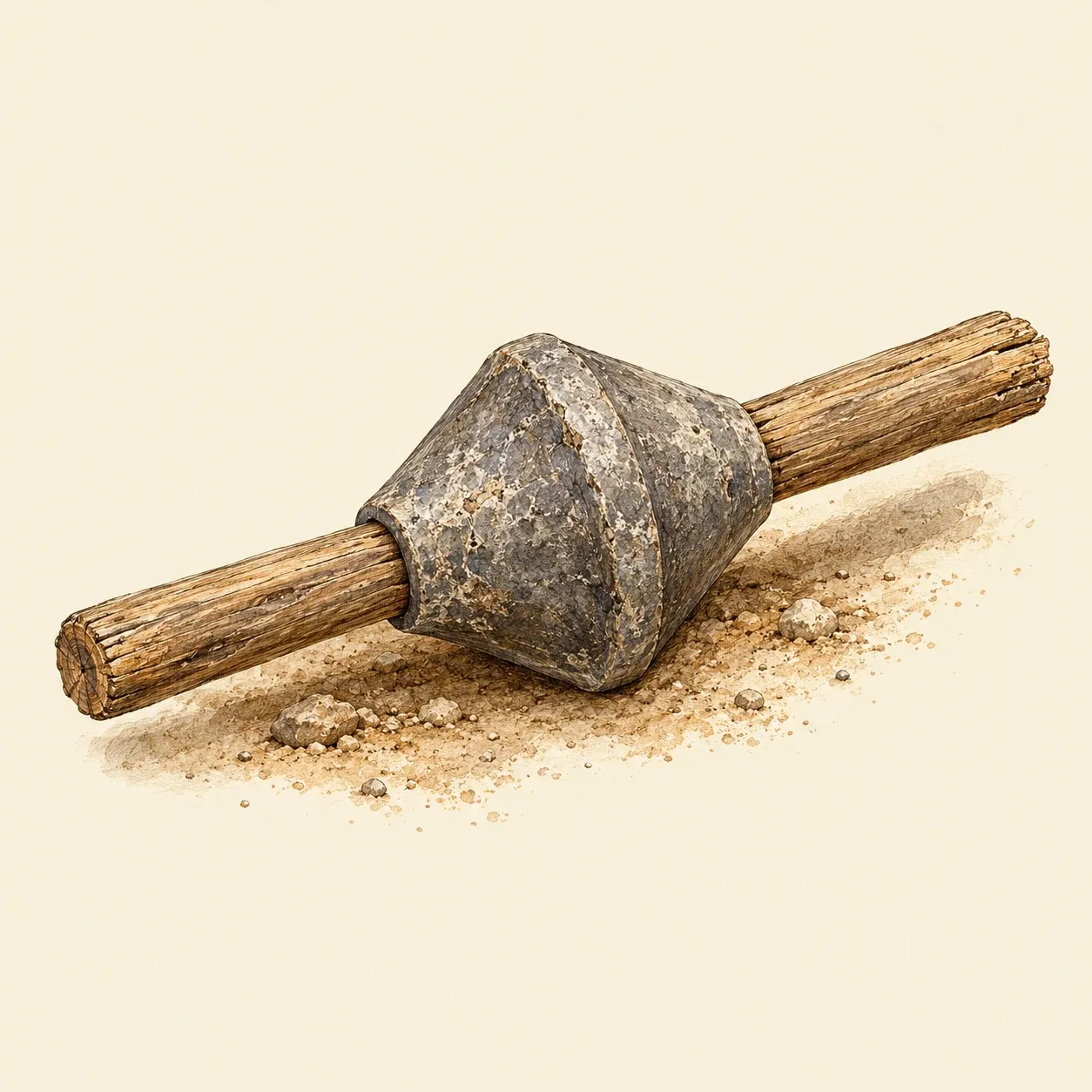 The piece from Ashalim Cave is the oldest object proved to be of smelted lead.
Beads from Çatalhöyük in Anatolia, once described as lead, turned out to be shaped from galena itself. A lead bracelet from Yarim Tepe in northern Iraq, of about 5700 BCE, is older, but whether its metal was smelted remains a guess. The oldest object proved to be of smelted lead is a small biconical piece from Ashalim Cave in the Negev, fixed on a wooden shaft that radiocarbon dates to 4300 to 4000 BCE. It is almost pure lead, and its isotopes match ores of the Taurus Mountains in Anatolia.
Silver appeared across the Near East in the fourth millennium BCE, together with the first evidence of cupellation, remains of cupellation hearths at Habuba Kabira in Syria and at Fatmalı-Kalecik in Anatolia. Around 3000 BCE lead was being made into bowls, trays and bottles, at Ur in Mesopotamia and at Demircihöyük in Anatolia.
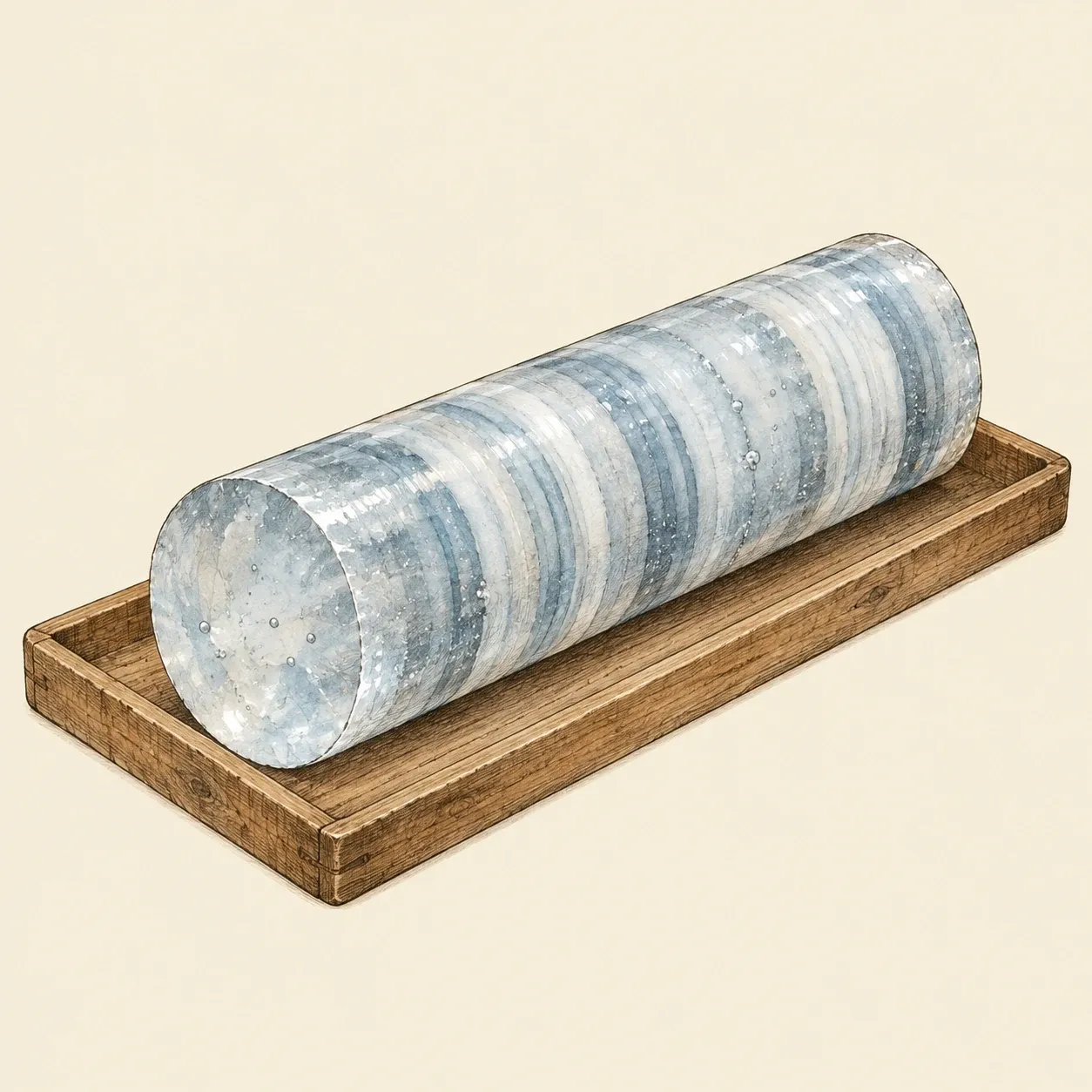 A section of ice core: each year’s snowfall forms a layer, and the dust and metals it carried stay trapped in the ice.
Lead in Greenland ice records how much was smelted in Europe. Measurements published in 2018 show emissions rising with Phoenician trade, accelerating with Carthaginian and Roman mining in Iberia, peaking under the Roman Empire and falling after the Antonine plague of the second century. Most of that lead came from smelting silver ores for coinage.
In medieval England lead was smelted in boles from about the end of the twelfth century. A bole was a low stone enclosure on an exposed ridge, where the wind kept a wood fire burning. The large bole at Totley, near Sheffield, about seven metres by three, could make up to 16 fothers of lead, about 15 tonnes, in one burning. Boles worked in campaigns when the winds were strongest; a sixteenth-century report says the workers had to wait for a south-west wind.
From the middle of the sixteenth century the ore hearth, blown by bellows and later by water-driven bellows, replaced the bole. In 1735 the London Lead Company built a cupola at Kelstedge near Ashover in Derbyshire, a reverberatory furnace fired with coal in which the ore never touched the fuel; long flues and tall chimneys were added to cool and condense the fumes. In 1850 Alexander Parkes patented a method of removing silver from lead by stirring in zinc, which took up the silver. Today more than half of the world’s lead comes from recycling, most of it from old batteries.