Bound book
Folded sheets held together by sewing
Contents
- 1Leaf
- 2Gathering fold
- 3Sewing thread
- 4Flexible cover
- 5Edges of the leaves
A book made from gatherings brings together sheets folded and sewn along their folds. This form, the codex, allows readers to turn leaves and go straight to a passage. The earliest surviving examples use papyrus or parchment; a small paper gathering is enough to understand its construction.
What it is
A codex brings together leaves attached along one side, which readers turn. Sheets folded inside one another form a gathering; several gatherings can then be joined in a binding. A cover protects the whole. Paper books retain this organisation.
A leaf has two faces, and therefore two pages. Folding a sheet in half creates two leaves and four pages. The distinction matters when preparing a book: pages that follow one another in the closed gathering are not necessarily next to one another on the unfolded sheet. Folding and the order of the sheets determine their sequence.
How it works
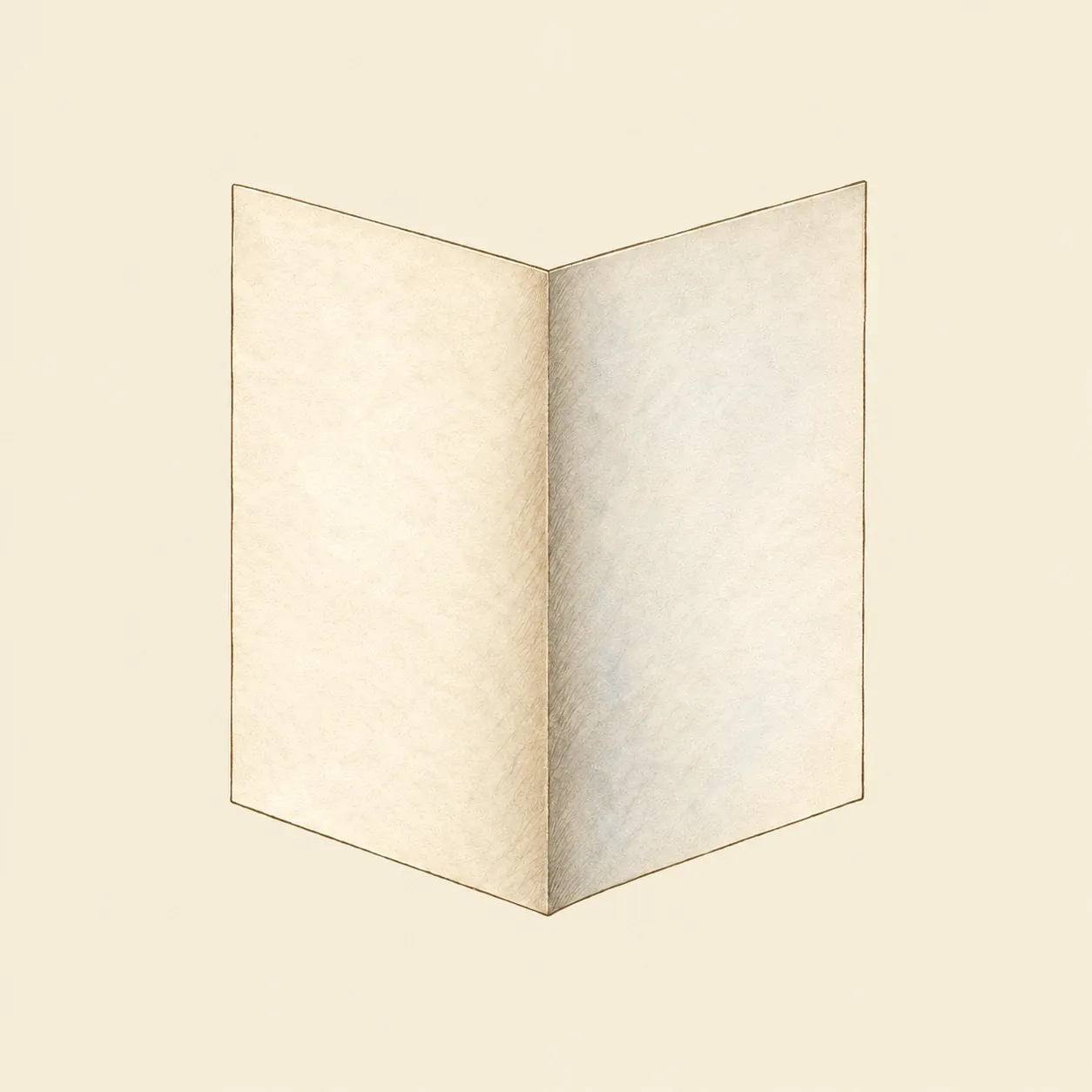 One fold creates two leaves, each with a front and a back.
In a single-gathering book, the sheets are nested before they are sewn. Thread passes through holes in their folds and holds them together. A flexible cover can be pierced by the same sewing.
With several gatherings, each group keeps its own fold. The binding holds the groups together. Early surviving codices show varied constructions; they did not all have the same number of sheets or the same type of cover.
This form lets a reader move from one page to another without unrolling a long strip. Both sides of the leaves can carry text, and a cover protects them during transport. Paper, papyrus and parchment are different writing materials; a codex is their arrangement as a book, not the material itself.
How to do it
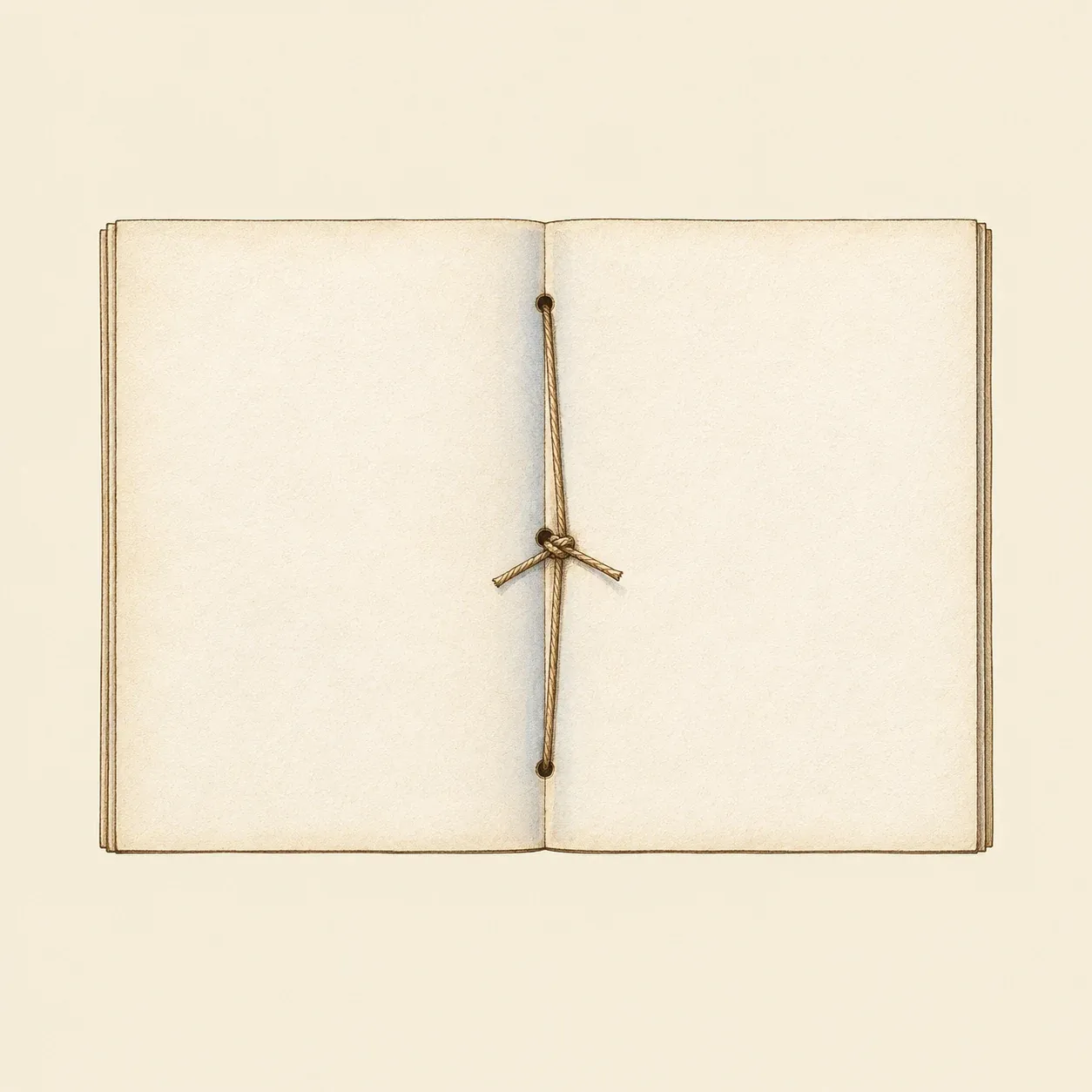 The sewing passes through three holes; at the centre, its ends secure the long inside stitch.
For a small booklet, take three sheets of paper and a slightly thicker sheet for the cover. Fold them in half, then nest the inner sheets inside the cover with their folds aligned. The gathering has twelve pages, not counting the cover. Crease the fold without crushing the paper edges.
Open the gathering and pierce three holes along the fold: one in the middle, one near the top and one near the bottom. The Library of Congress sewing guide recommends thread about three times the length of the spine. Thread a needle and begin at the middle hole, passing from inside to outside and leaving a free end inside.
Return inside through the top hole. Pass out through the bottom hole, skipping the middle one. Finally, return inside through the middle hole. Adjust the thread without tearing the paper, then tie its ends around the long stitch running along the fold. The ends must lie on opposite sides of that stitch to hold it.
Close the booklet, open it in the middle again and turn its leaves to check that the sewing keeps them together. To prepare text or images for reproduction, first number the pages of the assembled booklet, then unfold it: their positions on the sheets become clear. A book can be written by hand before any printing.
History and evolution
In the Graeco-Roman world, the codex developed alongside the scroll. The British Library holds a Latin parchment fragment known as the De Bellis Macedonicis, which it dates to the late first or early second century. Martial’s poems provide roughly contemporary evidence for parchment books.
A papyrus in Graz dated to the third century BCE has been proposed as the remains of an earlier codex. After a joint examination of the document, scholar Brent Nongbri accepted the interpretation of several folds and fastenings, but considered its membership in a book of multiple leaves still unproven. The surviving holes have received different interpretations.
Both papyrus and parchment were used to make codices. At Princeton, Codex Scheide 30.1, attributed to the fourth–fifth centuries, preserves parchment leaves and two wooden boards, but not its original leather spine. Christian communities particularly favoured the codex form, while Greek literary texts continued to circulate on rolls.
During late antiquity, codices became the majority form in the Graeco-Roman world. The book in gatherings continued its history with paper and printing. Simple single-gathering sewing is still used for booklets and notebooks, with paper, a needle and thread.