Needle and hand sewing
A polished eye carries the thread
Contents
- 1Needle point
- 2Polished bone shaft
- 3Pierced and smoothed eye
- 4Fine plant-fibre thread
- 5Two edges joined by stitches
A polished bone needle carries plant thread through two edges. Its eye saves feeding the thread separately through every hole; a seam in flexible bark demonstrates the action without requiring woven cloth.
What it is
An eyed needle is a pointed shaft with a hole for thread near one end. It opens a passage and carries a flexible strand through it. Repeated passages join edges, close a tear or attach one piece to another. The shaft needs enough strength to withstand pushing, yet must remain slender enough to pass through the material without tearing it apart.
Sewn animal skins belong to the history of clothing long before woven fabrics. Two strips of flexible bark are enough for this demonstration. Both faces remain easy to inspect, so the holes, thread path and first signs of tearing are visible. Neither weaving nor a hide-tanning process is needed to make it.
How it works
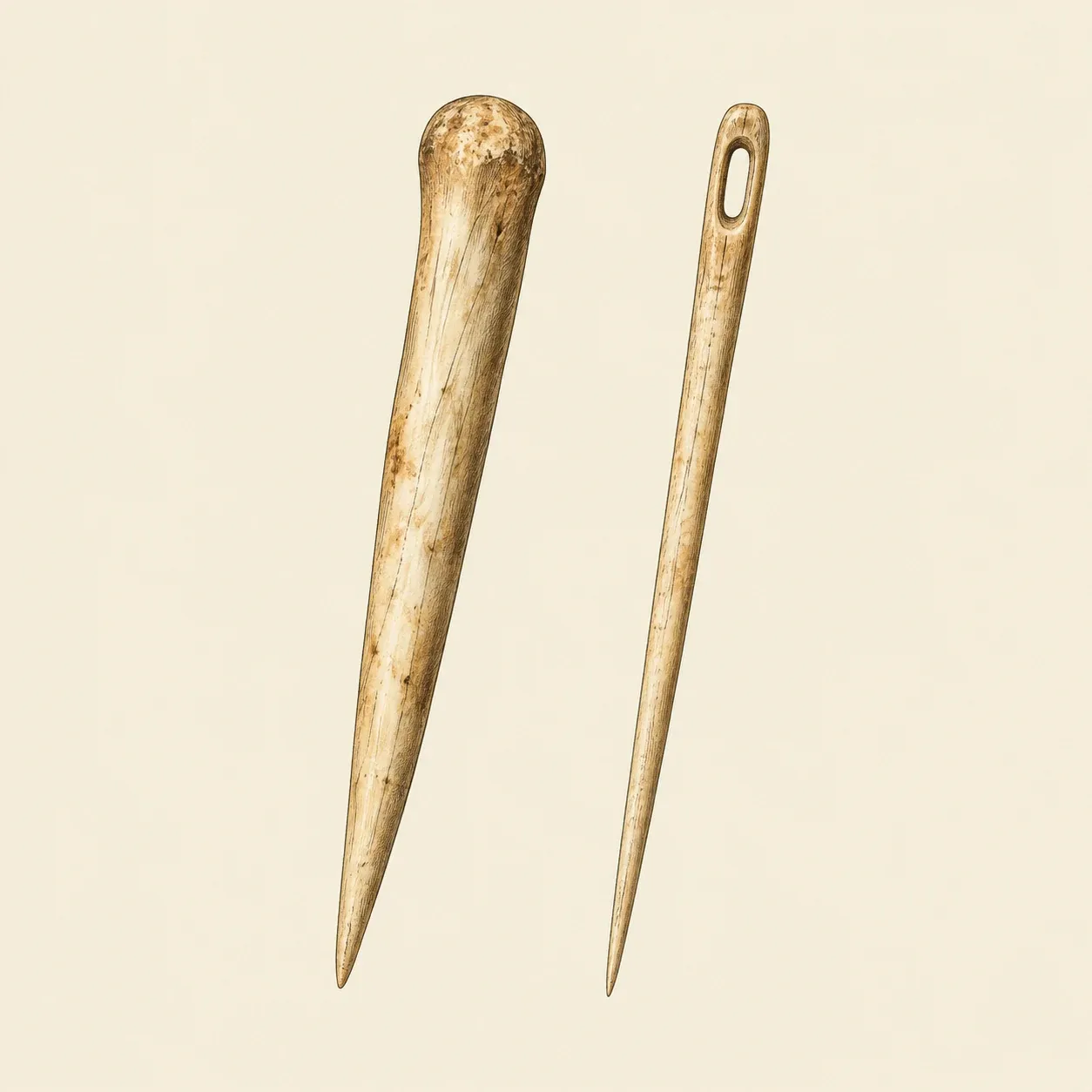 An awl prepares the hole; an eyed needle also draws the thread through.
An awl without an eye pierces or spreads the material, then must be withdrawn before the thread is fed through separately. A needle holds the thread in its eye. As the shaft passes through, the thread follows. A rough eye wears the fibres at every passage; an unfinished shaft catches on the work. A thick point demands more force and may break the bone before it penetrates. Pre-piercing with an awl remains useful for tough material even when an eyed needle is available.
For running stitch, the needle travels alternately above and below the overlapping layers. Visible thread segments have gaps between them. Tension brings the layers together, but excessive pulling puckers the work or splits an edge. Backstitch returns towards the previous hole before advancing, producing a more continuous line. An overcast stitch loops around the edges.
How to do it
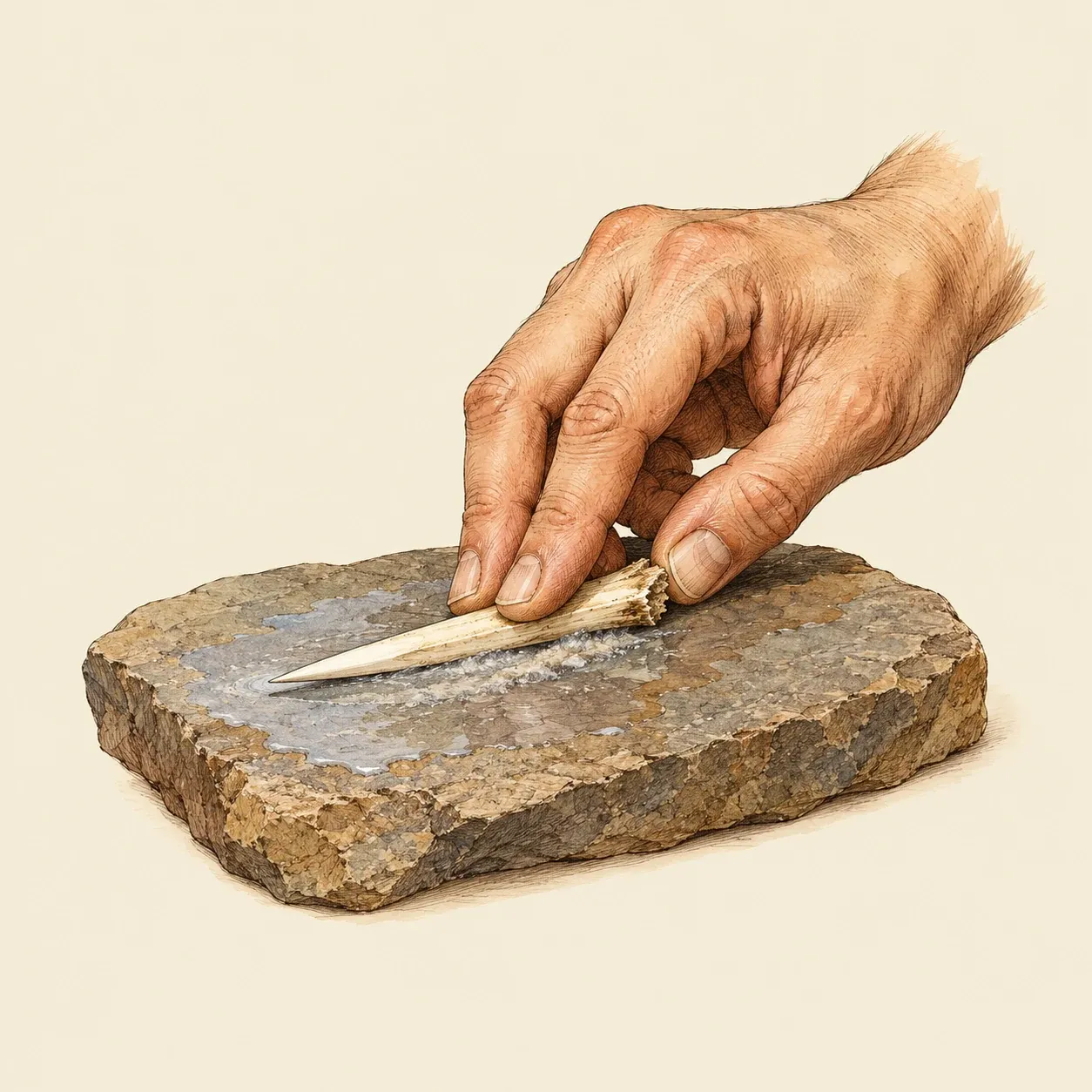 Wet abrasion on a stone rounds the shaft and tapers the point.
Choose clean, dry, sound bone without cracks; reject dirty fresh bone. Support the piece on stable wood. Rough out a small blank with stone tools, then reduce it by wet abrasion. Round the shaft and taper the point gradually. Leave sufficient material around the future eye. A very thin wall may look neat but will snap when the thread pulls against it.
Thin the eye end and work a hole from both faces with a stone point, using small rotations and little pressure. Smooth the lips by abrasion. Draw a spare piece of thread through repeatedly to check for cutting edges. Keep the bone and abrasive damp to suppress dust, wear eye protection and keep fingers clear of cutting tools. Do not blow away dried grinding sludge. Replace a cracked needle rather than trying to straighten it. This is a craft tool and must never be used to stitch a wound.
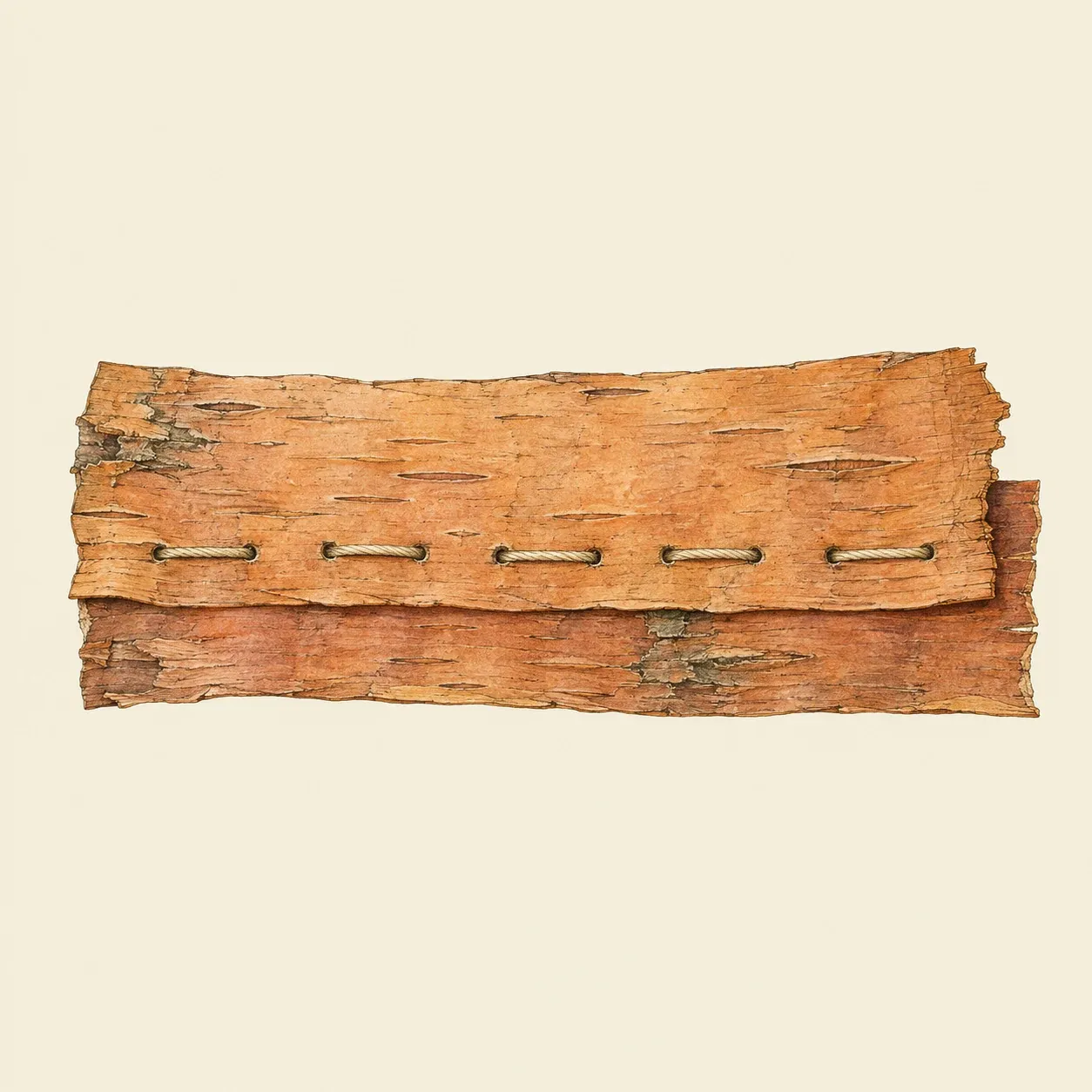 Alternating stitches join both layers without pulling the thread too tight.
Use flexible bark from fallen wood or an authorised source, without stripping a living tree. Dampen it if necessary, overlap the edges and pre-pierce holes away from the margins with the awl, working against the wooden support. Prepare fine, even plant thread using the fibre-working skills of cordage; thick rope will not fit. Thread the eye, leave a short tail and tie a small stopping knot. Work several running stitches, pulling along the holes rather than levering the needle sideways. Finish by returning through the last stitch and tying off. Gently separate the strips to check the joint. The sample is neither watertight nor suitable for carrying a load.
History and evolution
Bone awls are older than eyed needles. With an awl to pierce the holes and the thread pushed through by hand, people were already making tailored clothing. A 2024 synthesis in Science Advances places the earliest known eyed needles in Siberia about 40,000 years ago. The excavators of Denisova Cave, in the Altai, proposed an older age of about 50,000 years for an eyed needle of bird bone found in 2016, an age taken from the layer that held it.
Fine needles may have helped people make layered clothing and attach ornaments, although their precise role remains debated. Much later, a bone needle from Japan’s Final Jōmon period, about 1000–300 BCE, now in the Metropolitan Museum of Art, still shows the eyed form. Metal needles and industrial manufacture made slender, regular shafts easier to produce. Hand needles retain shapes suited to repair, embroidery and different materials; sewing machines use needles with the eye near the point.