Medical protective equipment
Gowns, masks and gloves that keep infection away from those who give care
Contents
- 1Face shield
- 2Respirator fitted to the face
- 3Long-sleeved disposable gown
- 4Gloves with their cuffs over the gown sleeves
- 5Gown ties knotted at the back
Medical protective equipment is what doctors, nurses and carers wear so that blood, body fluids and germs do not reach their skin, eyes, nose or mouth, and are not carried on to the next patient: gloves, gowns and aprons, masks, respirators and eye protection. The oldest solid evidence of a garment worn for this purpose is the costume of the plague doctors of Rome in 1656. Rubber gloves and gauze masks entered the operating room in the 1890s, and single-use equipment spread from the 1960s.
What it is
Medical protective equipment, often called PPE, is the set of barriers that health workers put between themselves and the source of an infection. It keeps blood, body fluids, droplets and germs away from their skin and from the eyes, nose and mouth. It also stops them from carrying germs on their clothes and hands from one patient to the next. The main items are single-use gloves, aprons and gowns, surgical masks, respirators and eye or face protection such as goggles, visors and face shields.
Not every item is needed every time. Staff first judge what exposure a task is likely to bring and choose the equipment for it. Gloves are worn when contact with blood, body fluids, broken skin or mucous membranes is expected. An apron or gown protects clothing, eye protection is added when splashes are likely, and a respirator is kept for germs carried in the air. Each item is put on just before the task and taken off as soon as it is over, and gloves are changed after each patient.
How it works
Each item works as a barrier with a particular job. A gown with long sleeves and a fluid-resistant surface keeps splashes off the arms and body, and gloves pulled over its cuffs cover the wrist. Goggles, a visor or a face shield stop droplets from reaching the eyes.
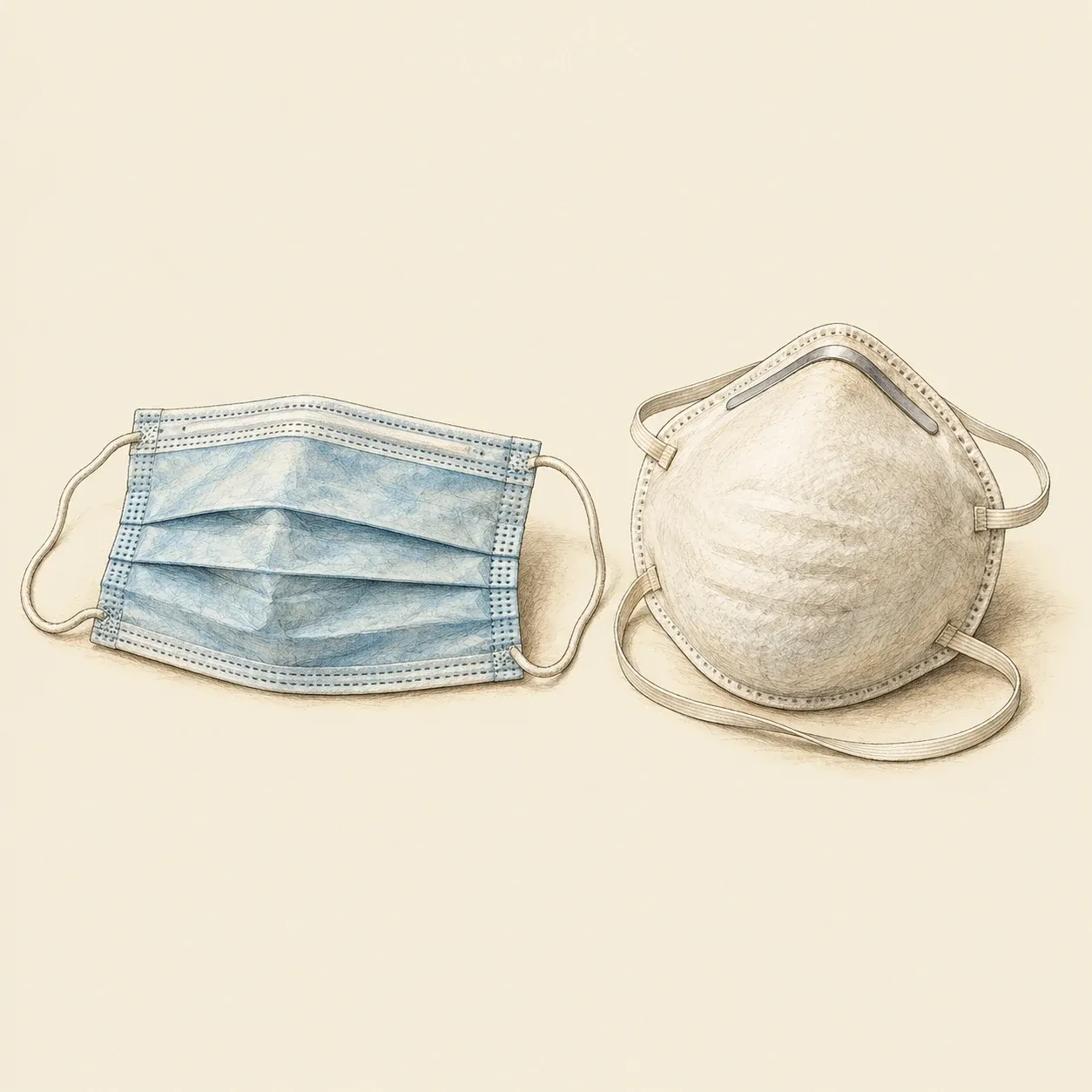 A surgical mask stops splashes, while a respirator seals on the face and filters the air breathed in.
The two kinds of face covering do different work. A fluid-resistant surgical mask catches splashes on the nose and mouth and, in surgery, stops the wearer’s own breath from reaching the patient. A respirator is shaped like a cup and fits closely on the face, so that the air breathed in has to pass through its filter. In the United States, a respirator classed N95 must stop at least 95% of the test particles in a standard filtration test.
Taking the equipment off needs as much care as putting it on. Once the outside of the gloves and gown is soiled, taking them off can put germs on the hands, face and clothes. Guidance in Scotland sets the order: gloves first, then the apron or gown, then eye protection, then the mask, followed by hand washing. A respirator is taken off outside the patient’s room. For Ebola, the World Health Organization had workers remove their equipment under the eye of a trained colleague, clean their gloved hands between steps and roll the gown off inside out.
How to do it
This exercise shows how easily contamination passes to the skin when gloves and an apron come off. It uses washable paint in place of germs and involves no patient and no real infection. It does not train anyone to care for a person with an infectious disease. Choosing, wearing and removing real protective equipment is taught and checked by infection prevention teams and trained health professionals.
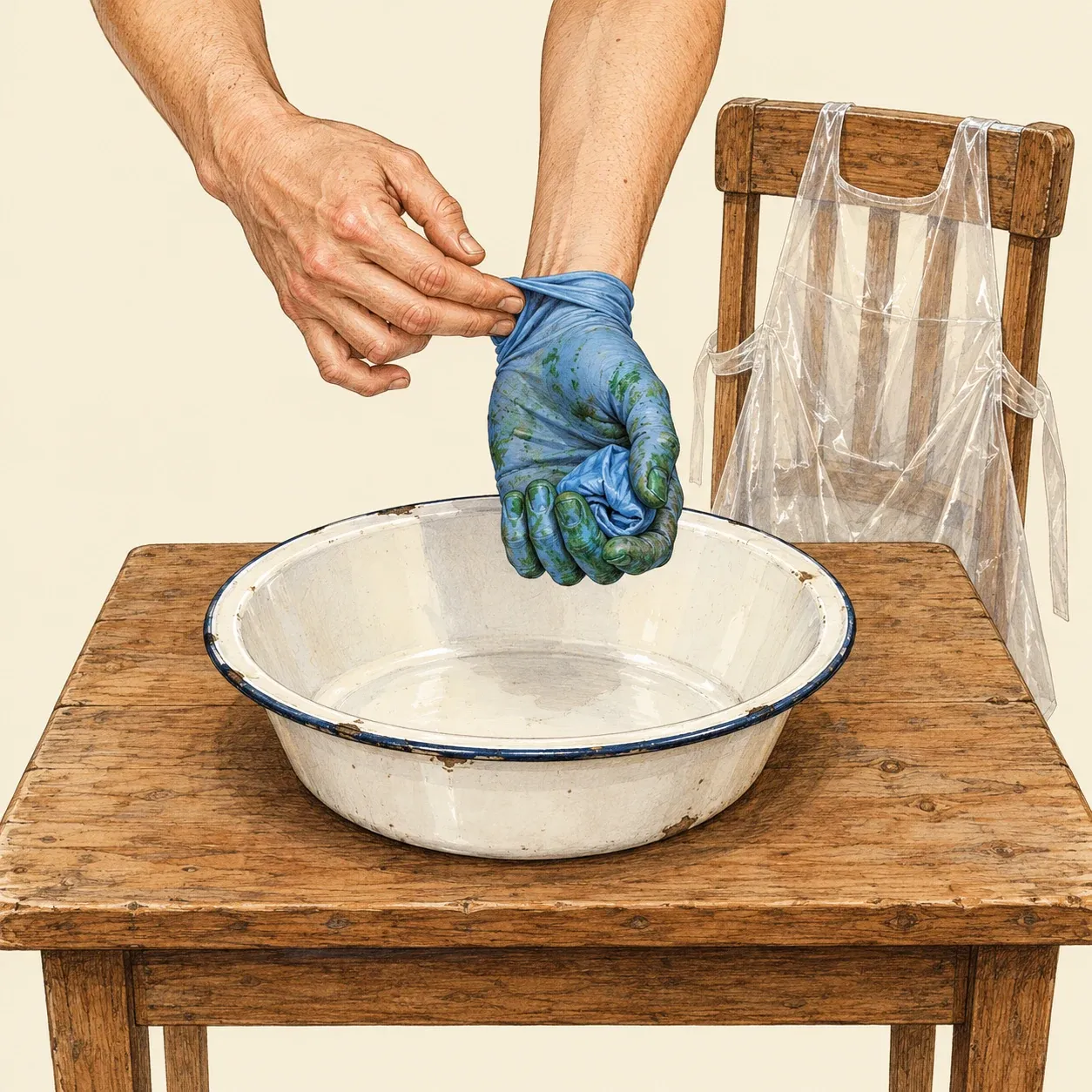 Slide the bare fingers under the cuff and touch only the inside of the second glove.
You need a pair of disposable nitrile gloves, a disposable plastic apron, a teaspoon of washable children’s paint and a basin. Put on the apron and then the gloves. Have a helper put the paint on your gloved palms, then rub your hands together as if washing them, so that the paint covers the backs of the gloves and the fingertips. Touch the front of the apron once with each hand.
Now take everything off without letting the paint touch your skin. With one gloved hand, pinch the outside of the other glove at the wrist and peel it off, turning it inside out, and hold it in the gloved hand. Slide two bare fingers under the cuff of the remaining glove, touching only its inside, and peel it off over the first so that one glove ends up inside the other. Then pull the front of the apron forward to break the neck strap and let the bib fall. Hold the apron by its edges, pull to break the waist ties, and roll it up with the soiled front inside, touching only the inside, before dropping it in a bin. Look for green marks on your hands, wrists and sleeves. Wash your hands, then repeat the exercise more slowly, or with a helper watching and reading out each step, and compare the results.
History and evolution
Doctors had no working clothes of their own before the late nineteenth century and dressed according to their rank. During epidemics, though, they were advised to wear long sleeves closed at the wrist and smooth cloth, such as pressed linen sealed with oil or wax, to which the poisons of disease were thought less likely to stick. To clean the air they breathed, they held a sponge soaked in aromatic vinegar or a bag of herbs to the nose.
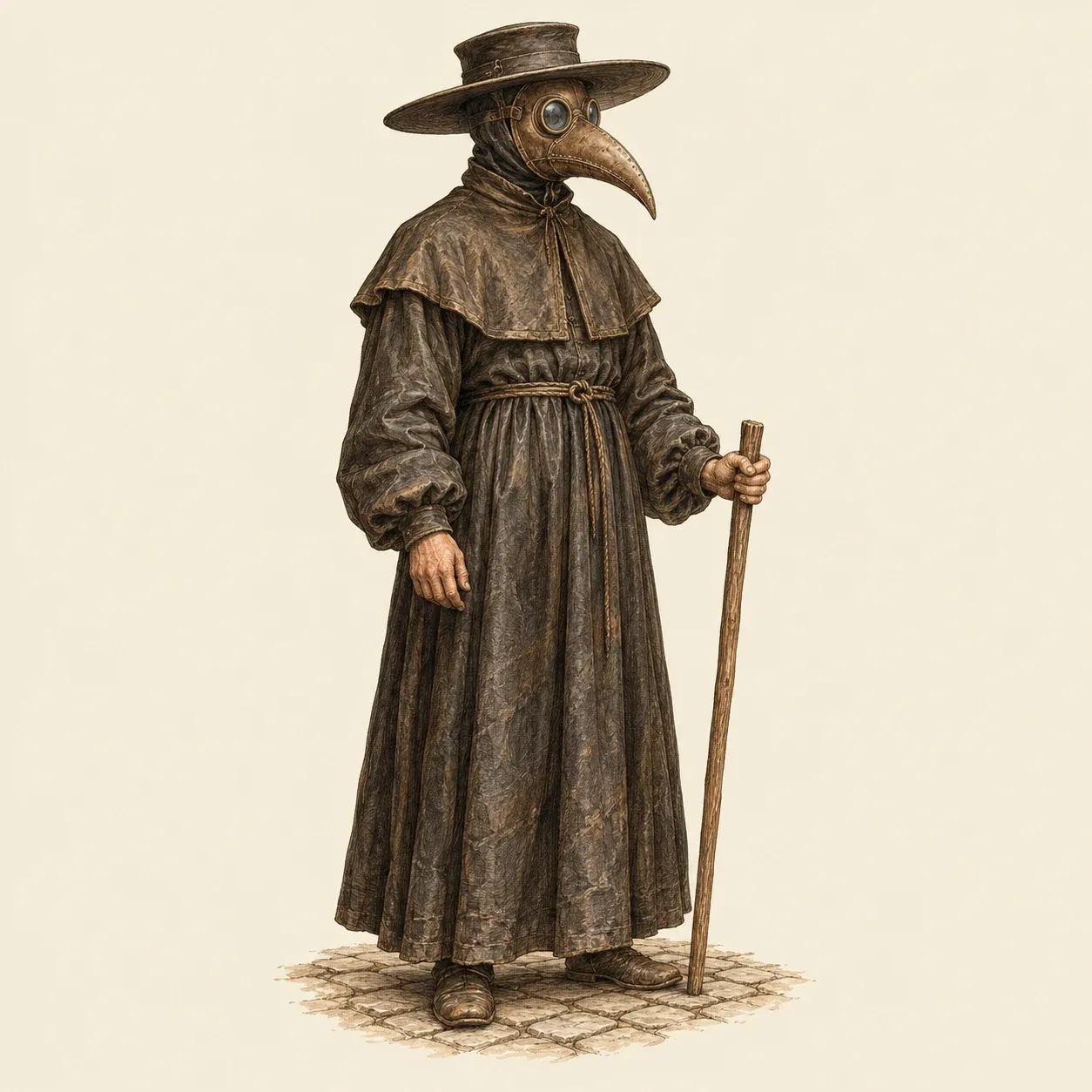 The beak of the Roman plague doctors held fragrant substances meant to purify the air.
The oldest solid evidence of a complete protective costume comes from the plague of Rome in 1656. That year a print of the “Doctor Schnabel von Rom”, probably copied from a Roman sheet, was published in Nuremberg, and a few years later the Danish physician Thomas Bartholin described the Roman plague doctors from a picture sent to him: a gown of pressed linen, a stick in the left hand and a beaked mask filled with fragrant substances. The beak freed the doctor’s hands, since he no longer had to hold the scented sponge to his nose. Historians have attributed the idea to Charles Delorme, physician to Louis XIII. In 1721, during the plague of Marseille, the Geneva physician Jean-Jacques Manget showed a version in Morocco leather with crystal eyepieces and gloves. There is no evidence that beaked masks were ever used in central Europe.
Protection changed once germs were understood. In the winter of 1889 to 1890 at the Johns Hopkins Hospital in Baltimore, the surgeon William Halsted had the Goodyear Rubber Company make thin rubber gloves for his chief operating room nurse, Caroline Hampton, whose hands were inflamed by disinfectants. His assistants then began wearing them during operations, and over the following decades gloves became standard in surgery. In 1897 Johann Mikulicz in Breslau began to wear a gauze mask tied to his cap after the bacteriologist Carl Flügge showed that droplets from the mouth carried bacteria, and Paul Berger did the same in Paris. During the Manchurian plague of 1910 to 1911 and the influenza pandemic of 1918 to 1919, masks came to protect the wearer as well as the patient. Single-use latex gloves came in the 1960s, and the spread of HIV and hepatitis made equipment a protection for staff as well as patients, with nitrile gloves for those allergic to latex.