Pitfall traps
A pit the animal cannot climb out of
Contents
- 1Row of pits across the animals' path
- 2Fence guiding animals towards the pits
- 3Open mouth of a pit
- 4Steep walls of the original pit, in section
- 5Later infill, leaving the shallow hollow seen today
A pitfall trap is a hole that an animal falls into and cannot climb out of. Hunters dug pits on the paths animals used, often in long rows joined by fences, and hid the openings. The oldest known trap pits, on the island of Tanegashima in southern Japan, were dug between about 38,000 and 34,000 years ago.
What it is
A pitfall trap is a hole in the ground placed where animals walk. An animal that steps into it drops to the bottom and cannot get out again, and the hunter comes later to take it. The idea is among the oldest in hunting. Unlike a deadfall, it needs no moving part: only digging, a good choice of place and, often, a way to hide the opening.
Pits were made for prey of many sizes. Hunters in Palaeolithic Japan dug them probably for deer and wild boar, and in northern Europe whole lines of pits waited for elk and reindeer on their seasonal routes, with fences between them. Smaller pits took ground birds, and today ecologists sink small cups into the soil to count the beetles and spiders that fall in.
How it works
A pitfall has two jobs: to bring the animal to the edge, and to keep it once it has fallen. The first depends on place. Pits lay on the regular paths of the prey and at narrow points in the ground, and fences between them led the animals towards an opening. Many were hidden under a light cover that gave way beneath an animal.
The second job depends on the shape of the pit: its walls are steep and too high for the animal to leap or climb. Many pits held the animal alive until the hunter came, and the Palaeolithic pits of Japan are thought to have been dug to take animals alive. Others, in Scandinavia, were made to kill.
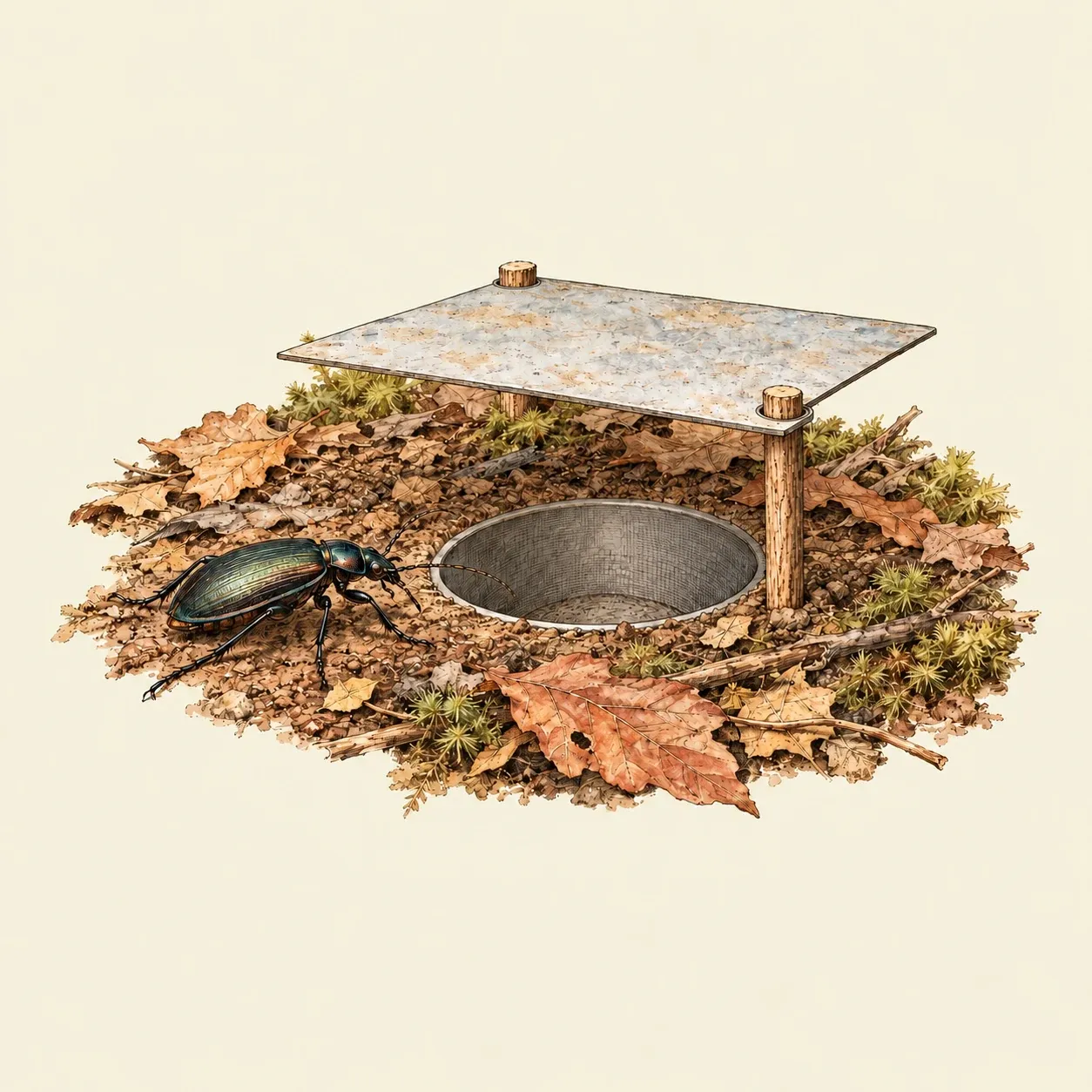 A pitfall at insect scale: a cup set flush with the ground catches what walks across it.
Small pits work the same way. The Brockhaus and Efron encyclopedia, published in Russia around 1900, described small Siberian pits for hazel grouse, from which, it says, the bird could not fly out. Entomologists began using pitfall-type traps in the 1890s, and today a plastic cup sunk flush with the soil is one of the standard ways to sample insects and spiders that live on the ground; such traps also catch small mammals.
An open pit is a danger to people and livestock as well as to game, and it stays one long after the hunters have gone. When Norway banned hunting elk and deer in pits in 1863, the law also ordered the pits to be filled in.
History and evolution
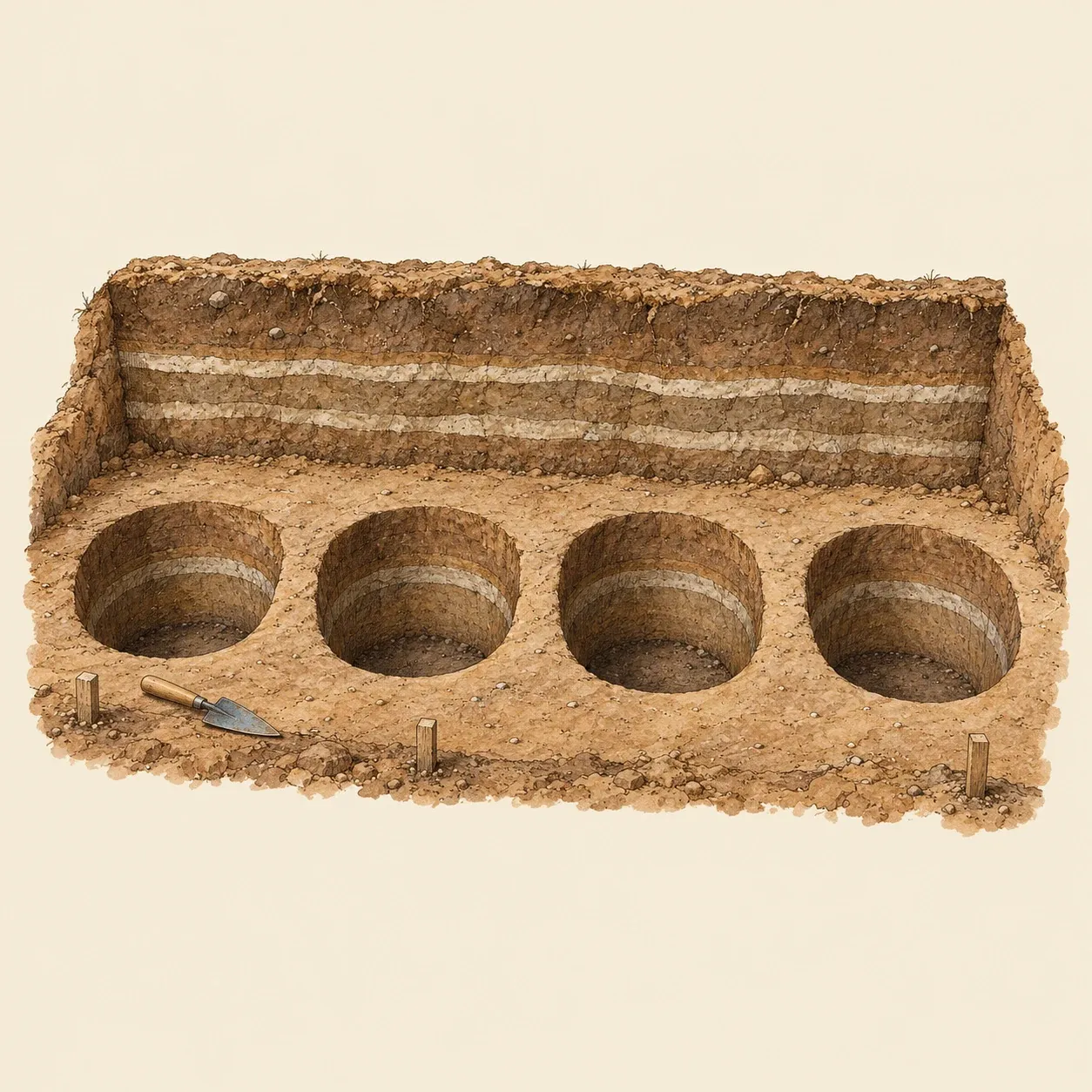 Palaeolithic trap pits in Japan were dug through layers of volcanic ash, which help to date them.
The oldest known trap pits are in Japan. Excavations at Hatsunegahara, near Mount Hakone, in the late 1980s revealed rows of Palaeolithic pits, and many more have been found since. The archaeologist Hiroyuki Sato, comparing them with later Jōmon pits and with the traps of recent hunter-gatherers, interpreted them as traps; another researcher, Imamura, read the long lines of pits as part of drive hunting. The oldest, at Otsubobata on the island of Tanegashima, date to between about 38,000 and 34,000 years ago. More than 200 pits from the foothills of Mount Ashitaka and Mount Hakone are round, with bucket-shaped sections, set either in clusters on slopes or in long lines across terraces. Several hundred have now been recorded, most of them in central Honshu and southern Kyushu.
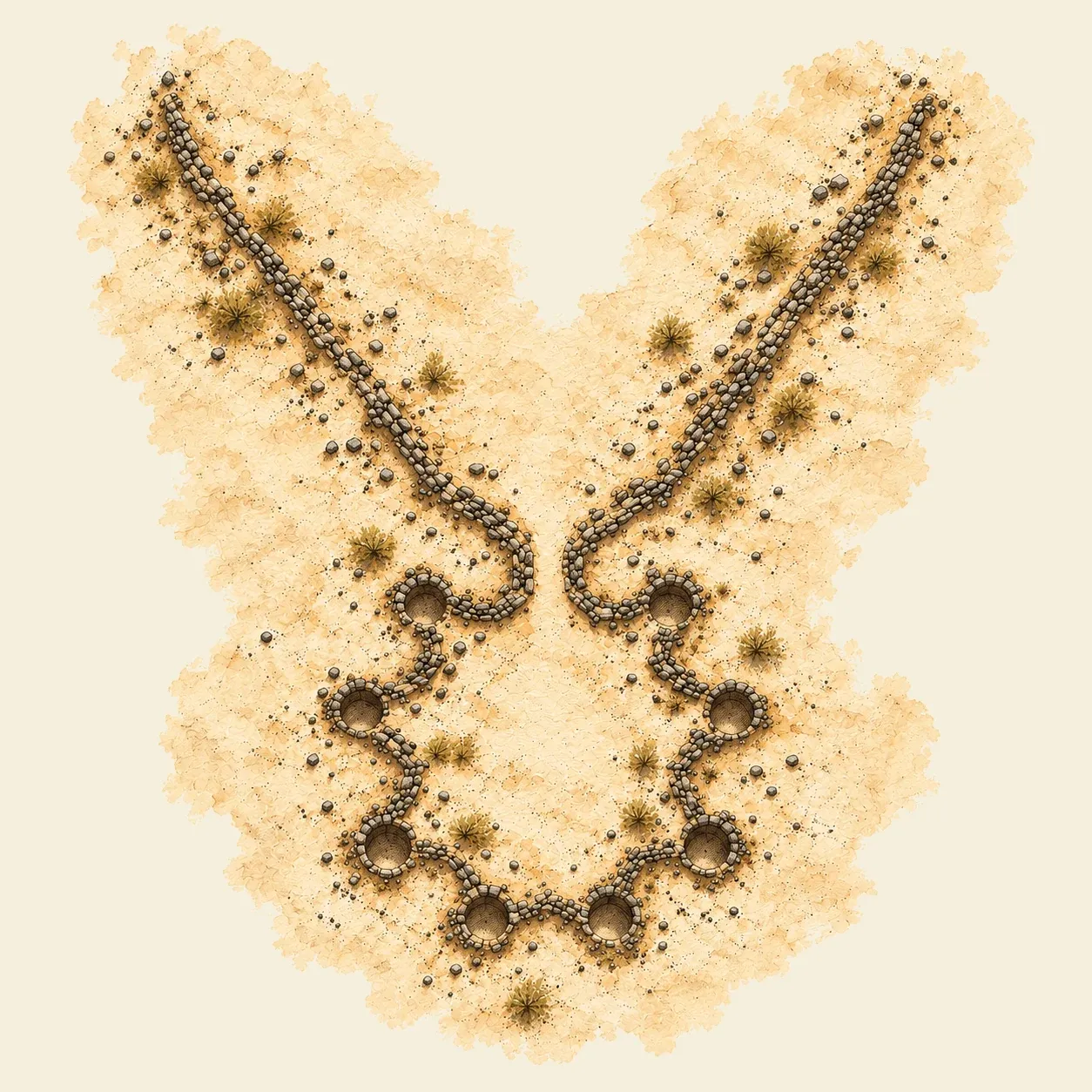 In a kite, long low walls converge on an enclosure ringed with pits.
In the deserts of the Middle East, people built “kites”: long low walls converging on an enclosure ringed with pits, into which wild animals were driven. The oldest kites are at least 9,000 years old, and stones found near some of them carry engraved plans of the kites with their pits. In the fourth century BCE the Greek writer Xenophon described pits used to take lions, leopards, lynxes and bears in foreign mountain lands such as those beyond Macedonia.
In Scandinavia, pits for elk and reindeer were dug over thousands of years. In Norway some elk pits date to as early as 3700 BCE, and most dated pits in Finland are 5,000 to 2,000 years old. Airborne laser scanning has revealed more than 1,600 along a single river valley in Finnish Lapland. A study of 370 radiocarbon dates from pits in Sweden and Norway found the busiest period of pit building in the centuries before the Viking Age, while in Värmland most of the surviving pits are thought to date from the late Middle Ages and the seventeenth century. Pit hunting ended by law: Norway banned it in 1863; for Sweden, Hennius gives 1864 and the Värmland county board 1865.