Cloth adhesive tape
From rubber plaster to duct tape
Contents
- 1Roll on a cardboard core
- 2Plastic top film
- 3Woven cloth carrier
- 4Rubber adhesive
- 5End torn by hand
Cloth adhesive tape is a strip of woven cloth coated on one face with a sticky layer of rubber, so that it holds under light pressure without water or heat. A patent of 1845 by William Shecut and Horace Day already spread a rubber mass on cotton to make medical plasters. Duct tape, its best known form, began as a waterproof cloth tape for the US Army during the Second World War and took its name from heating ducts after the war.
What it is
Cloth adhesive tape is a narrow band of fabric with one sticky face. The adhesive is of the pressure-sensitive kind: it stays soft and tacky, so pressing the tape onto a surface is enough to make it hold, with no water, heat or drying time. The cloth gives the band its strength, and the tape can be unrolled, cut or torn, and stuck down in one movement.
Duct tape, the common grey or silver tape, has three layers. On top is a thin film of polyethylene, a plastic that keeps out water and gives a smooth back. Under it lies a cloth carrier, an open weave of cotton or synthetic threads that gives the tape its strength along and across and lets it be torn by hand. Under the cloth is the adhesive, a compound based on natural or synthetic rubber. The film and the cloth are bonded so that they do not part in use, and the whole band is wound on a cardboard core.
How it works
A pressure-sensitive adhesive behaves like a very thick liquid that never sets. Under the light pressure of a finger it flows into the small hollows of a surface and comes into close contact with it, and the attraction between the adhesive and the surface holds the tape. Pressing harder or rubbing the tape down increases the area in contact and the grip. Dust, grease or water between the two reduce it.
Peeling the tape means stretching the soft layer at the line where it leaves the surface until it lets go, which takes effort along the whole width. The same tape is far harder to slide along the surface than to peel, because then the whole stuck area resists at once. The cloth spreads the pull over the full width and stops the plastic film from stretching and tearing.
How to do it
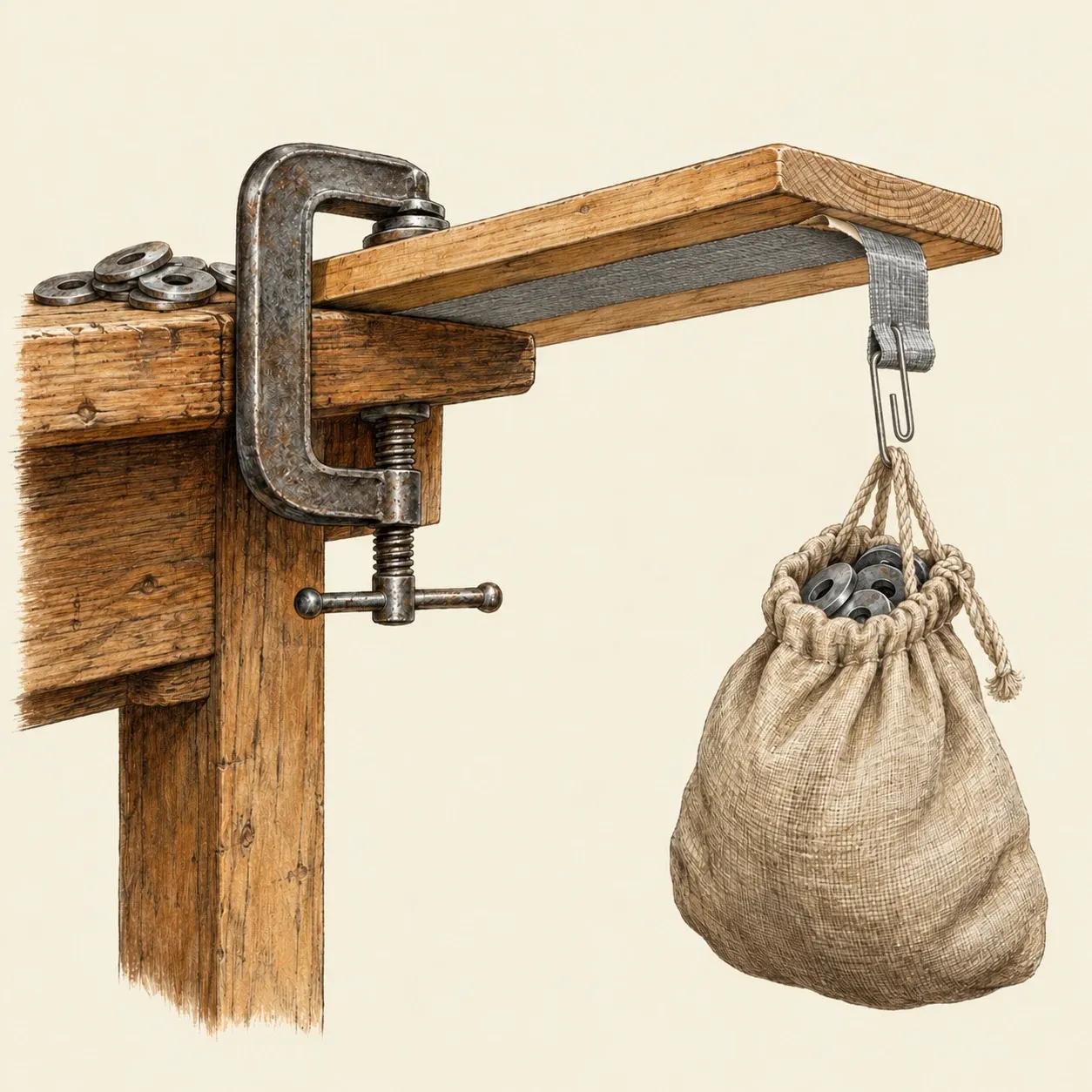 A strip of tape stuck under a board and loaded at its free end peels away when the weight is large enough.
This peel test compares how strongly different tapes hold. You need a roll of duct tape and two or three other tapes, such as masking tape, clear plastic tape and cloth sports tape, a smooth wooden board about 30 cm long, a clamp, scissors, a ruler, large paper clips, a small cloth bag and a supply of identical steel washers, a kitchen scale and a pencil.
Cut a strip of each tape 25 cm long and trim them all to the same width with the scissors, for example 2 cm. Stick 15 cm of the first strip along the board, starting at one end, and rub it down firmly with your thumb. Fold the last 10 cm of the strip back on itself, sticky faces together, to make a tab, and push a paper clip through the end of the tab.
Clamp the board flat to the edge of the table with the tape underneath, so that the tab hangs down just past the edge. Hook the bag to the clip and add washers one at a time, waiting a few seconds after each, until the tape starts to peel steadily from the board. Weigh the bag and washers on the kitchen scale and write the result down. Repeat with each tape, then with a strip of duct tape that was only laid on lightly and with one stuck to a dusty patch of the board. Each pair of results shows one cause of a good or poor grip: the tape itself, the pressure that set it, the cleanliness of the surface.
Safety. Keep the load small and put a box under the bag so that it does not drop onto feet when the tape lets go. Take care with the scissors. Tape can pull off paint and varnish, so use a bare or old board. Never use duct tape to repair electrical cables, gas pipes or anything that must carry a load safely.
History and evolution
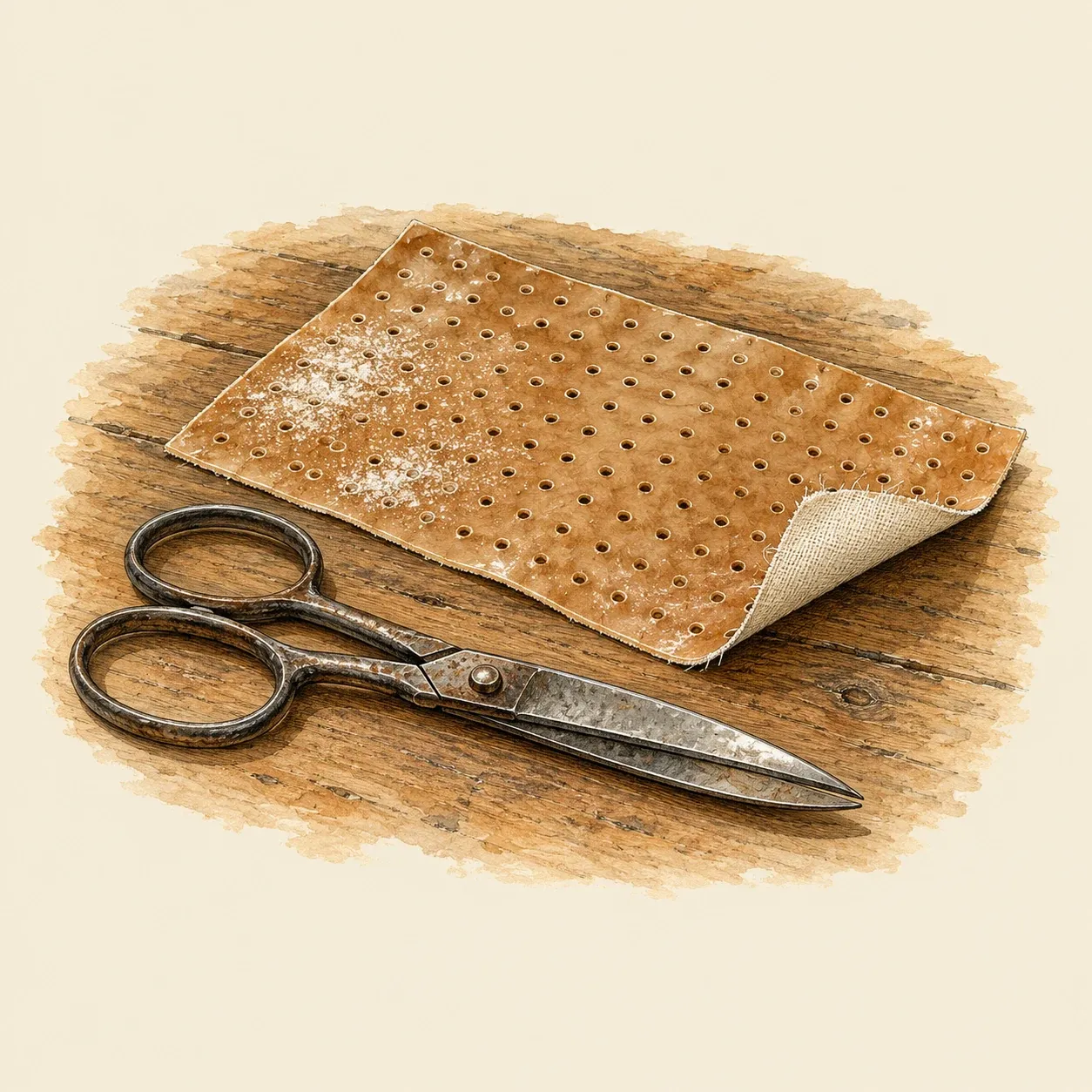 An adhesive plaster of the 1840s: cotton cloth spread with a rubber mass and pierced with small holes.
In 1845 William Shecut and Horace Day of New York patented an improved adhesive plaster. They softened india rubber in boiling water, dissolved it in spirits of turpentine and mixed it with melted pine gum and medicinal ingredients. The mass was spread on cotton cambric or muslin with the machinery used to make rubber cloth and left to dry for several days. It stayed tacky, so the sheets were dusted with powdered soapstone to keep them from sticking to each other, and then pierced with small holes. In her history of adhesive tape, Tisha Hooks cites it as an early patent joining cotton cloth and india rubber. After the American Civil War, Seabury & Johnson and then Johnson & Johnson built a trade in medicinal plasters, and in the early 20th century rolls of adhesive plaster were also advertised for household repairs.
In 1943 Vesta Stoudt, who packed cartridges for rifle grenades at the Green River Ordnance Plant in Illinois and had two sons in the Navy, wrote to President Franklin Roosevelt. The boxes were sealed with thin paper tape and a tab for opening them, then dipped in wax, and the tabs often tore off, leaving soldiers struggling to open the boxes. She proposed a strong, waterproof tape made of cloth. The War Production Board wrote back that the change had been approved. Johnson & Johnson says that its tape company, then the Industrial Tape Corporation and later Permacel, made the new tape. Her son, interviewed by a local newspaper in Illinois, said he did not know of that link.
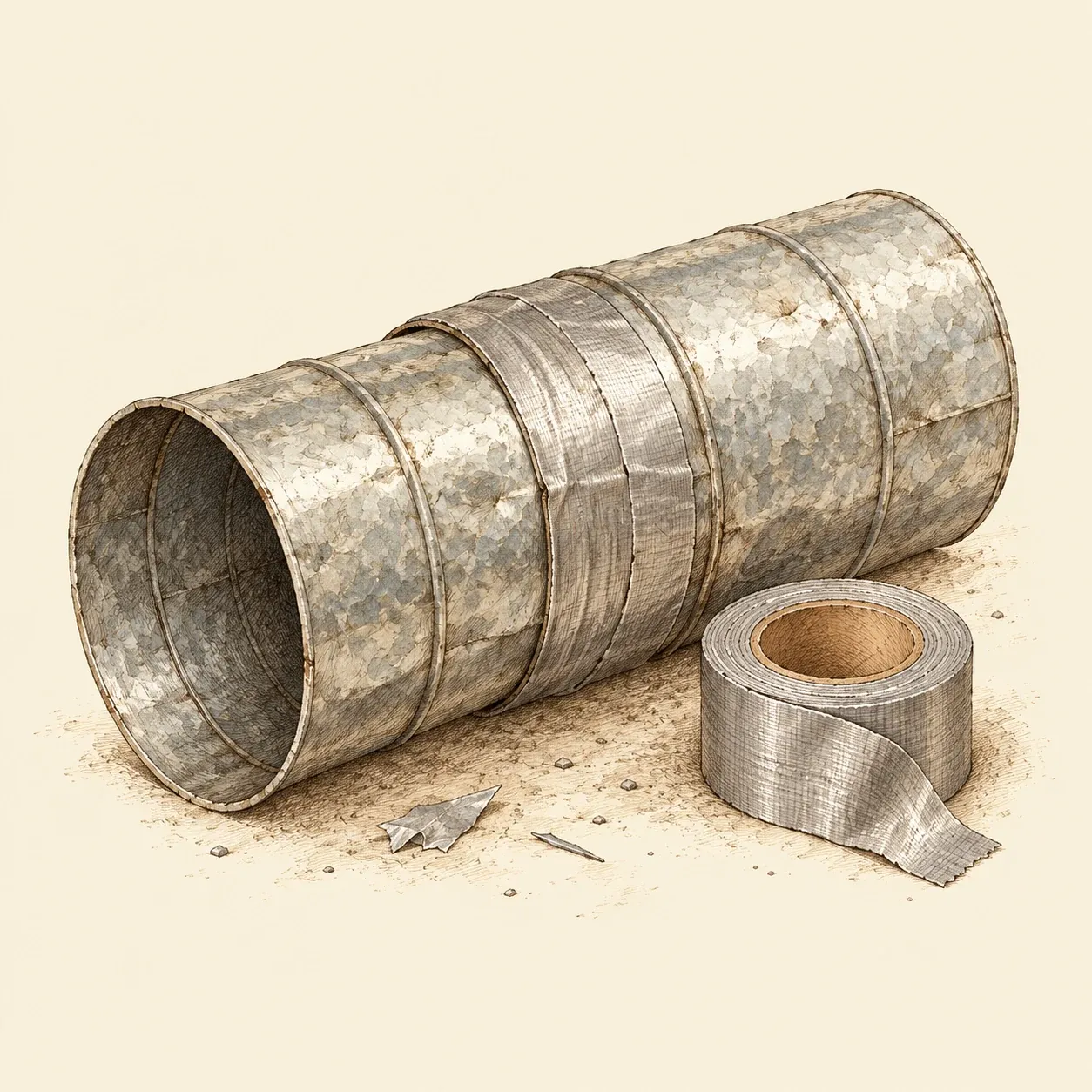 After the war the tape was sold in silver for joining the metal ducts of heating and ventilation.
After the war the tape went on sale for joining the ducts of heating and ventilation systems, in a silver colour that matched the sheet metal, and became duct tape. Johnson & Johnson’s company history, as quoted by the language columnist Jan Freeman, says the wartime tape was called duck tape, after the cotton duck cloth or its resistance to water. Freeman found that earlier duck tape was plain cotton tape with no adhesive, and found no adhesive duck tape in print before duct tape.
Heat softens a rubber adhesive. In tests at the Lawrence Berkeley National Laboratory, cloth-backed tapes with rubber adhesive were the only duct sealants that failed when hot and cold air was passed through sealed duct joints, and the researchers thought that heat was degrading the glue. Tapes with other backings and adhesives are made for that job.