Glues and bonding
Joining materials through adhesion
Contents
- 1Flint found at the Zandmotor
- 2Mass of birch-bark tar
- 3Visible boundary between flint and tar
- 4Uneven outer surface of the tar
Glues hold surfaces together through adhesion. Plant resins and animal glues provide different ways to join materials and make useful objects.
What it is
An adhesive holds materials together by attaching to their surfaces and resisting separation. A glued joint depends on the materials being joined, the adhesive itself and the region where they meet. It can secure one material to another without driving a fastener through either piece.
Animal glues made from collagen and plant adhesives belong to different families. Hides and bones supply material for the former; the latter include conifer resins and tar made from birch bark. Resin that seeps from a tree and tar produced by processing bark have different material origins. Their shared use as adhesives does not imply a shared composition.
A small flint tool found at the Zandmotor in the Netherlands retains a lump of birch-bark tar about 50,000 years old. Researchers interpret the tar as a grip for holding the flint. Erosion has left too little evidence to establish exactly what the tool was used for.
How it works
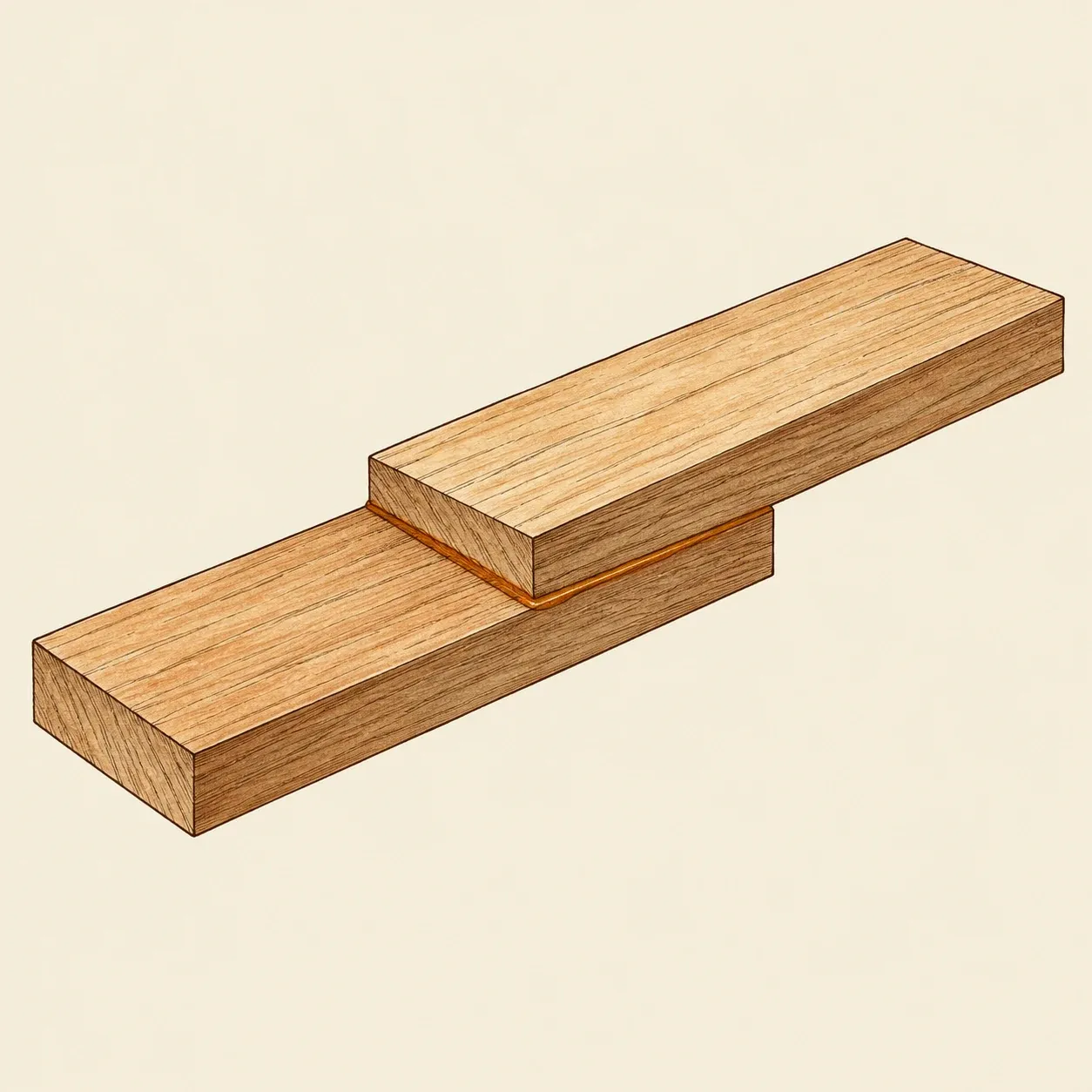 A thin layer of glue bonds the two surfaces.
An adhesive must wet the surfaces it is to join: it needs to spread and make close contact with them. Interactions between molecules in the adhesive and the underlying material then contribute to adhesion. Depending on the materials, penetration into pores or around surface irregularities can also help it take hold. No single mechanism explains every adhesive bond.
The shape of the joint matters because forces pass from one piece to the other through the bonded area. Strength depends on the adhesive, the materials and the condition of their surfaces. Suitable tests measure resistance to tension, shear or peeling. A glue made for one task will not necessarily have the properties another task requires.
In animal glues, processed collagen contributes to adhesion. Preparation methods affect the resulting product’s composition and properties. Chemical analyses of prehistoric residues from Fossellone and Sant’Agostino in Italy identified resin belonging to the pine family, Pinaceae. This identifies a botanical family, not a particular species of pine. One Fossellone sample contained both resin and beeswax; that combination was not established for every object from the two sites.
How to do it
Traditional animal-glue production processes collagen-rich materials such as hides and bones. Resin adhesives and birch-bark tar use different plant materials and different production methods. These practices require professional control of the materials and working conditions. For a demonstration, use a ready-made commercial glue without processing animal tissue or heating bark.
Take two small, already cut wood offcuts for an unloaded model. Choose a ready-to-use liquid animal glue explicitly intended for wood and usable without heating. Titebond Genuine Hide Glue is one such product; its product information says that it needs neither mixing nor heating. Read the label and safety data sheet for the actual product purchased before starting.
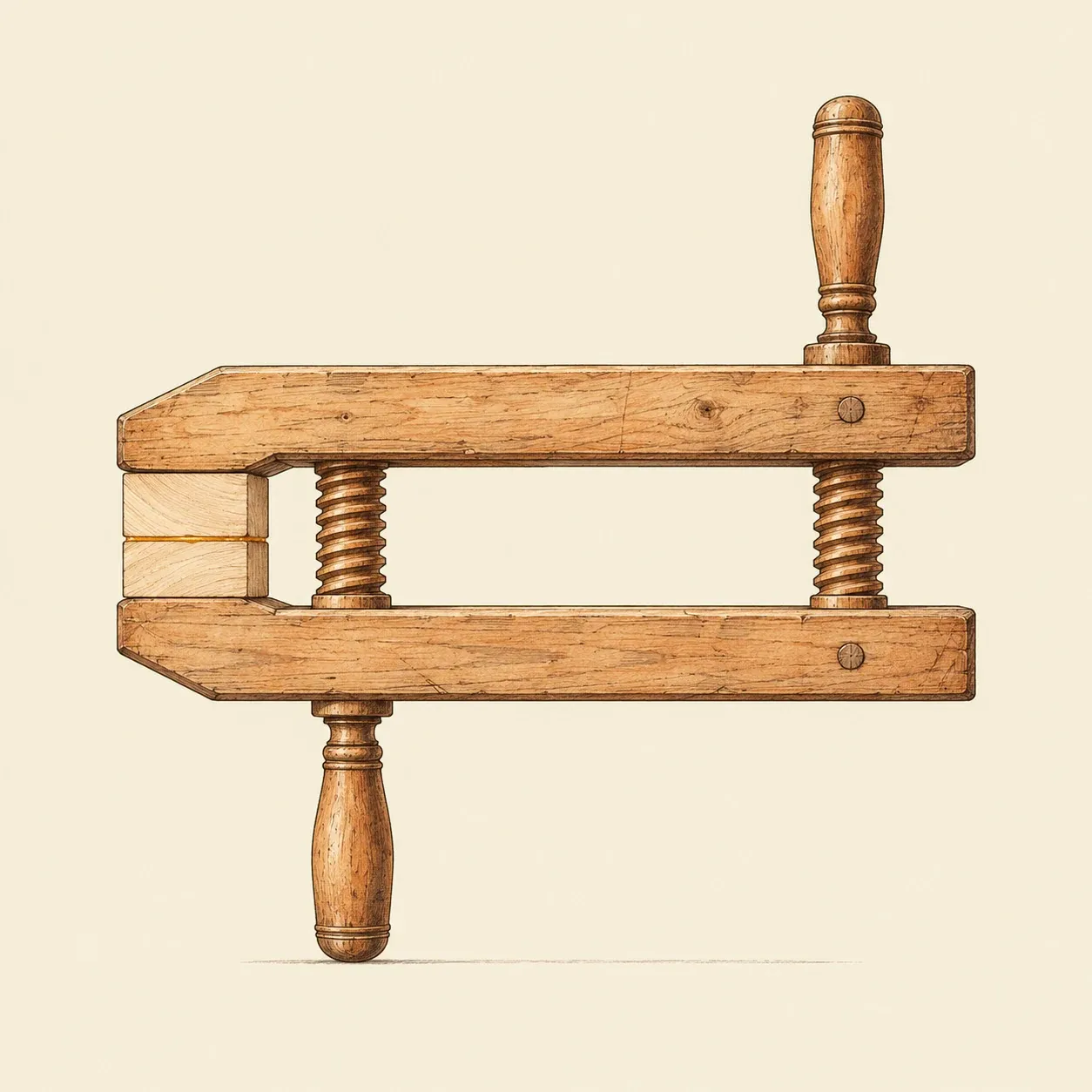 Enough pressure to keep the glued faces in close contact, without crushing the wood.
Apply the glue, bring the surfaces together and hold them as the manufacturer directs. Allow the specified drying time before handling. The manufacturer calls for enough pressure to bring the joint surfaces into close contact, rather than pressure that crushes the pieces.
Safety: this glue irritates eyes and the manufacturer does not intend it for children. An adult should handle it, avoid eye contact and use the protection specified on the label. Do not use the joint to carry a load, repair safety equipment or remain outdoors: this product is unsuitable for structural applications and damp conditions. Do not extract animal tissue, heat glue, distil bark or use solvents for this activity.
History and evolution
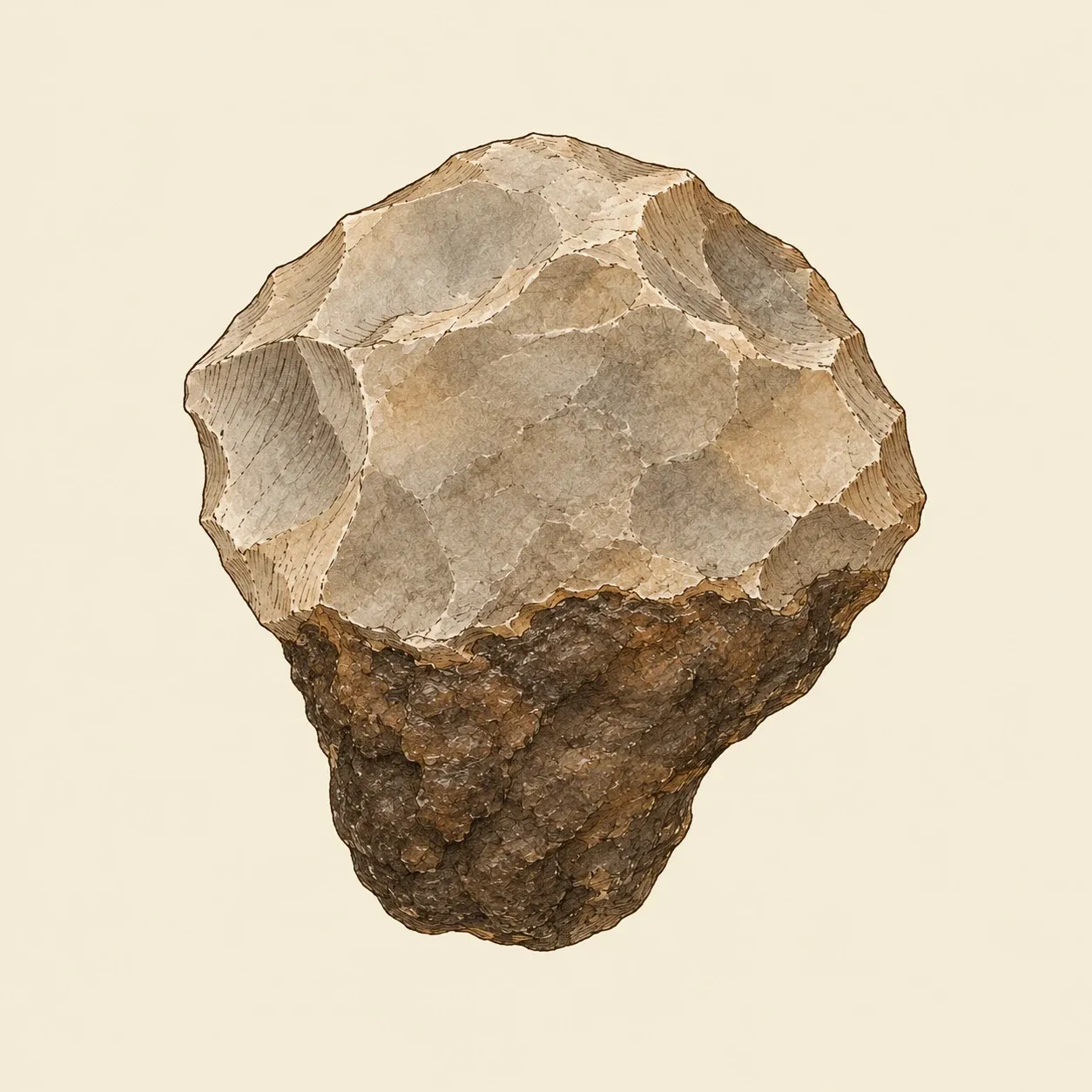 Birch-bark tar is one of the ancient plant adhesives.
Two flakes from Campitello in Italy bear an adhesive made from birch bark. Leiden University places these finds at about 200,000 years ago. Based on the associated fauna, Degano and colleagues suggest a probable assignment to a phase between 206,000 and 201,000 years ago. These finds considerably predate the Zandmotor flint, which is about 50,000 years old.
Conifer resins offered another route. Chemical analysis has identified resin residues on Middle Palaeolithic tools from Fossellone and Sant’Agostino. The study distinguishes these materials from birch-bark tar and detects beeswax in one case. It also reports bitumen used for hafting at Umm el Tlel in Syria, in layers dated to 42,000 and 70,000 years ago. The evidence covers several materials and settings, rather than a uniform prehistoric recipe.
At Nahal Hemar in Israel, a Neolithic assemblage dating to about 8200–7300 BCE preserves organic coatings on various objects. Samples from baskets contain collagen and blood proteins of bovine origin. The skull coatings examined include a styrax-type resin.
Uses diversified in antiquity and the Middle Ages. Britannica’s historical account mentions fish glues for wooden objects, as well as binders for manuscripts. Animal- and fish-glue technology advanced in the eighteenth century. Rubber and nitrocellulose cements developed in the nineteenth, followed by the growing use of synthetic adhesives in the twentieth. Modern formulations meet different demands for strength and service conditions; animal glues remain in use in woodworking and restoration.