Tungsten Extraction
A metal too refractory to melt, won from its ore as a powder and pressed into shape
Contents
- 1Wolframite
- 2Scheelite
- 3Tungsten oxide powder
- 4Tungsten metal powder
- 5Sintered bar
- 6Coiled filament of drawn tungsten wire
Tungsten melts at a higher temperature than any other metal, so it cannot be smelted and cast like iron or copper. It is won from its ores as a fine powder and shaped from that powder into bars, wire and the hard carbide of cutting tools. The Elhuyar brothers first isolated the metal at Bergara, in the Basque Country, in 1783.
What it is
Tungsten is a grey metal as heavy as gold that melts at a higher temperature than any other metal. In nature it is almost always found combined in minerals; native tungsten, the free metal, is a very rare mineral, formally described only in 2021. The two ores worth mining are wolframite, a black iron and manganese tungstate, and scheelite, a pale calcium tungstate. The metal is also called wolfram, after the first of them, which is why its chemical symbol is W.
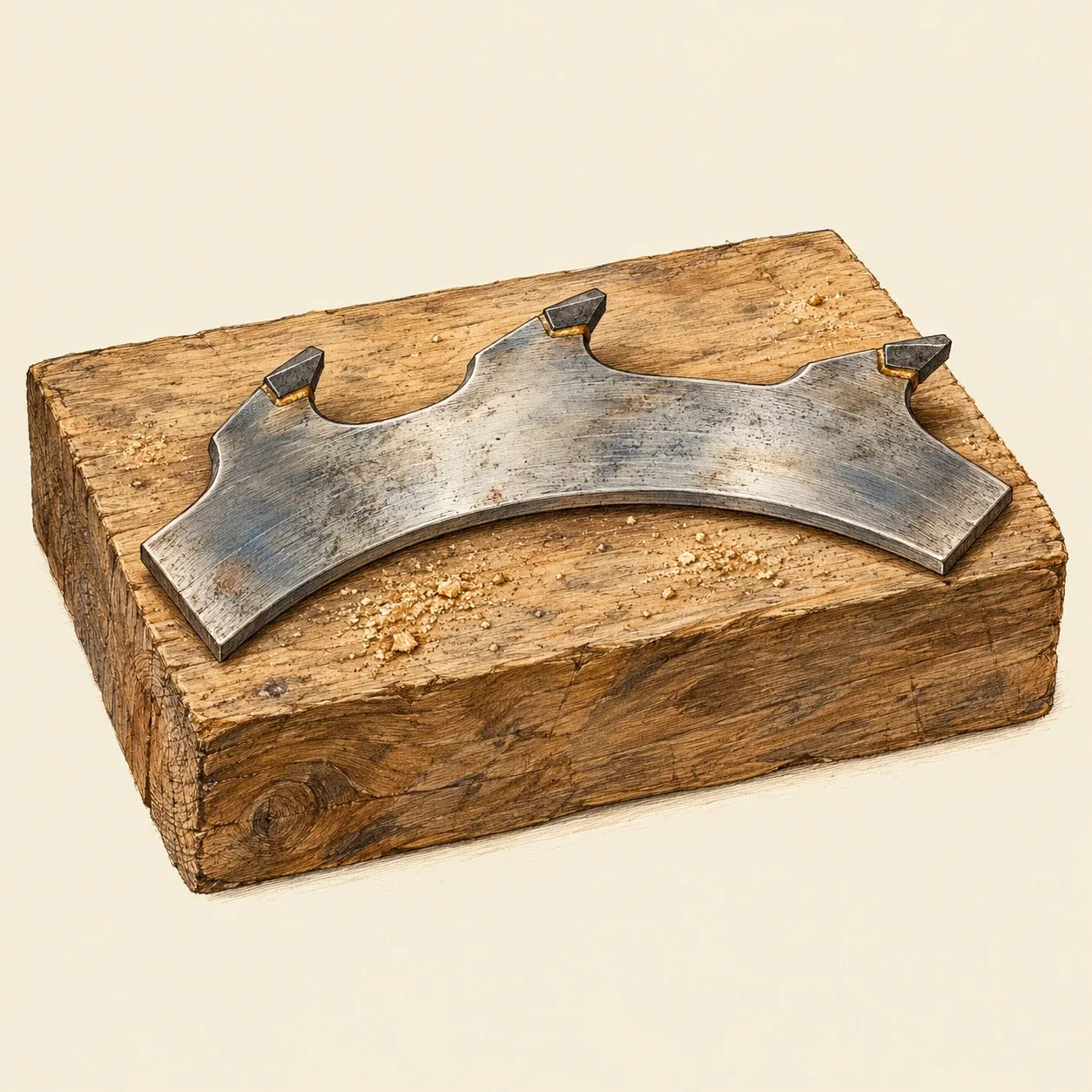 Carbide-tipped saw teeth: the hard tips of tungsten carbide do the cutting, the steel blade carries them.
Its main use today is in cemented carbide, a material of tungsten carbide grains bound with cobalt, which is hard enough to cut and drill metal, stone, wood and plastics. Tungsten also goes into tool steels and other alloys, into counterweights and radiation shields where its weight counts, and into lamp filaments and other parts that have to stand great heat.
Winning tungsten from its ore is chemical industry. It uses strong chemicals and produces fine metal and carbide powders whose dust must not be breathed, and it is done only in specialised industrial plants.
How it works
Tungsten ores are poor: the useful mineral is scattered through much larger amounts of rock, and it has to be concentrated before any chemistry begins. Mills rely on its properties: both tungsten minerals are far denser than the rock around them, wolframite is weakly magnetic, and fine grains of scheelite, once their surface has been treated, cling to air bubbles.
Chemical plants then turn the concentrate into pure tungsten compounds, among them tungsten oxide. The metal obtained from the oxide does not melt: it comes out as a fine grey powder. Tungsten carbide, the hard compound of tungsten used in tools, is also produced as a powder.
Because tungsten melts at a heat no ordinary furnace can reach, it is shaped from powder, and so is cemented carbide. A sintered bar is a solid but brittle bar in which the powder grains have joined without melting. William Coolidge found how to make such bars tough and bendable enough to become wire, and in cemented carbide the cobalt holds the hard carbide grains together.
History and evolution
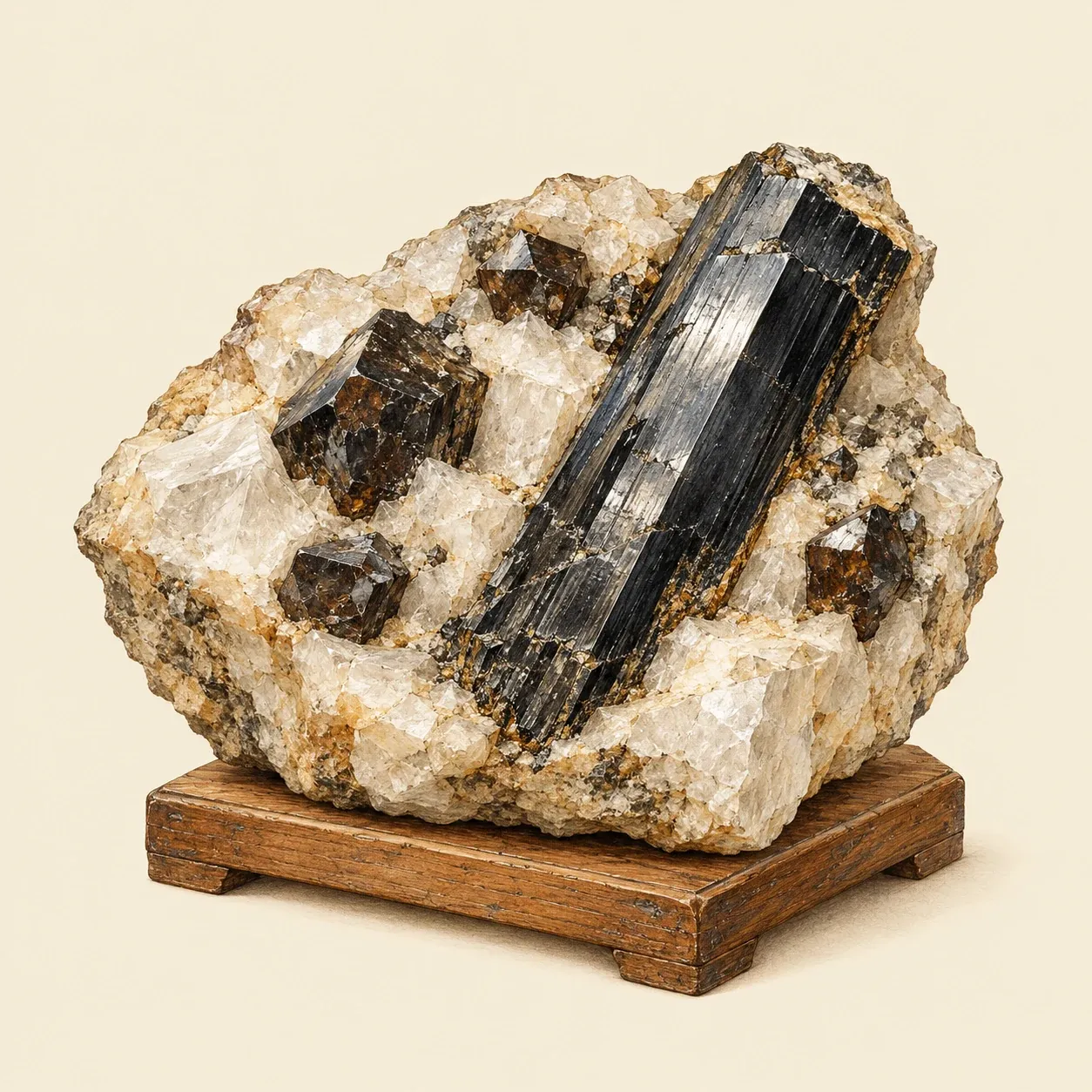 Tin ore with wolframite: the black blade is the mineral that troubled the tin smelters.
Tin miners of the Erzgebirge, between Saxony and Bohemia, knew wolframite in the sixteenth century as a nuisance mineral that lowered the yield of their tin. They gave it names built on the German word for wolf, such as Wolf Rahm, “wolf’s froth”. In 1781 the Swedish chemist Carl Wilhelm Scheele extracted a new acid, tungstic acid, from a Swedish mineral called tungsten, “heavy stone”, now named scheelite after him. Scheele and Torbern Bergman thought a new metal could be obtained from it, but they did not manage to reduce the acid.
In 1783 the brothers Juan José and Fausto Elhuyar, working at the Royal Seminary of the Basque Society of Friends of the Country at Bergara, found the same acid in wolframite and reduced it to the metal. They called the metal wolfram and published their analysis the same year.
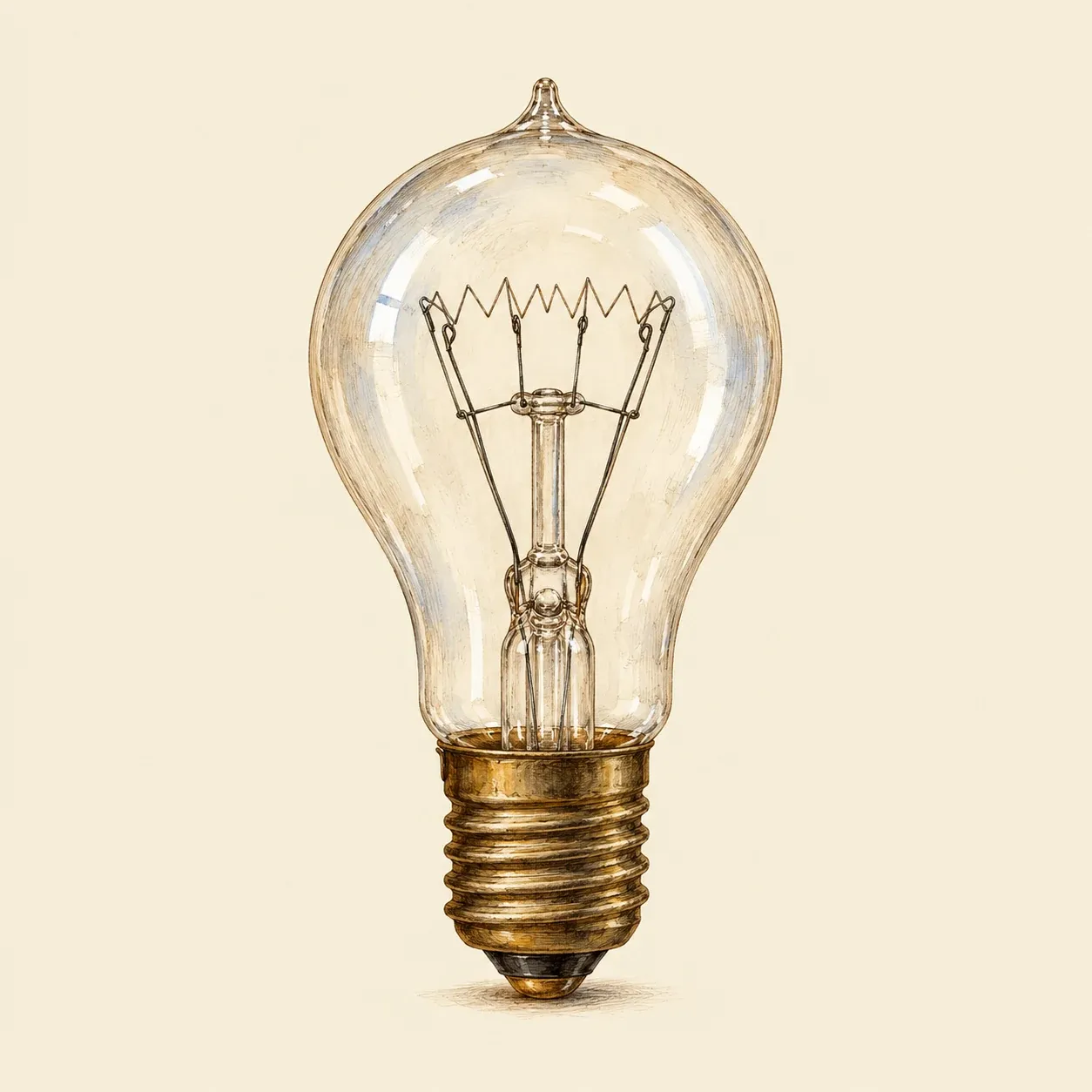 A lamp of the 1910s with a drawn tungsten filament strung in a zigzag around its glass stem.
Lamp makers wanted tungsten because its filaments gave much more light than carbon ones, but the first tungsten filaments were brittle. In 1909–1910, at the General Electric research laboratory, William Coolidge produced ductile tungsten from sintered bars, and General Electric began selling lamps with drawn tungsten filaments. The light bulb has used tungsten wire ever since, drawn as in wire-drawing but through diamond and carbide dies.
Cemented carbide came out of that lamp industry. Looking for a material to replace the diamond dies used to draw tungsten wire, Karl Schröter of Osram filed a patent in 1923 for a sintered hard alloy of tungsten carbide and cobalt. Krupp bought the rights and sold the material from the late 1920s under the name Widia, from the German “wie Diamant”, like diamond. Carbide tools changed machining, and much of the tungsten mined today ends up in cemented carbide parts.