Waste to energy
Steam and current from the refuse that is left
Contents
- 1Tipping hall, with a refuse lorry at the door
- 2Boiler house
- 3Flue-gas cleaning building
- 4Chimney
- 5Turbine and generator hall
- 6Bottom ash in an open loading bay
A waste-to-energy plant burns the household waste that is not recycled and turns its heat into electricity and, often, heat for buildings. Its flue gas must be cleaned, and its ash still holds metals worth recovering. In 1876 Manchester was already using the heat of its refuse furnaces, and in 1893 Halifax first made electricity from town refuse.
What it is
A waste-to-energy plant is a power station whose fuel is the household and commercial waste left after recycling. It burns the waste in a furnace built for that purpose and, like other thermal power stations, turns the heat into electricity with a turbine and a generator; many plants also pipe heat to homes, offices or factories. Burning reduces the waste to a much smaller volume of ash, and the energy replaces some of the coal or gas that would otherwise be burned.
Waste policy treats this as a fallback. The US Environmental Protection Agency ranks energy recovery below cutting waste and below reuse and recycling, and above landfill. The UK Department for Environment, Food and Rural Affairs (Defra) says the same and adds that a plant is worth more the more of the energy it puts to use: a plant that also sells its heat makes far better use of the energy in the waste than one that only makes electricity.
How it works
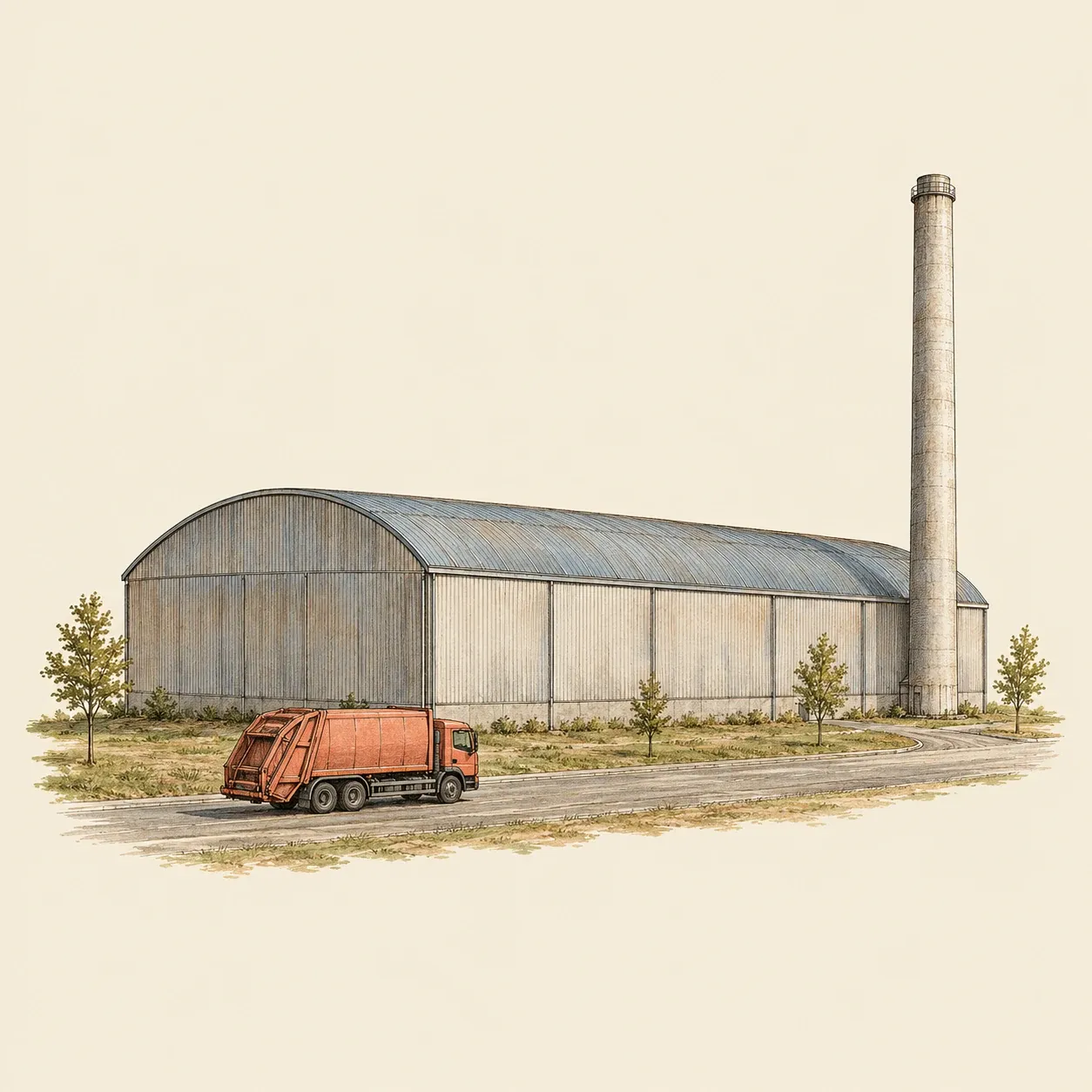 Seen from outside, a modern plant is a large closed hall under a tall chimney.
A plant takes in the mixed waste that is left once households and businesses have set aside what can be recycled. What comes out is electricity for the grid, heat that in many towns warms water piped to buildings nearby, cleaned flue gas, and ash. The waste is handled inside closed buildings so that dust and smells do not escape into the street.
The gas leaving the boiler still carries fine dust and pollutants from everything that was in the waste. Laws on emissions set what it may contain when it leaves the chimney, and every plant has a gas-cleaning section with filters and is licensed and monitored against those limits.
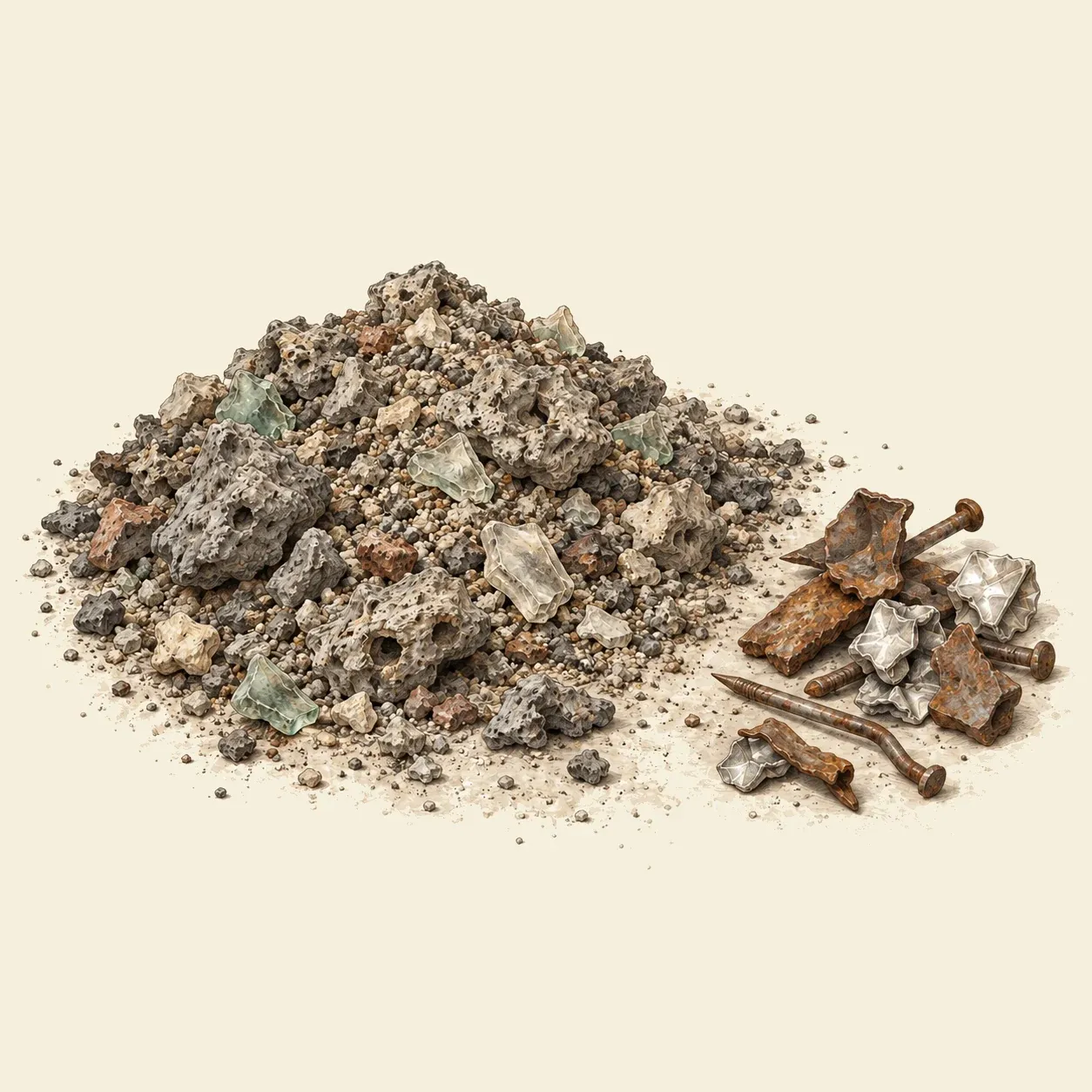 Bottom ash is a gravelly clinker that still holds pieces of metal from the waste.
What is left after burning is bottom ash, a clinker of stones, glass, ceramics and metal. The metals in it are recovered and sold for recycling. In Europe the rest may go into roads and building work only if it meets environmental and technical criteria, and Zero Waste Europe has reported that these rules differ from country to country and are often weak. In the United States, the EPA says, the ash goes to landfills built to protect the groundwater. None of this is a task for a home or a garden: burning waste in a stove or an open fire releases smoke and pollutants without any of the controls of a plant.
History and evolution
Towns in Britain began to burn their refuse in furnaces in the second half of the nineteenth century, to be rid of it. Alfred Fryer, of the Nottingham engineers Manlove, Alliott and Co., built his refuse destructor at Manchester in 1876, according to the 1911 Encyclopaedia Britannica and to a review in Nature of W. Francis Goodrich’s book on refuse disposal and power production. Shigeru Mizoiri and Kohei Watanabe, who studied Fryer’s patents, write that it stood at the Water Street depot and that his patent of that year puts the heat of the furnace to use. A magazine report of a visit to the works of Manchester’s Health Committee in 1876, reprinted by the engineer Percy Boulnois in 1881, describes destructors that burned rubbish long heaped in the suburbs and whose heat was put to use in the yard, and a newspaper account of 1882 says that refuse fired the boilers of the city’s Holt Town works. Engineers then tried to turn the heat into light. In 1893 the refuse destructor at Halifax became the first plant in Britain to make electricity from refuse, enough to light a searchlight and a set of arc lamps. The historian of engineering D. G. Tucker also describes early stations at Cheltenham and Oldham.
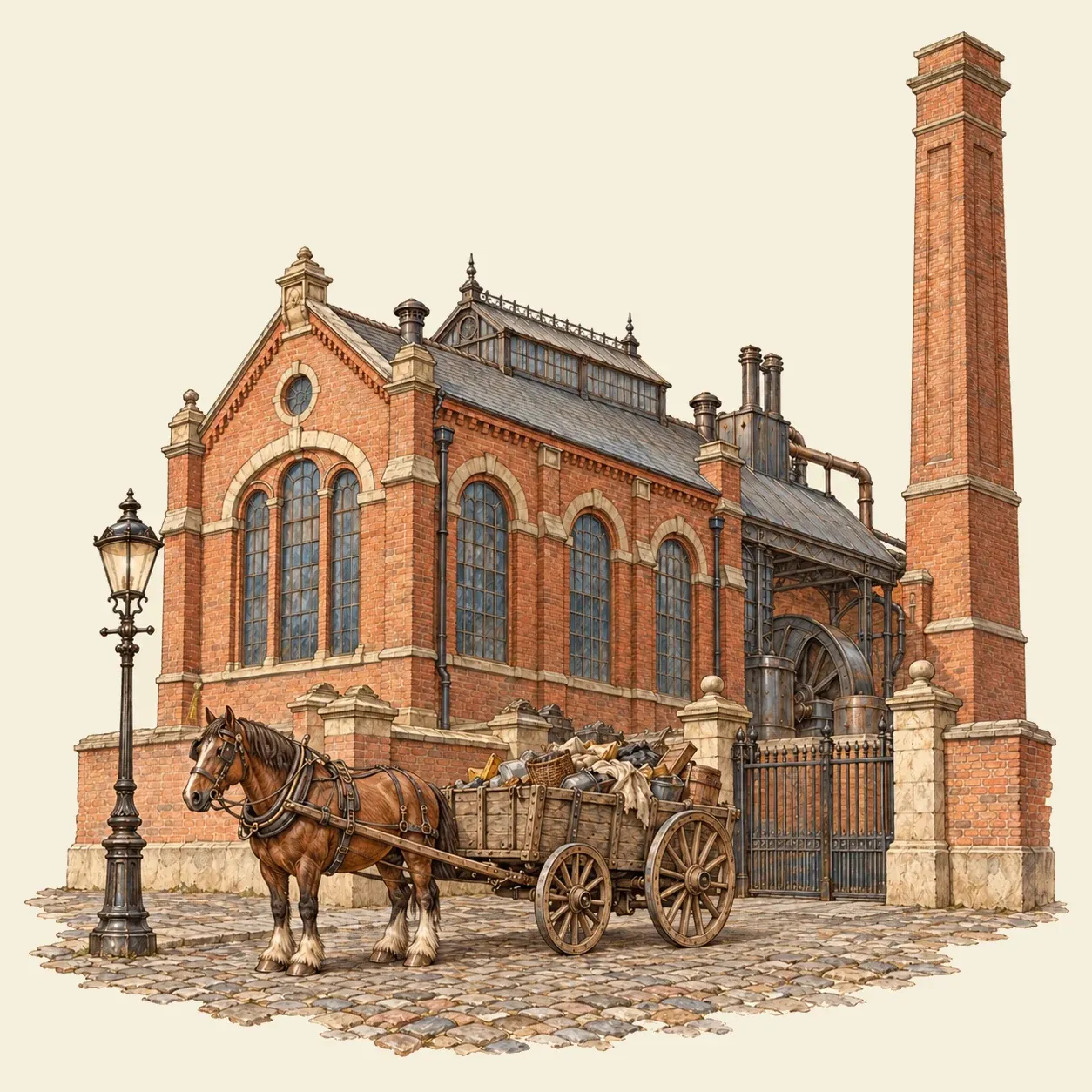 In the 1890s some town councils built refuse destructors and electricity stations in one building.
In June 1897 the vestry of Shoreditch, in London, opened the first successful station designed from the start to burn refuse and generate electricity, inaugurated by Lord Kelvin. Its motto, carved on the building, was E pulvere lux et vis, “out of the dust, light and power”. In New York, a sorting plant tried under George Waring drew its own power from the refuse it could not sell. The early stations also sold their clinker for road building and used exhaust steam to heat public baths. The 1911 Britannica warned that refuse was not a fuel on which engineers could count to light a town, because the demand for current rose and fell.
In the United States many city incinerators closed when federal clean-air rules required equipment they did not have, the EPA notes, and most of the plants that now recover energy from waste are in the Northeast.