Book cipher
Secret letters keyed to a printed book
Contents
- 1Two copies of the same edition
- 2Page number
- 3Lines counted from the top of the text
- 4Chosen word in the line
- 5Letter written in groups of three numbers
A book cipher hides a message by pointing into a book that both correspondents own in the same printed edition. Each word or letter is replaced by its place in the book, such as page, line and word. Girolamo Cardano described the method in 1557.
What it is
A book cipher uses an ordinary printed book as its key. The sender and the receiver each own a copy of the same edition, with the same text on the same lines of the same pages. Instead of writing a word, the sender writes where it stands in the book: a page, a line and a position in that line. The receiver opens the same edition at each page and line given and reads the words back.
The letter that travels carries numbers, or in older forms sentences that look harmless. The book stays at home on both sides. Any title will do if the two copies match exactly, but a book with a large vocabulary gives more choice, such as a dictionary, a law book or a long collection of letters. The method relies on the printing press, which turns out many copies with identical pages. It is a substitution, as words or letters are replaced by references. A turning grille works the other way round, keeping the letters and moving them.
How it works
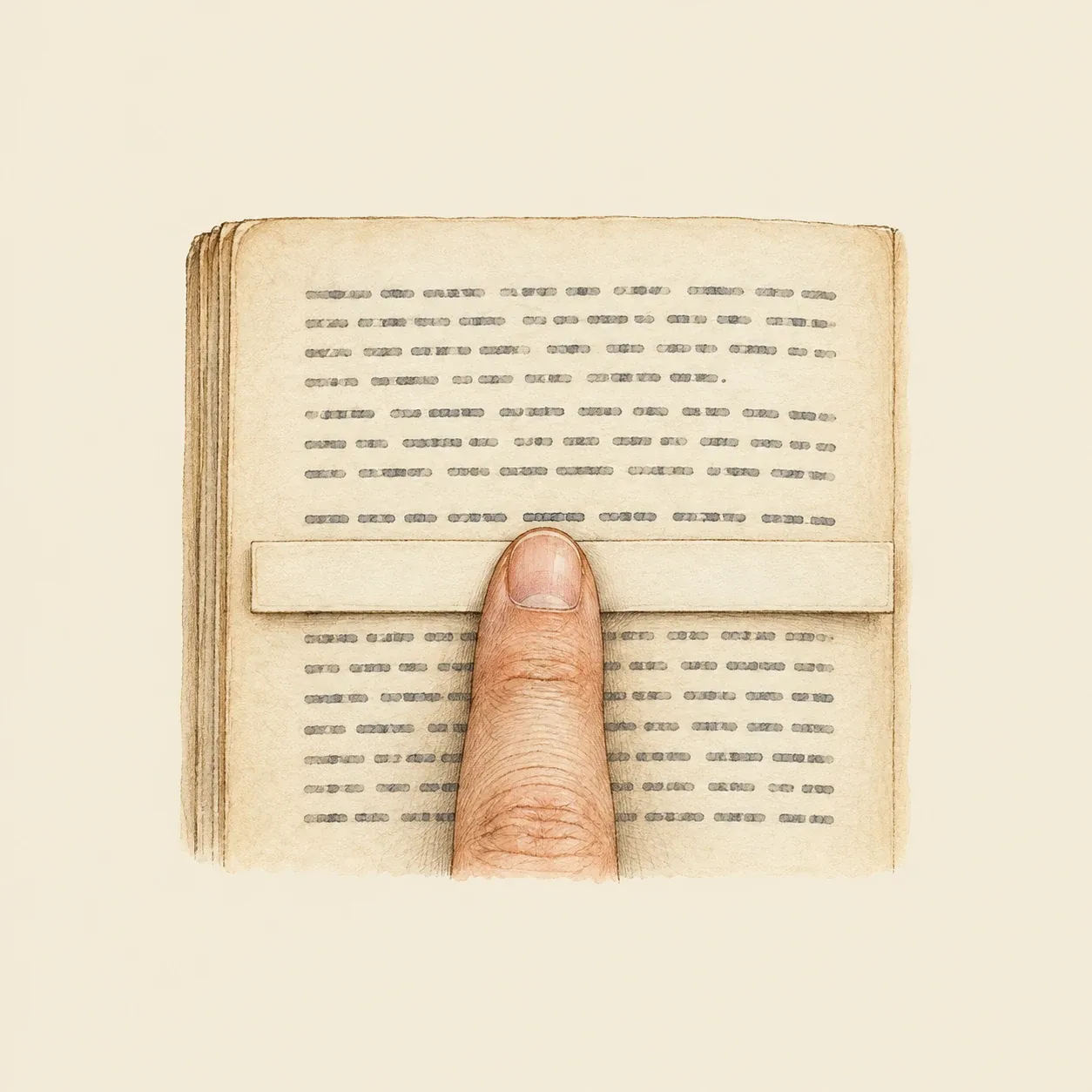 The strip keeps the eye on the right line while the words are counted.
The usual form gives each word three numbers. To write “wrote”, Benedict Arnold found the word in his key book on page 293, line 9, seventh from the left, and wrote 293.9.7. The receiver opens the same page, counts nine lines down, then seven words along. Both must count the same way: they need to agree whether the heading at the top of the page is a line, and how a word split at the end of a line is counted.
A second form works letter by letter. Blaise de Vigenère gave the example of the word charité taken from page 17 of his own treatise, where the c is the first letter of the second line, so it becomes 17, 2, 1. A common letter appears on almost every page, so it can be written with many different groups of numbers, and a word that comes back often does not have to look the same each time. The price is time. Vigenère judged the method unbreakable without the secret, but slow to write, slow to read and easy to get wrong.
Much depends on the choice of book. An enemy who finds out which edition was used can read every message. Even without the book, a skilled analyst can make headway with enough messages: during the First World War, William and Elizebeth Friedman pieced together the book codes of Indian conspirators before they had found the books, starting from groups that came back often and from the sense of the text. The two copies must also share the same layout. If the receiver’s copy has its pages or line breaks in other places, for example in a reset edition, every reference points to the wrong word. Cardano advised sending the name of the author and of the printer, so that the correspondent could buy an identical copy.
How to do it
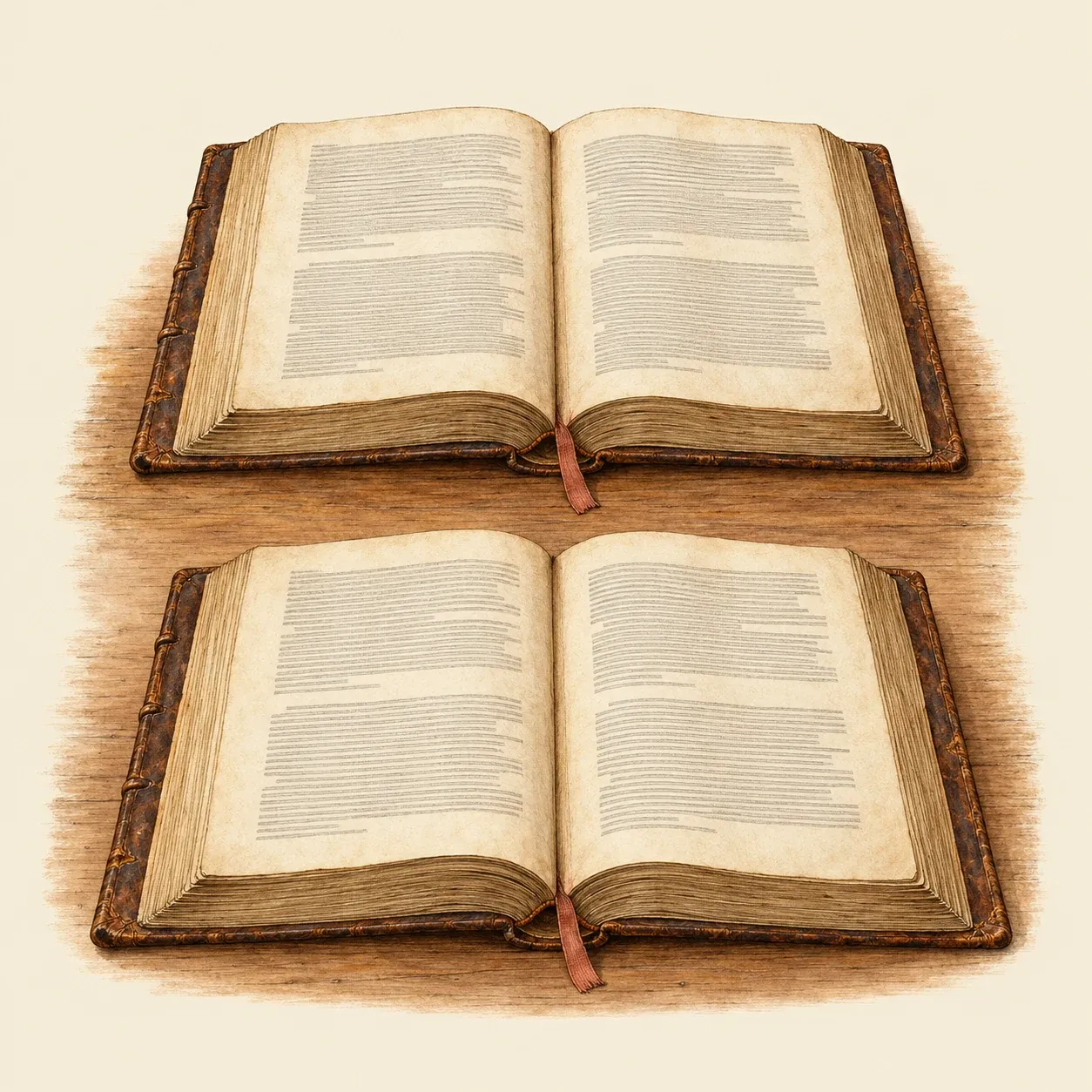 Two copies of one printing: compared page by page, the first and last words must match.
Two people each need a copy of the same book from the same printing, for example two copies of one paperback bought together. Check that they match by comparing the first and last words of several pages, which must be identical. A dictionary or a thick novel holds enough different words.
Agree on the rules before writing anything. Write each word as page.line.word, with a dot between the numbers and a space between groups. Count lines from the first line of the main text, leaving out the running head and the page number, and count words from the left, treating a hyphenated or split word as one. When a word cannot be found, spell it out with page.line.letter groups, marked with a sign both of you know, such as a slash before the group.
To encipher a short message, look up each word and write its three numbers, taking a different place in the book when the same word comes back. To decipher, the receiver opens each page in turn and counts. Exchange a few practice messages, check every word, and change the rules wherever the two of you counted differently. Anyone who guesses the book can read everything, so the method suits games and exercises, never real secrets.
History and evolution
The oldest known description is in Girolamo Cardano’s De rerum varietate, printed in Basel in 1557. He proposed taking two books “of the same printing”, such as the letters of Pliny or of Cicero. The letter sent was built from words of the book, and the reader looked up each one on the agreed page and read the word that followed it instead. The day of the month written on the letter gave the page. Cardano’s example used page 19 of the Aldine edition of Pliny’s letters.
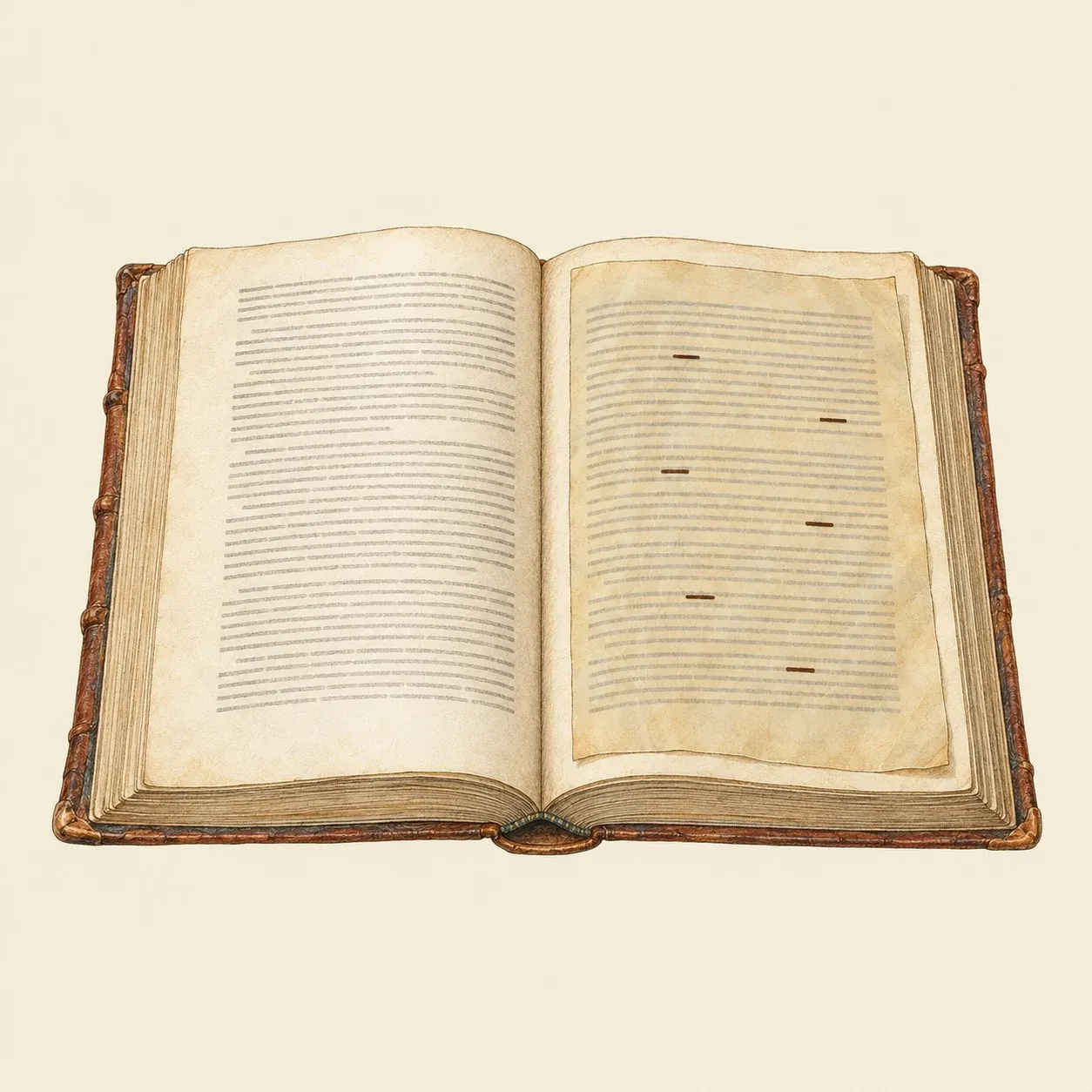 A sheet made transparent with oil, laid on the agreed page, shows the reader which words to take.
Giambattista della Porta set out the same idea in his treatise on ciphers, printed in Naples in 1563, with an example drawn from Pliny’s Natural History in a Basel edition printed by Froben. He also described a sheet made transparent with oil or wax and laid on an agreed page of any book, with ink strokes marking the letters, syllables and words to be read. In 1586 Blaise de Vigenère credited Cardano and Porta with the word method and found it hard to use, because the words a dispatch needs rarely turn up in the pages and the names of people of the day are seldom there at all. He preferred numbers for page, line and the rank of each letter, and described a disguise in which the groups looked like an astronomical table: the sign of the zodiac stood for the page, the degrees for the line and the minutes for the letter.
During the American War of Independence, the American general Benedict Arnold used a book cipher in his secret correspondence with the British officer John André, who set out the method in a letter of 10 May 1779. The Clements Library in Michigan, which holds the letters, names the key as either William Blackstone’s Commentaries on the Laws of England or Nathan Bailey’s dictionary; another account gives Blackstone alone. Arnold left some words in plain text so that the letters read like the business of two merchants.