Grafting and cuttings
Keeping varieties through living stems
Contents
- 1Cutting with node and polarity
- 2Adventitious roots in growing medium
- 3Living rooted rootstock
- 4Scion and cambiums brought into contact
- 5Binding holding the union
A living cutting grows its own roots; a graft joins a scion to a compatible rootstock. Both preserve useful plants through living tissue, careful orientation and protection from drying.
What it is
A cutting is a living piece removed from a plant and encouraged to grow its missing organs. A stem section can develop adventitious roots and become an independent plant. Grafting joins two partners instead: the rootstock supplies the roots, while the scion supplies the variety wanted above ground.
Vegetative propagation generally preserves the genetic make-up of the piece taken. This matters when seedlings would vary rather than reproduce a selected variety. It also carries risks: infected material can pass on disease, and identical genes do not guarantee identical growth in different surroundings. A graft retains the identities of its two partners. Joining them does not sexually cross them or automatically produce a new variety.
How it works
A cutting initially draws on stored reserves while living tissues respond to the wound and develop roots. Buds provide the growing shoots. Polarity is the original direction from the base towards the tip: reversing the piece can prevent successful establishment. The medium holds the stem and supplies moisture around it, but the developing roots also need air. Waterlogged sand encourages decay; dry sand allows the tissues to lose water. Opening buds alone are weak evidence of success because they can grow briefly on reserves without a working root system.
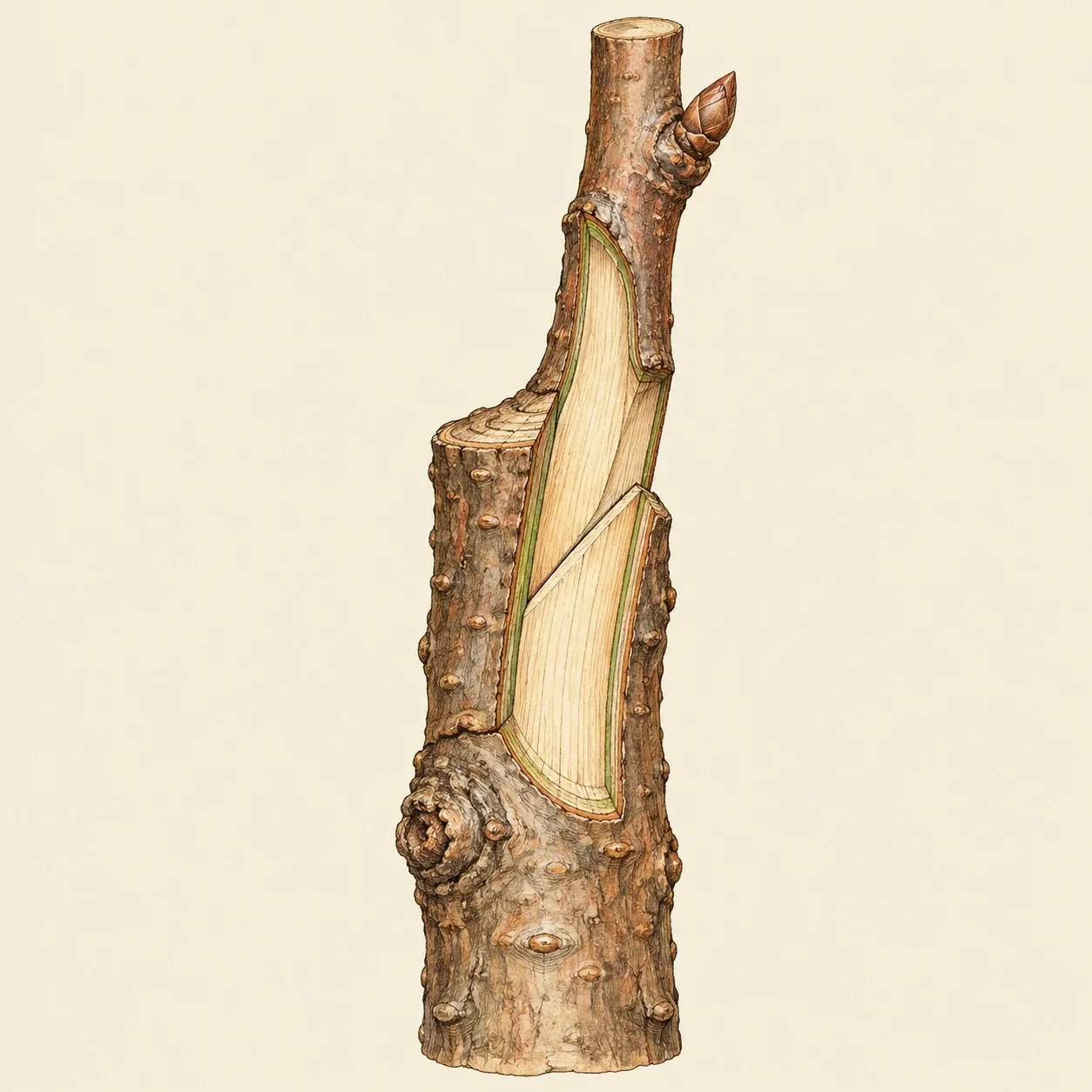 If the stems differ in diameter, match the cambium on one side rather than centring the scion.
Cambium is a thin growing zone between bark and wood. Compatible partners can develop healing tissue and new conducting connections across the union. Merely pressing the woody centres together misses this living interface. The cambiums of scion and stock must touch along at least one side. Binding keeps the cut surfaces still while they unite, and suitable protection prevents them drying out. The scion must retain its natural orientation, with its base against the stock. Even a neat fit can fail through poor timing, disease or an incompatibility that shows up later.
How to do it
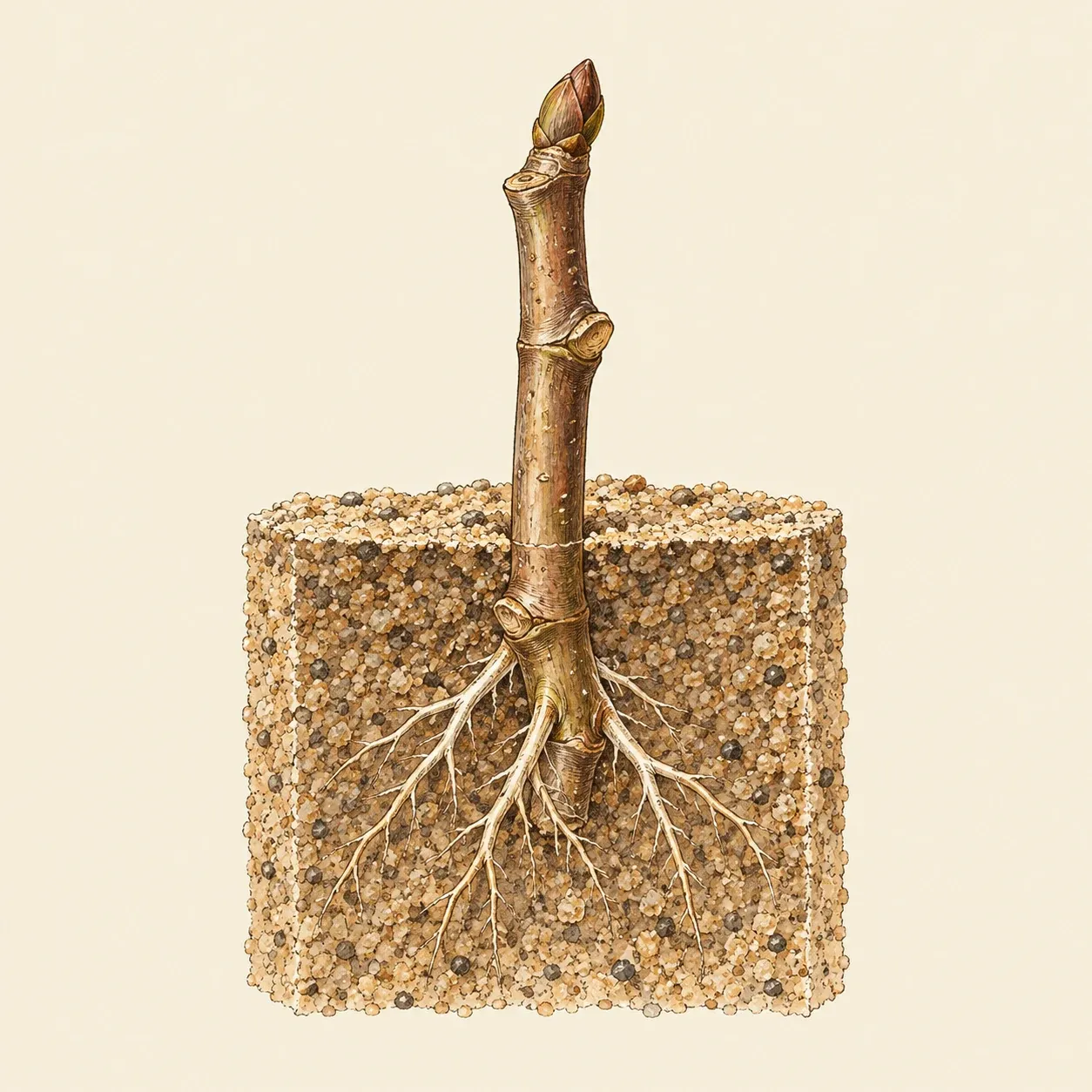 The lower end points into the medium, with a node below its surface.
For a small trial, use a healthy cultivated blackcurrant, Ribes nigrum, which you have permission to propagate. The Royal Horticultural Society lists blackcurrants among plants suitable for hardwood cuttings. Take the material during dormancy after leaf fall; in a temperate climate, late autumn is best, avoiding severe frost.
With clean secateurs, remove a vigorous shoot of the current year’s growth that has become woody. Discard its soft tip. Make a section 15–30 cm long, with a straight basal cut below a bud and a sloping upper cut above a bud. Keep track of which end is which. Cut away from fingers. Clean and disinfect tools between plants using a suitable product at its labelled concentration and contact time.
Fill a deep container with drainage holes with clean, coarse horticultural sand and moisten it. Sand serves only for rooting; it does not feed the plant. Make a planting hole first, insert roughly two-thirds of the cutting with a node buried and a few buds exposed, then firm gently. Water and let excess water drain. Keep it sheltered from drying wind without forcing growth with indoor heat. Check moisture regularly and do not tug on the stem to test it. Move the plant to suitable growing soil once developed roots allow careful handling. Discard rotting pieces and label the trial.
Treat grafting as a separate nursery operation. Use a dormant apple scion and an apple rootstock of known compatibility, in spring as growth resumes. Matching sloping cuts bring their cambiums together; grafting tape holds the join. Exposed cuts need an appropriate grafting wax or sealing product, applied according to its instructions. String alone does not provide that seal. Check the binding and slit or remove it before it constricts the growing stem. Never collect protected plants or propagate diseased material or invasive exotic species.
History and evolution
Fig, grapevine, olive and pomegranate root easily from cuttings. Early farmers in the Near East multiplied chosen trees this way and domesticated these fruit trees between about the 5th and the 3rd millennium BCE, depending on the species and the study. Apple, pear and plum root poorly and had to wait for grafting, which spread much later.
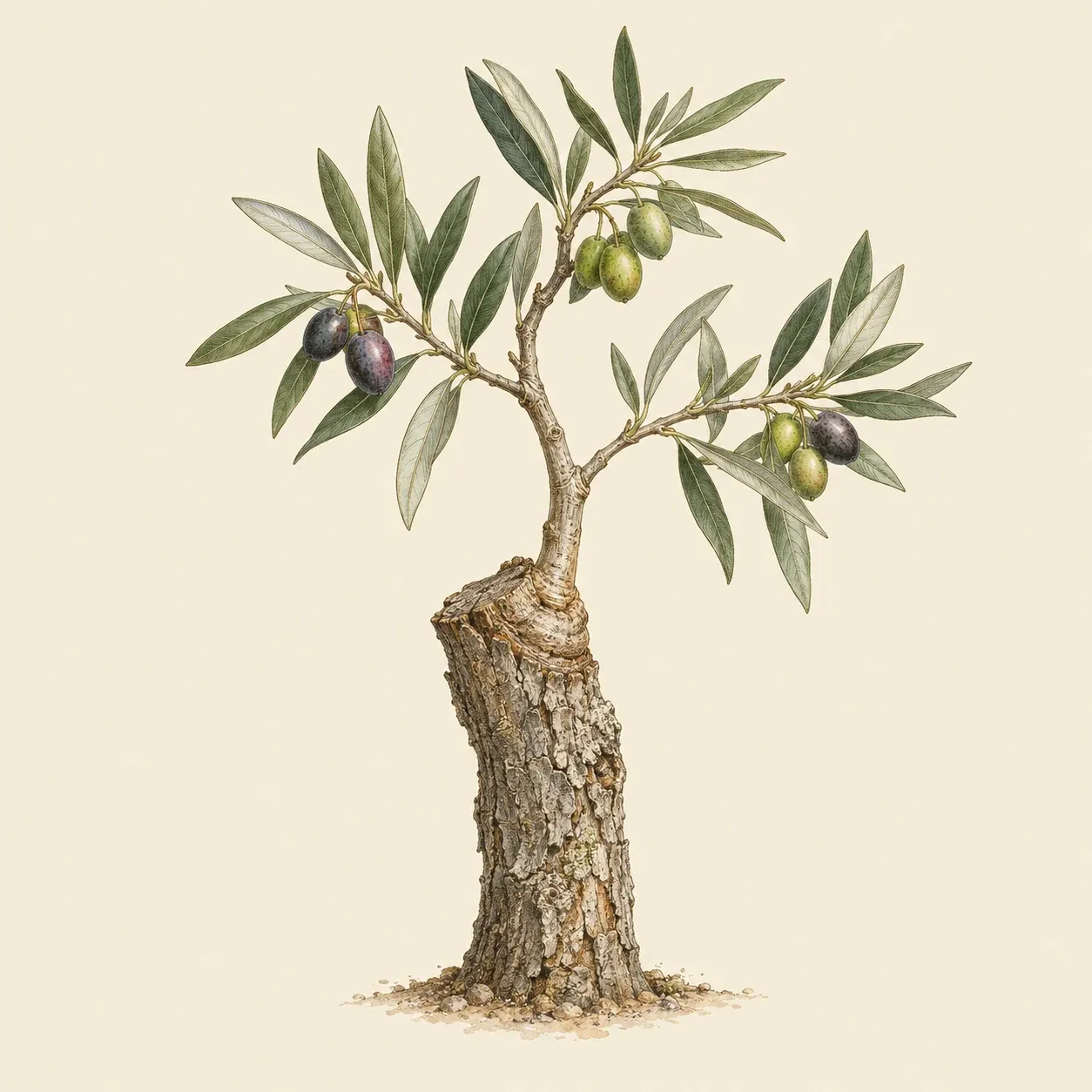 Theophrastus discussed cultivated olive grafted on a wild stock.
The first clear written account of grafting is in On the Nature of the Child, a treatise of the Hippocratic collection written around 424 BCE. Its author treats grafting as a familiar practice and notes that a grafted branch bears fruit different from that of the tree it is grafted on. Around 300 BCE, Theophrastus discussed plant multiplication and the relation between scion and stock. He insisted on a close fit between the cut surfaces so that they would not dry out, recognised the value of joining similar plants and discussed cultivated olive on a wild stock.
Greek and Roman accounts also include improbable combinations. A historical study published in TAPA in 1933 examined such reports against biological limits and possible confusion with seedlings rooted in tree crevices. Later nursery practice developed cleft, bark and bud grafts for different stem sizes and purposes. Modern selected rootstocks help control vigour and adaptation, while sanitary selection limits disease transmission. Cuttings still give plants that grow on their own roots.