Wood distillation
Charcoal, tar, wood vinegar and methanol from wood heated without air
Contents
- 1Iron retort set in brickwork
- 2Firebox under the retort
- 3Vapour pipe
- 4Condenser in a tub of cold water
- 5Receivers for tar and wood vinegar
- 6Charcoal drawn from the retort
Wood distillation heats wood in a closed vessel with no air, so that it breaks down instead of burning. The vapours are cooled into tar and a sour watery liquor, wood vinegar, which holds acetic acid and wood spirit, or methanol; charcoal stays behind. Johann Rudolf Glauber described the condensing of wood vinegar in the late 1640s, and until the 1920s distilling wood was the chief source of methanol.
What it is
Wood distillation, also called dry or destructive distillation, heats wood in a closed vessel with the air shut out. The wood cannot burn, so it breaks down. Its vapours leave through a pipe and are cooled until most of them turn to liquid: a heavy, dark tar and a sour, watery liquor called pyroligneous acid or wood vinegar. A gas that does not condense comes off as well, and charcoal is left in the vessel.
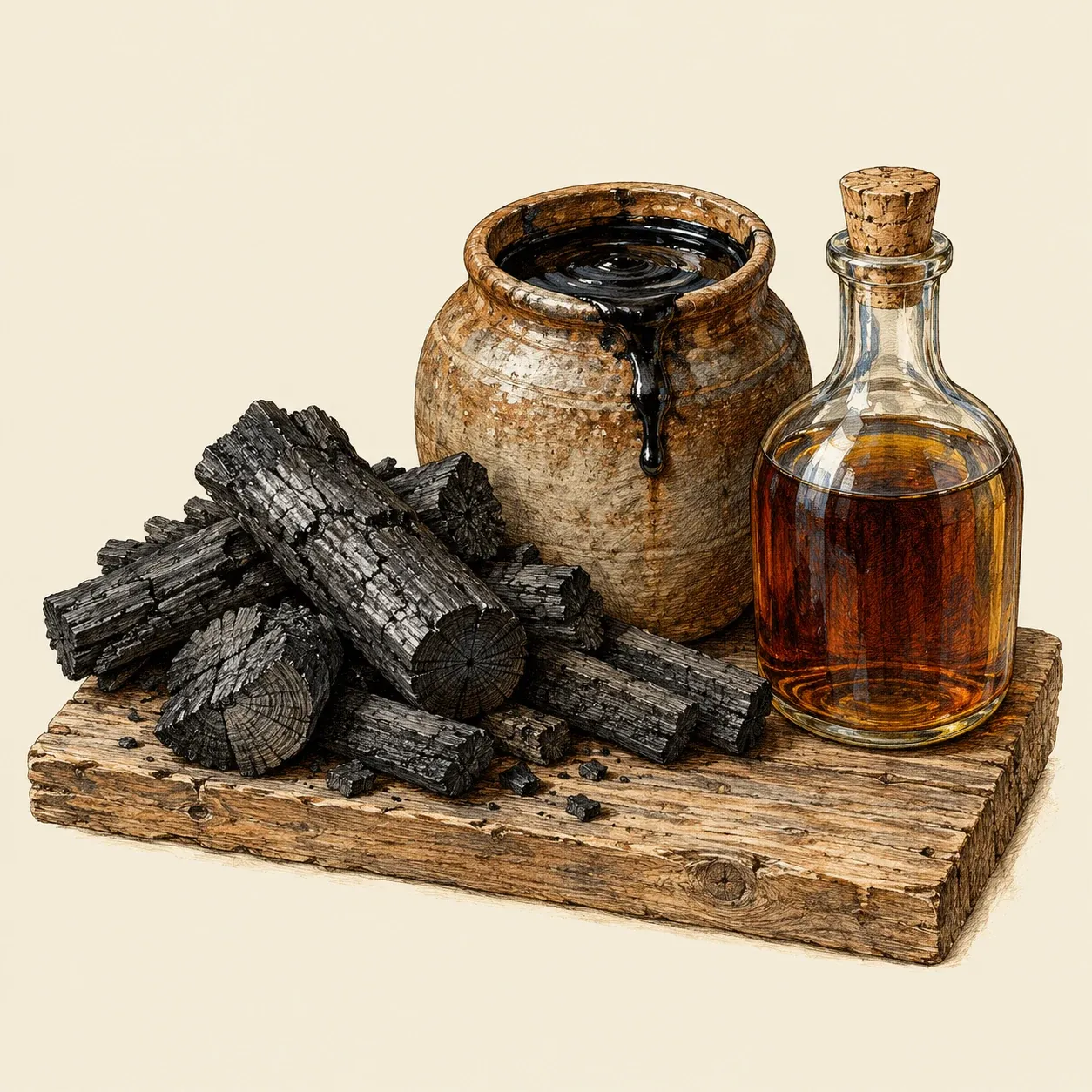 Charcoal, tar and wood vinegar, three of the products of distilling wood.
Wood vinegar is mostly water, with acetic acid, the acid of vinegar, and smaller amounts of methanol, acetone and many other compounds. Methanol was long called wood spirit or wood alcohol because it came from here. Charcoal burners working in open kilns let these vapours escape into the air; wood distillation recovers them. Until the 1920s it supplied most of the world’s methanol and much of its acetic acid.
Wood distillation is dangerous chemistry. Its gas and much of its vapour are flammable. Methanol is a poison: a small amount swallowed attacks the eyesight and can kill, and its symptoms may appear only many hours later. Never distil wood or its liquors at home, never drink or taste them, and never use them as a fuel or a solvent; the process belongs in regulated industrial plants.
How it works
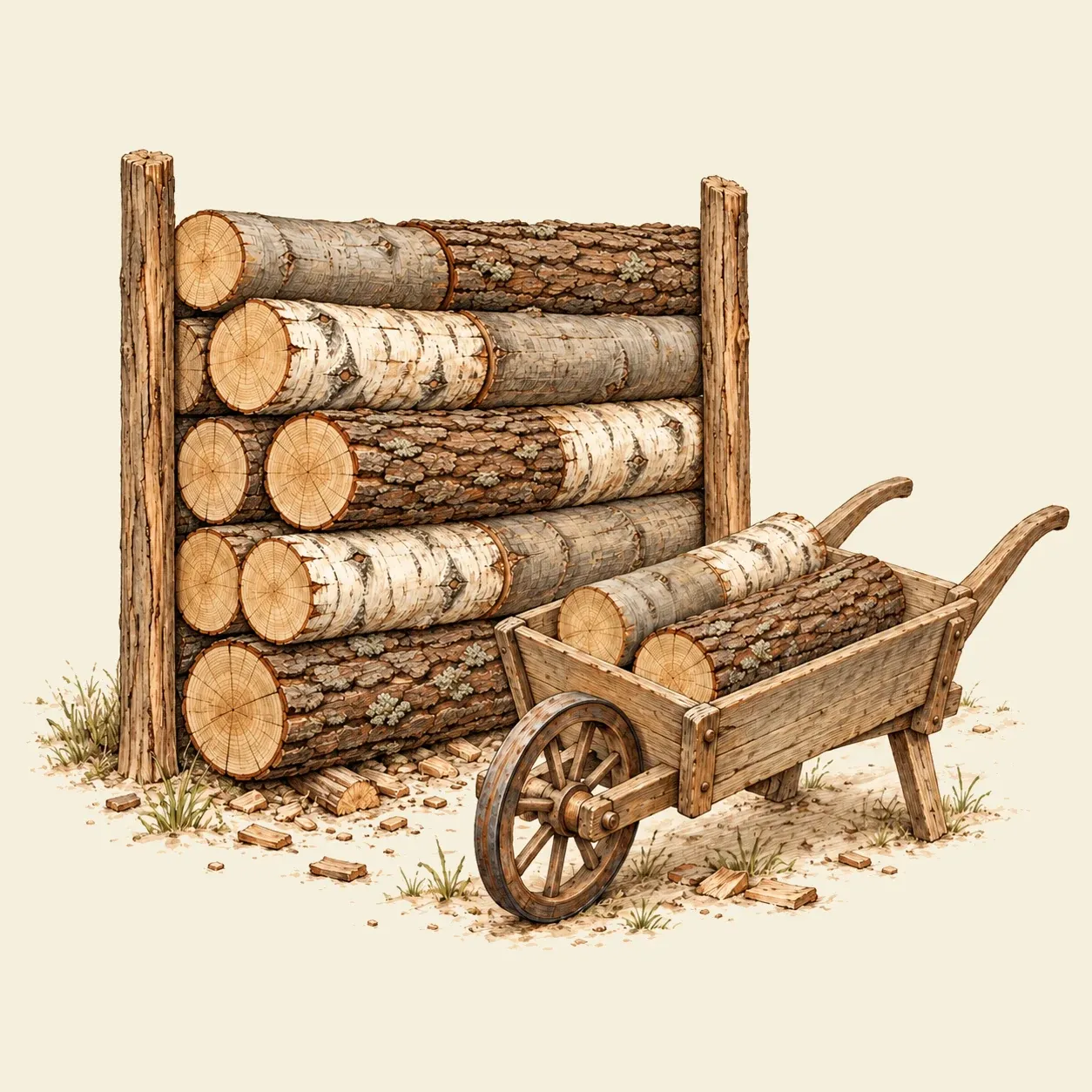 Beech, birch and oak billets, hardwoods favoured by the distilling works.
As the retort heats, the wood first gives off its water. Then the wood itself comes apart, releasing vapours that grow richer in tar as the heat rises, until only charcoal remains. Cooled in condensers, the vapours give tar and a watery liquor, crude pyroligneous acid.
The gas that will not condense still burns. Distilling works burnt it to help heat the retorts, and in France Philippe Lebon proposed burning it for light and heat.
The works preferred hardwoods such as beech, birch and oak. They sold the charcoal as fuel, notably for smelting iron. The acid of the liquor went to market as acetate of lime, the raw material for acetic acid and acetone, and wood spirit, or methanol, served above all as a solvent. The tar was usually burnt as fuel.
History and evolution
Tar drawn from bark and wood heated without air is far older than the recovery of the watery liquor, as the adhesives of the Stone Age show. The condensing of wood vinegar was described in the seventeenth century.
In his Furni novi philosophici, published in Amsterdam in the late 1640s, the German chemist Johann Rudolf Glauber described a furnace for distilling wood and called the sour liquid it gave the vinegar of woods. In 1661, in The Sceptical Chymist, Robert Boyle reported that the sour spirit of box wood was made of two different substances: besides its acid, it held a second spirit with a strong smell, a piercing taste and no sourness. That second spirit contained what is now called methanol.
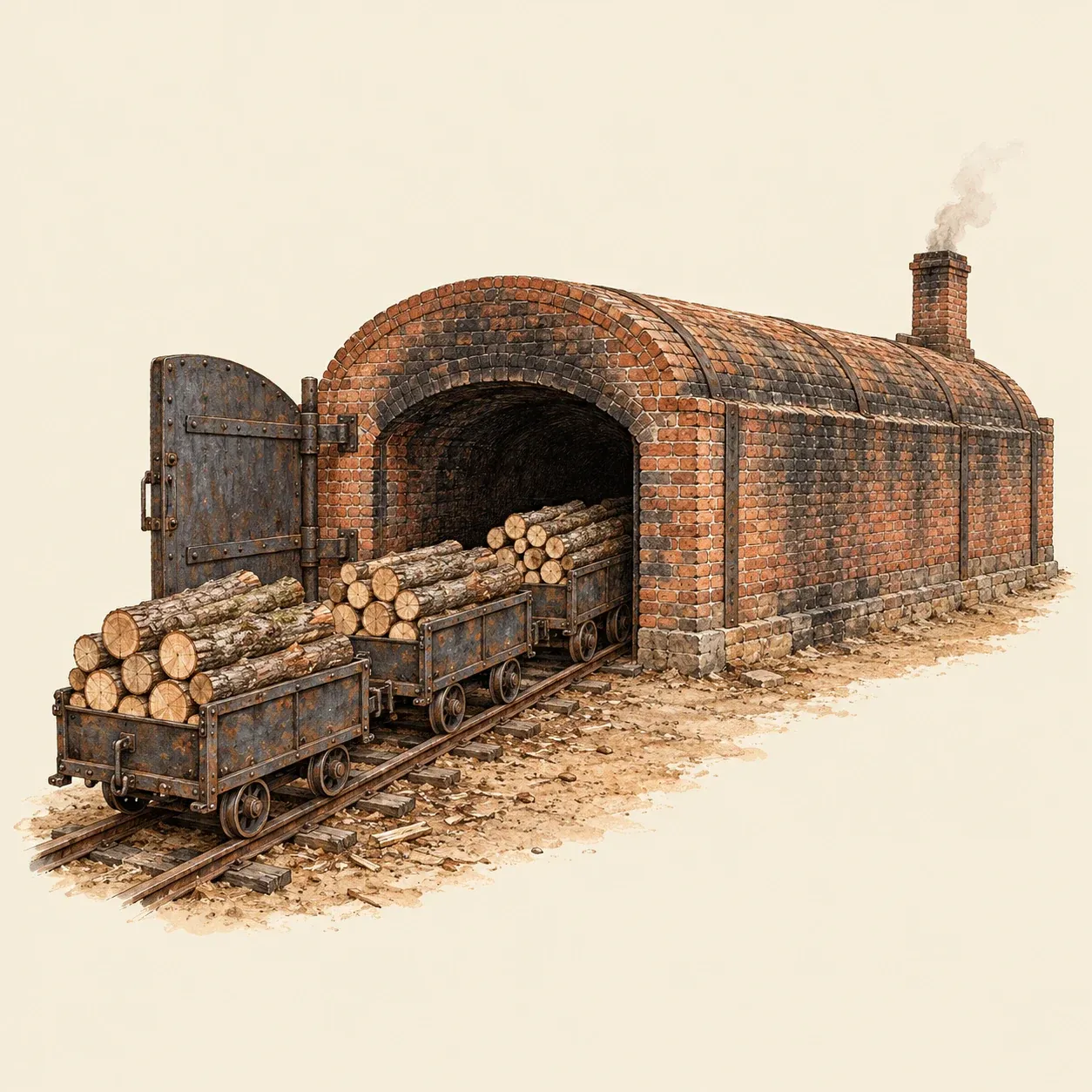 As wood distillation became an industry, wagons of wood were rolled on rails into long retorts.
In 1799 Lebon patented his thermolampe, which burnt a gas distilled from wood to give light and heat. During the nineteenth century, distilling wood in closed iron retorts grew into an industry alongside the chemical industry of Europe, and wood chemical plants spread across the north-eastern United States.
In the twentieth century, plants rolled wagons loaded with wood on rails into long horizontal retorts, heated by burning the wood gas beneath them. The decline began in 1923, when BASF shipped the first synthetic methanol from its Leuna works, made from gas under high pressure. Petroleum then supplied acetic acid and acetone more cheaply, and the wood distillation industry collapsed around the end of the Second World War, although some retorts kept working into the 1950s and 1960s.