Pigeon post
Messages carried home by homing pigeons
Contents
- 1Home loft
- 2Landing board and entrance
- 3Wicker basket for carrying the birds away
- 4Homing pigeon
- 5Small tube fixed to the leg
- 6Message rolled on thin paper
A pigeon post carries written messages with homing pigeons, which fly back to the loft where they live. The birds are taken away in baskets, given a small message and released, and they bring it home. The oldest solid accounts come from the siege of Mutina in 43 BCE.
What it is
A pigeon post sends written messages with homing pigeons. A homing pigeon returns to the loft where it lives, often from a long way off. To use that habit, the birds are carried away from home in a basket. When news has to be sent, one of them is given a small message and released. It flies home, where the keeper takes the message from its leg.
The service runs in one direction only, towards the loft. Anyone who wants news from a distant place must first send birds from their own loft there. Two towns that write to each other each keep birds from the other’s loft, and a network needs lofts at every station, with baskets of birds carried back out by road or rail once they have flown home.
How it works
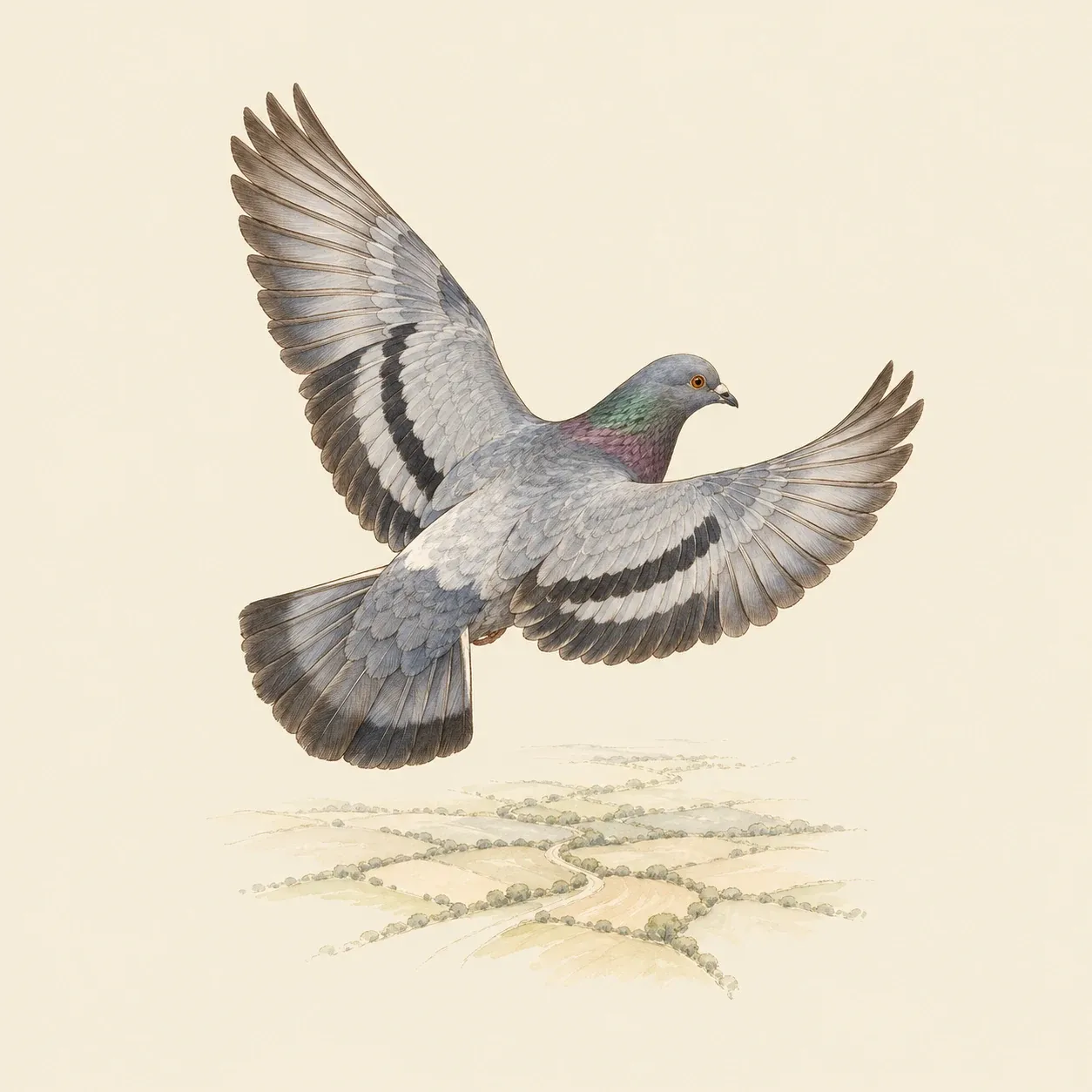 Near home, pigeons often follow roads, hedges and the edges of fields.
A released pigeon first has to find its way. Studies show that pigeons can use the sun as a compass and sense the Earth’s magnetic field, and that smells and landmarks also play a part. Over unfamiliar country, many researchers think the birds work out where they are from smells carried by the wind. Close to home they recognise the landscape and often keep to a route they have learned, along roads or the edges of fields. How these cues combine is still debated.
Rain and fog upset their sense of direction, so birds are not released in them. Birds of prey catch pigeons in flight, and some birds never come back. An important message is therefore safer on two birds than on one.
The load must be small and light. Pliny says the letters at Mutina were tied to the birds’ feet, and medieval Islamic pigeon posts fixed small notes to the legs. Later services rolled a slip of thin paper into a light tube clipped round the lower leg, or tied a quill holding the message to a tail feather. Whatever the fitting, it must leave the toes and the wings free.
How to do it
Pigeons return to the loft where they settled, so a pigeon post starts with young homing pigeons from a club or a breeder, kept in your own loft from the start. The loft should be dry, ventilated without draughts, raised off the ground and easy to clean, with a landing board and an entrance the birds can use on their own. Give clean water at all times, changed twice a day, and a feed of grain and pulses with wheat as the base. Check local rules on keeping pigeons before building.
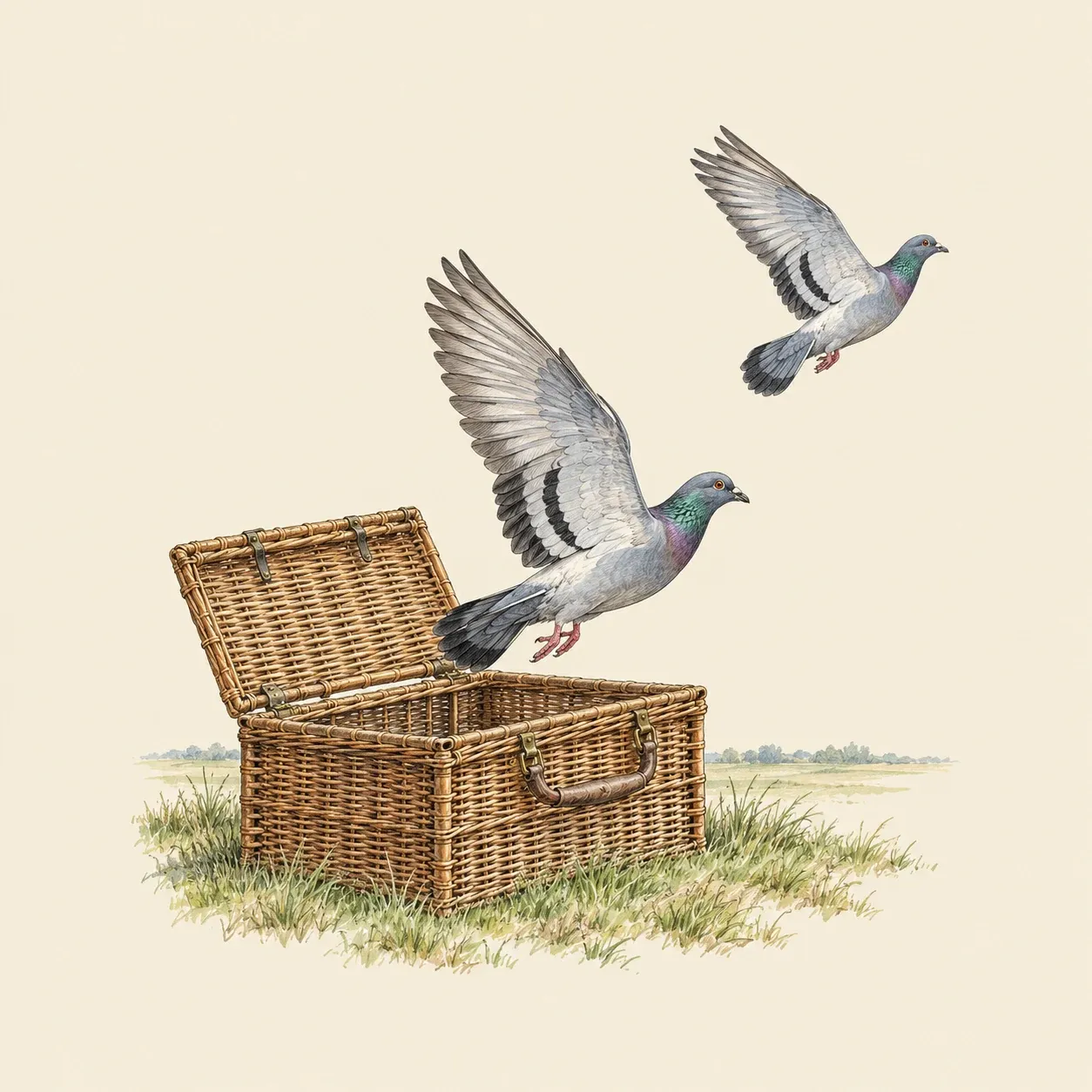 The young birds are carried a short way in a basket and released, a little farther each time.
Once the young birds know the loft, let them fly freely around it every day and feed them when they come back in. When they fly well, carry them in a basket a short distance and release them, then take them a little farther each time. For a message, write a few words on a narrow slip of thin paper, roll it tightly and slide it into a light tube fitted to one leg.
Safety. Fly only healthy, fully feathered birds that are fit for the distance. Never release them in rain, fog, storms or great heat, or late in the day, and do not leave them shut in a basket for long, in the sun or without water. Do not crowd the basket. The dust from droppings and feathers can cause a lung disease in people, known as pigeon fancier’s lung, and birds can carry the bacterium of psittacosis. Wear a cap, a dust mask and a coat when cleaning the loft, clean it at least weekly, keep it well aired, and wash your hands after handling birds. Anyone who becomes breathless or feels as if they had the flu after working with the birds should see a doctor and mention the pigeons.
History and evolution
The oldest solid accounts come from the siege of Mutina, now Modena, in 43 BCE, when Mark Antony held Decimus Brutus shut in the town. Pliny the Elder, writing more than a century later, says that Brutus sent letters tied to pigeons’ feet to the camp of the consuls, and asks what good Antony’s rampart and the nets stretched across the river did him against a messenger travelling through the sky. Frontinus tells it differently: the consul Hirtius kept pigeons in the dark without food, tied letters to their necks with a hair and released them near the walls, and the hungry birds made for the highest roofs, where Brutus caught them.
In medieval Egypt and Syria, rulers kept pigeons for urgent news. The Mamluk sultan Baybars, who reigned from 1260 to 1277, organised a pigeon post at the same time as his mounted couriers. It served the war against the Mongols. Damascus was the centre of the network, and dispatches converged on the citadel of Cairo.
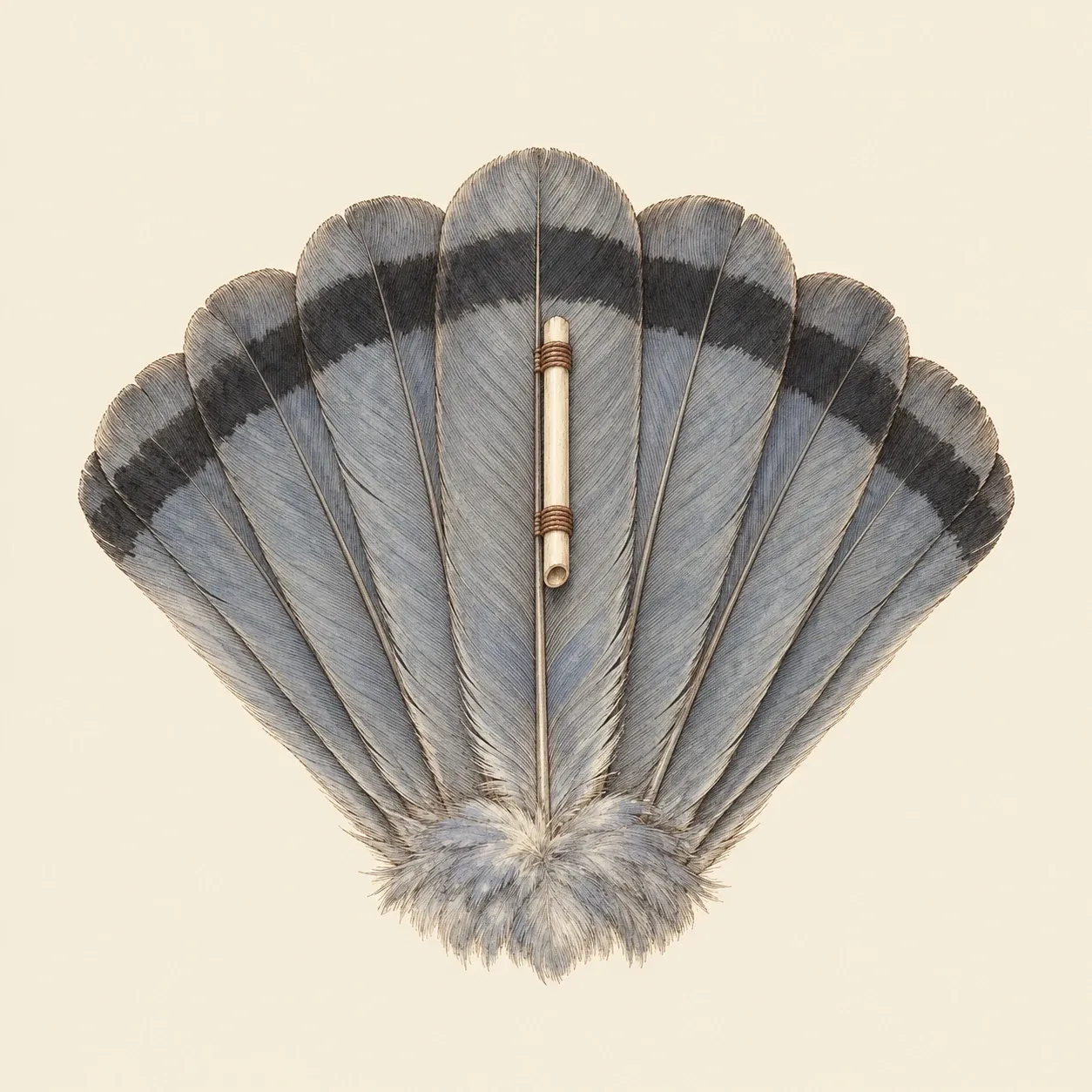 In 1870–1871 dispatches for Paris travelled in a quill tied to a tail feather.
In April 1850 Paul Julius Reuter used pigeons to carry news and stock prices between Aachen, where the German telegraph lines ended, and Brussels, gaining several hours over the mail. The service stopped once the gap in the lines was closed. During the siege of Paris in 1870–1871, balloons carried pigeons out of the city and the birds flew back with dispatches. René Dagron reduced pages of messages by photography onto films so light that one bird could carry up to twenty, and in Paris they were projected with a magic lantern and copied out by clerks. Counts of the birds differ: Alistair Horne gives 302 pigeons sent out and 57 returned, while another often quoted count gives 363 sent and about 73 back with messages.
Armies still used pigeons in the First World War. In October 1918 a pigeon named Cher Ami brought a message from an American battalion cut off in the Argonne forest, flying about 40 kilometres despite its wounds. The bird is kept at the Smithsonian’s National Museum of American History in Washington.