Quipu
Accounts tied into cords
Contents
- 1Main cord
- 2Pendant attachment
- 3Pendant cord
- 4Knot group
- 5Subsidiary cord
A quipu, also called a khipu, preserves information in the arrangement of its cords and knots. Inka numerical quipus organise values into units, tens and hundreds; colours and attachments provide further distinctions. UNESCO reports a quipu at Caral, long before the Wari and Inka examples.
What it is
A quipu is a record made from cords with other strings attached to them. Their arrangement, colours and knots preserve information. In the Inka administration, specialists called khipukamayoq made and read them to keep accounts of populations, labour and provisions.
A main cord gathers the pendant cords. Some carry subsidiary cords of their own, which can branch through several levels. The fibres include cotton and those of Andean camelids. Some cords retain their natural colours; others are dyed or combine threads of different colours.
How it works
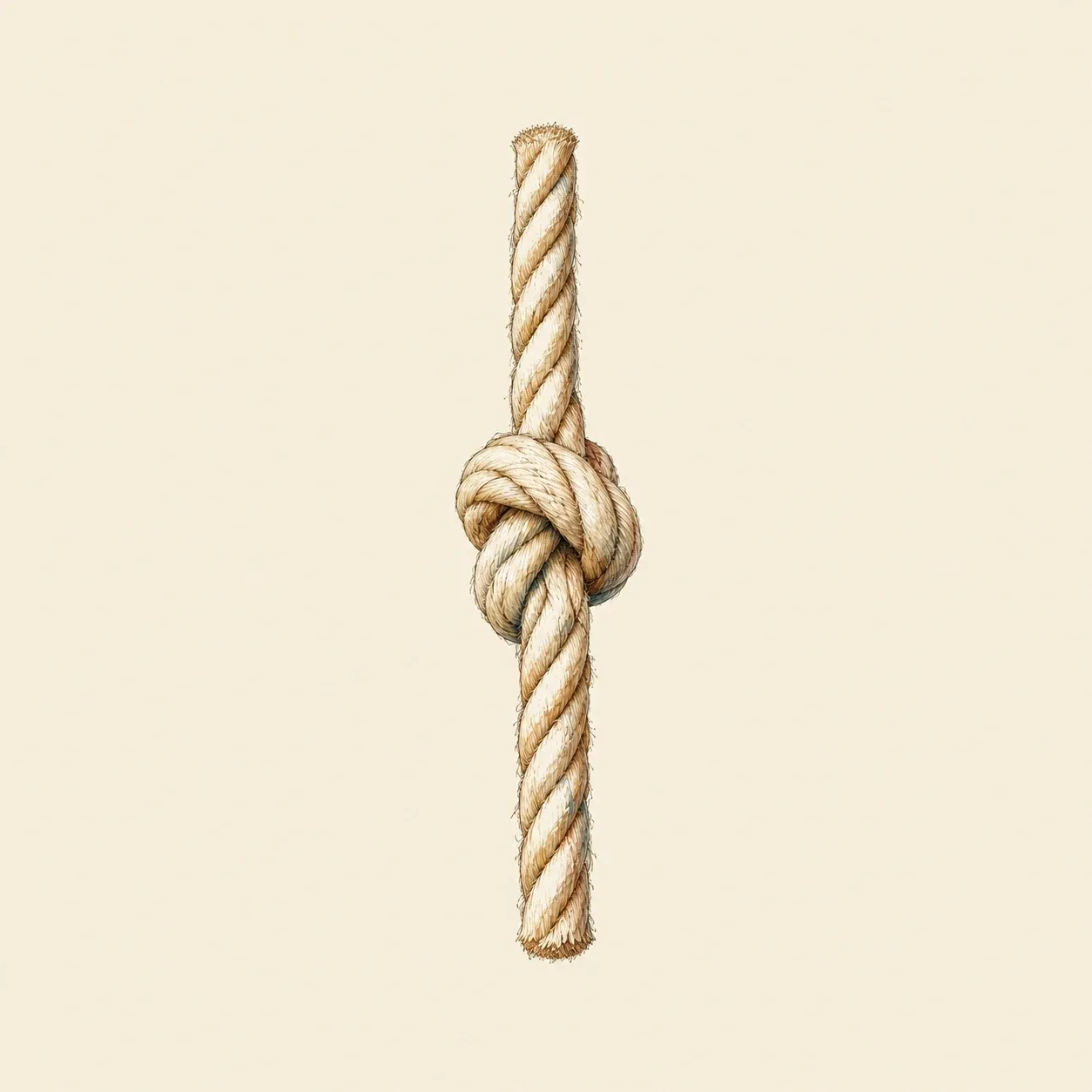 Single overhand knots form the groups that count tens, hundreds and higher positions.
In Inka numerical quipus, a knot’s value depends on its position. Units are farthest from the main cord, followed by tens, hundreds and higher places as one moves upward. This is place-value notation, with positions running along a cord instead of across a page.
Units use particular forms: a figure-eight knot represents one, while a long knot with two to nine turns records values from two to nine. In higher positions, the single overhand knots in a group are counted. Two knots in the tens position represent twenty; the same two knots in the hundreds position represent two hundred. Reading a cord brings together the values of its positions.
A cord’s colour, its place in a group and the direction of its attachment may also carry information. Reading a number therefore does not always reveal what was being counted. Some quipus do not follow this decimal organisation, and their interpretation remains debated. Inka numerical rules do not by themselves explain the earlier Wari cords.
How to do it
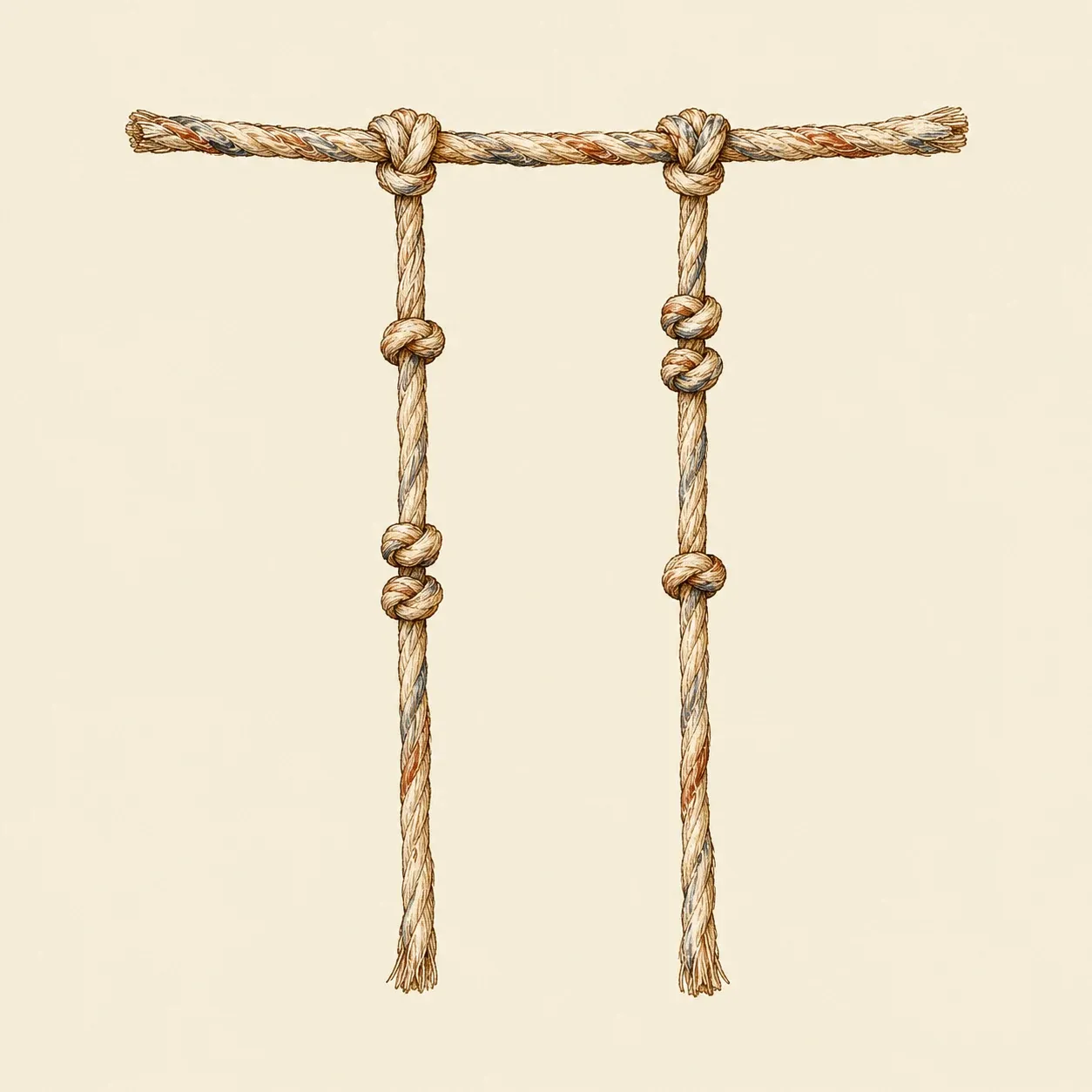 One hundred and two tens make 120; two hundreds and one ten make 210.
Prepare a main cord and two strings long enough to leave spaces between groups. Fasten the strings to the main cord with attachments that will not slip. Keep the same orientation for both and arrange their positions at matching heights; on quipus, the arrangement of attachments and groups is part of the record.
For a first exercise, leave the units positions empty and work with tens and hundreds. On the first string, tie one overhand knot in the hundreds position and two in the tens position. On the second, tie two in the hundreds position and one in the tens position. Both strings have the same number of knots, but they record different numbers: 120 and 210.
Read the groups from the bottom, retaining the empty units place, and add the values of the positions. Ask another person who knows their order to read the cords. To record a different quantity, untie the relevant group and remake it without moving the other positions. Bends observed in old quipus suggest that some knots were untied and tied again.
A subsidiary cord can then be added to a pendant to distinguish part of the account. In surviving quipus, such branches may correspond to subsets, exceptions or corrections. The meaning of a new group must be shared by its readers; a colour does not have one known meaning everywhere.
History and evolution
UNESCO reports a quipu found at Caral-Supe, a site whose development dates between 3000 and 1800 BCE. The Caral archaeological project attributes the use of quipus for recording information to that civilisation. These reports are distinct from the numerical systems documented much later among the Inka.
Wari quipus, attributed to the period 600–1000, notably include cords wrapped in coloured threads. A radiocarbon study published by Alexander Cherkinsky and Gary Urton in 2014 places the Wari samples studied between 777 and 1024. Dumbarton Oaks presents Wari examples as the earliest known quipus and notes that their numerical base remains unknown. The thread wrapping and knots do not, without further evidence, support reading them with the decimal rules of Inka quipus.
Under the Inka, and after the Spanish conquest in the sixteenth century, cords were used to record and present accounts. Colonial chroniclers describe other uses too, but their accounts do not always agree. Andean communities continued to use quipus, including to count herds and keep track of collective contributions. More recent traditions do not provide a common key to every ancient object.