Toothpaste
A paste or powder that cleans the teeth and protects the enamel
Contents
- 1Earthenware pot
- 2Lid
- 3Collapsible metal tube
- 4Cap
- 5Folded end of the tube
- 6Ribbon of paste
Toothpaste is a paste brushed onto the teeth to clean them, and most kinds now contain fluoride, which makes the enamel harder for decay to attack. The Ebers papyrus, written in Egypt in the 16th century BCE, already gives preparations for the teeth and gums, and Greek and Roman writers recorded tooth powders of ground stone, shell and ash. Tooth powders and pastes sold in jars gave way to pastes in collapsible tin tubes from the late 1880s, and a fluoride toothpaste first won the acceptance of the American Dental Association in 1960.
What it is
Toothpaste is a soft paste spread on a toothbrush to clean the teeth and gums. Its fine grains help the bristles clean the teeth and remove surface stains, and the fluoride that most pastes now contain makes the enamel harder for decay to attack. For most of its history it was a dry powder, and the word dentifrice, from the Latin for something that rubs the teeth, covers both forms.
Toothpaste has been sold in two main ways. From an earthenware pot with its lid, like the jars that a whole household shared in the 19th century, each person dipped a brush into the paste. The collapsible metal tube with a cap, squeezed to push out a ribbon of paste, took its place; Kalodont, made in Vienna, was already sold this way in 1887.
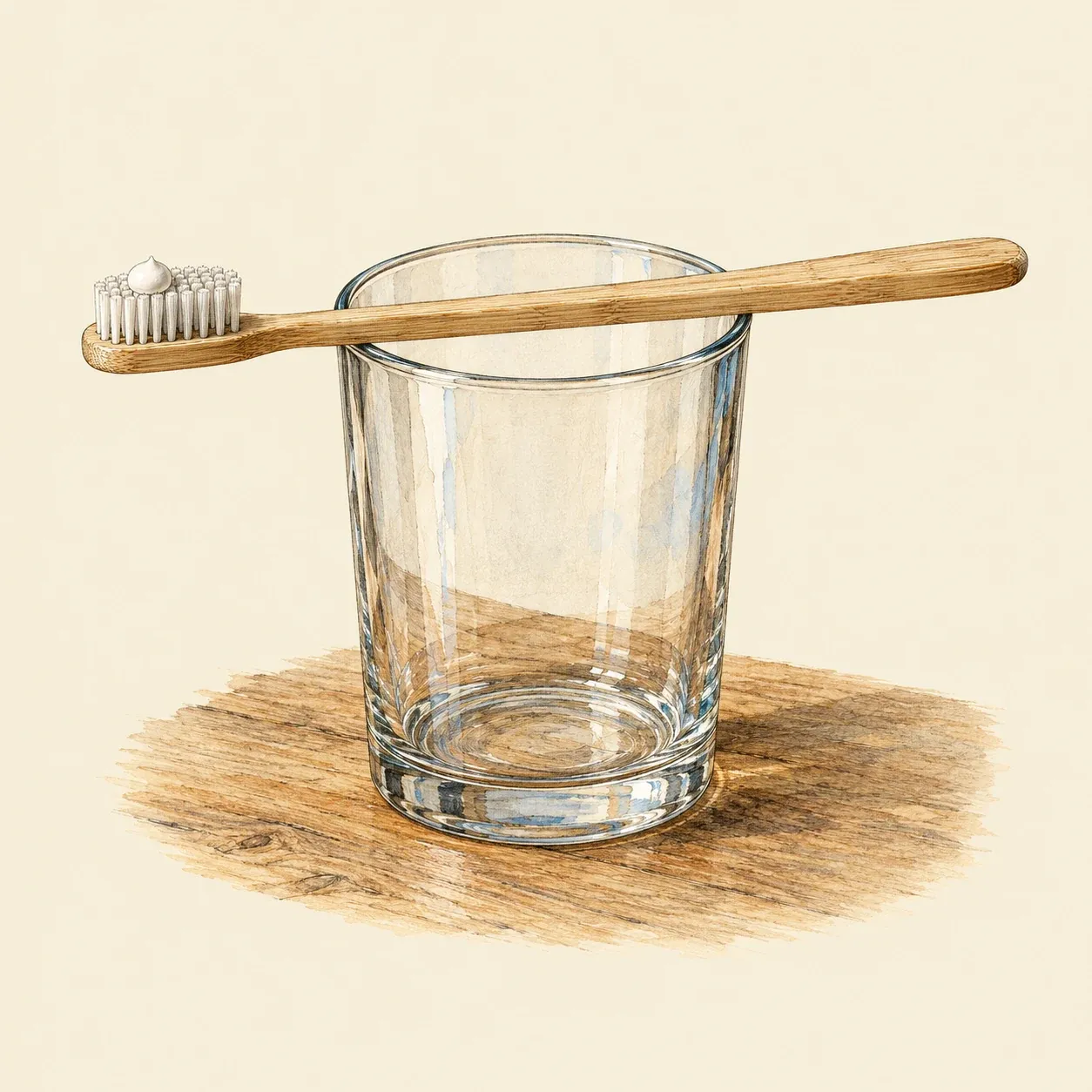 For a child of three to six, a pea-sized amount of fluoride toothpaste is enough.
Toothpaste is a regulated product, and the strength and amount matter more than the brand. Use a fluoride toothpaste sold for the purpose rather than a homemade mixture or an old recipe. In the United Kingdom the NHS advises adults to use a paste with at least 1,350 parts per million of fluoride and to brush twice a day for about two minutes. Children under three need only a smear, about the size of a grain of rice, and children of three to six a pea-sized amount; an adult should help them or watch them brush until they are at least seven. Spit out what is left without rinsing, because rinsing washes the fluoride away. A dentist may prescribe a stronger paste for people at high risk of decay.
How it works
The brush does most of the cleaning. The abrasive in the paste, usually a fine silica or calcium carbonate, helps it scour stains from the surface of the teeth. A detergent such as sodium lauryl sulfate makes the foam, humectants such as glycerol and sorbitol stop the paste from drying out, and binders made from seaweed extracts, natural gums or cellulose hold it together. Flavourings and sweeteners without calories give the taste; the American Dental Association accepts no toothpaste that contains sugar.
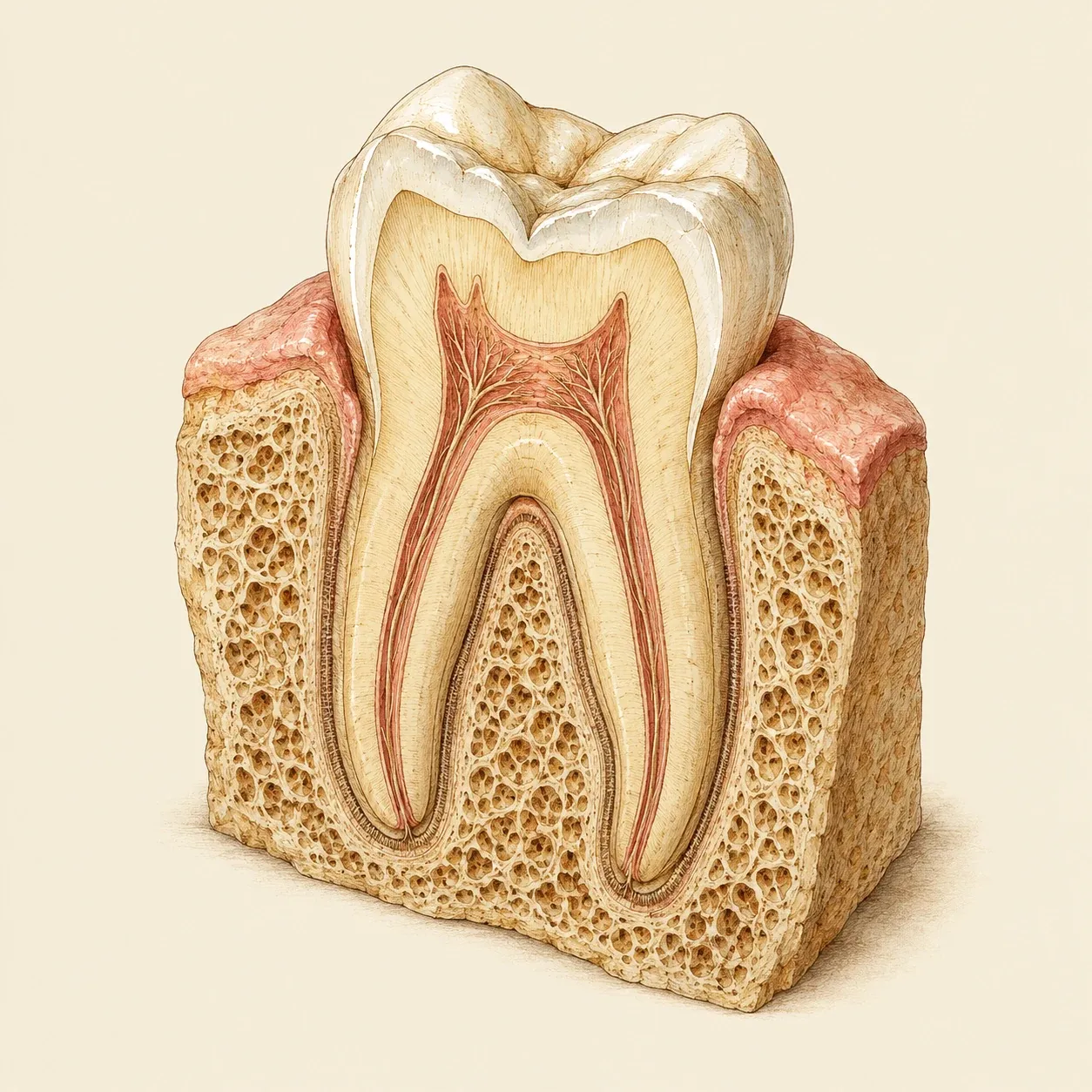 Fluoride acts on the enamel, the hard outer layer of the tooth above the gum.
The active ingredient is fluoride, added as sodium fluoride, sodium monofluorophosphate or stannous fluoride. Fluoride left on the teeth after brushing strengthens the enamel, makes it more resistant to the acid that causes decay and helps repair the earliest stage of decay, before a cavity forms. This is why dentists advise spitting out the foam rather than rinsing the mouth, and why a stronger paste on prescription helps people prone to decay. A toothpaste that carries the American Dental Association’s seal and claims to protect against cavities must contain fluoride, and its maker must first submit data and publications to the association’s Council on Scientific Affairs.
History and evolution
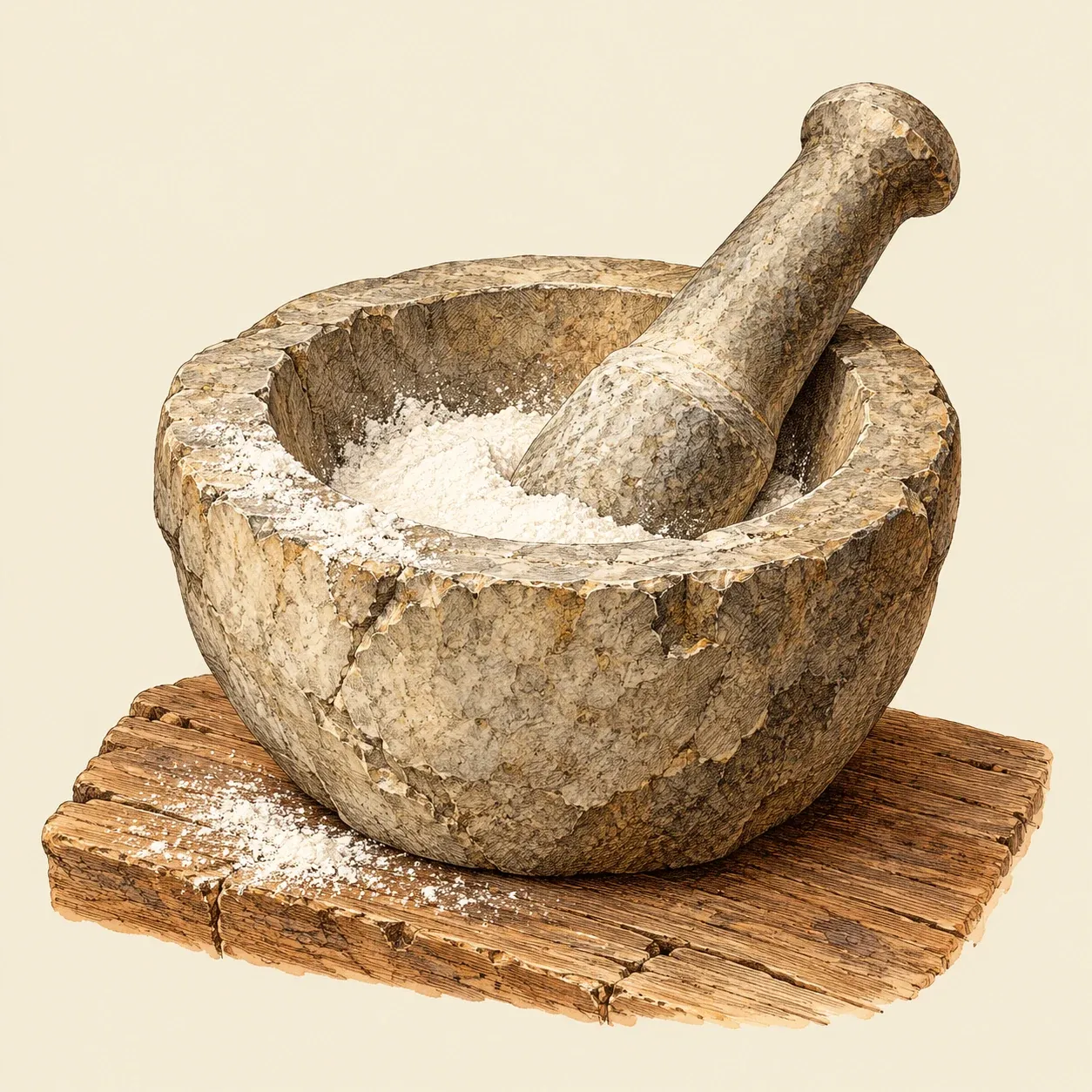 Ancient tooth powders were made of hard materials such as stone and shell, ground fine.
Egyptian medical papyri already give preparations for the teeth. The Ebers papyrus, written in the last quarter of the 16th century BCE, gathers remedies for the teeth and gums, among them pastes packed around loose teeth and mouthwashes. Fridus van der Weijden counts some of them among the early tooth-cleaning preparations, and the French society for the history of dentistry lists Egyptian dentifrices of mineral or plant powders mixed with honey. Roger Forshaw, who studied the Egyptian texts, finds little sign of a regular habit of cleaning the teeth.
Greek and Roman writers also recorded tooth powders. Diseases of Women, a treatise of the Hippocratic collection written around 400 BCE, gives one for bad breath and sore gums, made of burnt animal parts and ground stone, and calls it the Indian preparation. In the 1st century CE Scribonius Largus, a physician to the emperor Claudius, recorded the tooth powders of three women of the imperial family, Octavia, Livia and Messalina. Pliny the Elder names pumice, calcined murex shell and the ashes of antler among the ingredients, and Dioscorides oyster shell. These were powders, which kept better than a paste that dried out.
In the 19th century toothpaste and tooth powder were sold in jars, and a household often shared one porcelain jar into which everyone dipped a brush. According to the Technisches Museum Wien, Kalodont, a toothpaste made in Vienna by the firm of Sarg, was sold in tubes in 1887. In 1892 Washington Sheffield, a dentist in New London, Connecticut, began selling his dental cream in a collapsible tin tube, after his son Lucius had seen painters in Paris squeezing their colours from metal tubes.
From 1949 Joseph Muhler, Harry Day and William Nebergall at Indiana University worked on adding fluoride to toothpaste with a grant from Procter & Gamble. They paired stannous fluoride with calcium pyrophosphate, an abrasive they had made compatible with fluoride, and Procter & Gamble put the paste on sale as Crest in 1955. In 1960 the American Dental Association gave Crest its provisional acceptance for preventing decay, the first time it had accepted a toothpaste for a therapeutic effect.