Bee venom collector
An electric frame at the hive entrance that gathers the venom of honeybees
Contents
- 1Frame beehive
- 2Venom collector at the hive entrance
- 3Grid of fine wires
- 4Glass plate
- 5Electric control box
A bee venom collector gathers the venom of honeybees without killing them. A flat frame strung with fine wires over a sheet of glass is slipped into the entrance of a hive, and a weak electric shock makes the bees walking on it sting the glass. The venom dries there on the glass. Chemists first used electric shocks to make bees sting in 1954, and the hive collector described by Allen Benton and his colleagues in 1963 became the model for most later designs.
What it is
A worker honeybee keeps a small reserve of venom in a sac at the base of its sting and uses it to defend the colony. Laboratories want that venom to study its many components, and makers of medical extracts need it to treat people who are dangerously allergic to stings. Each sting gives only a tiny drop, so a useful amount takes a very large number of bees. A venom collector is a device that gets thousands of bees from the same hive to sting a clean surface in a short time, keeps their venom and leaves the bees alive.
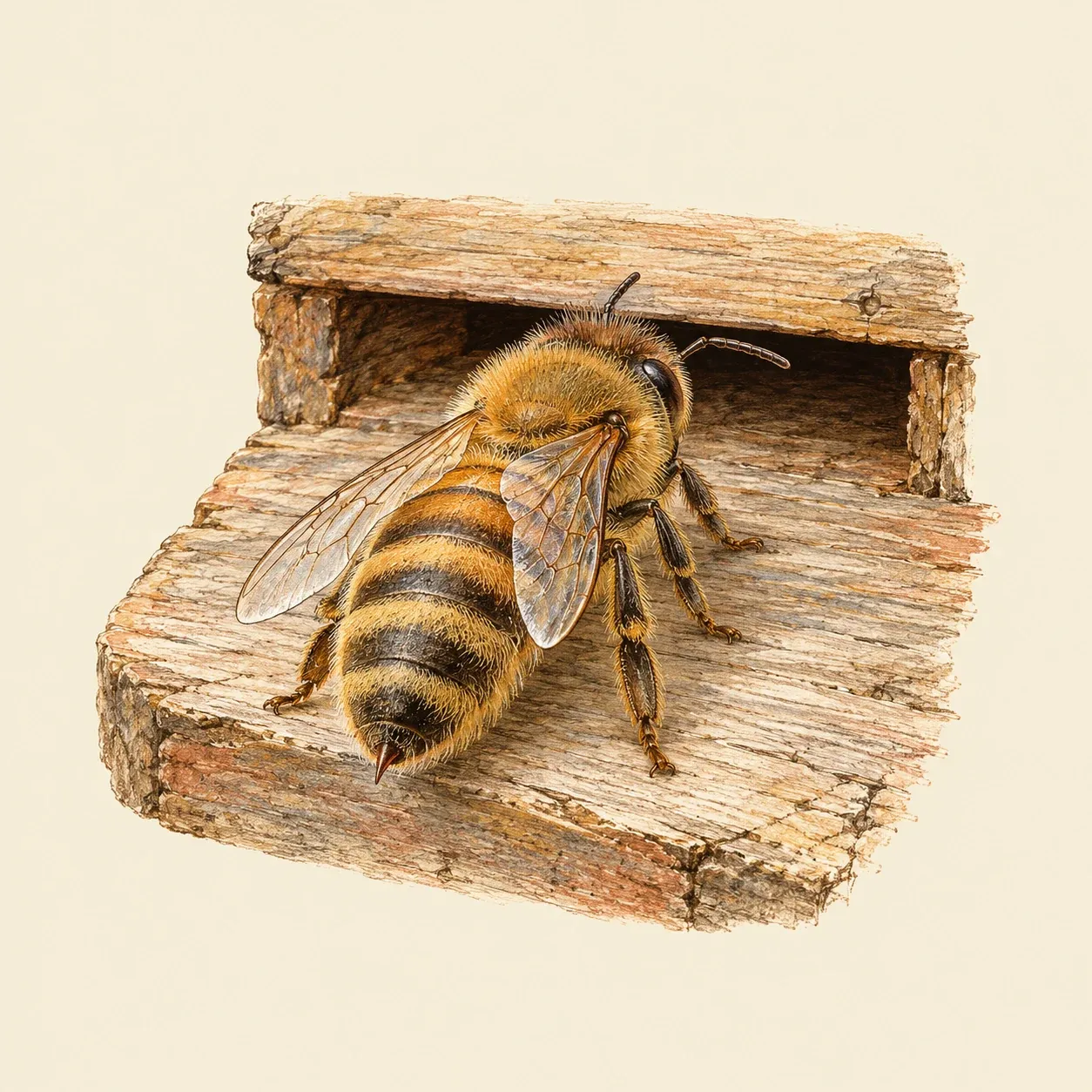 The sting of a worker honeybee is barbed.
The sting evolved from the egg-laying organ of the ancestors of bees, which is why only females have one. The sting of a worker honeybee carries fine barbs. When it pierces a tough skin such as ours, the barbs hold it fast, and the bee tears away its sting together with the venom sac and dies. On a hard, smooth surface such as glass, or on a thin, slippery sheet, the barbs find no grip. The bee leaves a drop of venom and pulls its sting back out. A collector relies on this difference. It offers the bees a surface they can sting and let go of, so that the colony keeps its workers and the venom stays behind, pure and free of bee parts.
How it works
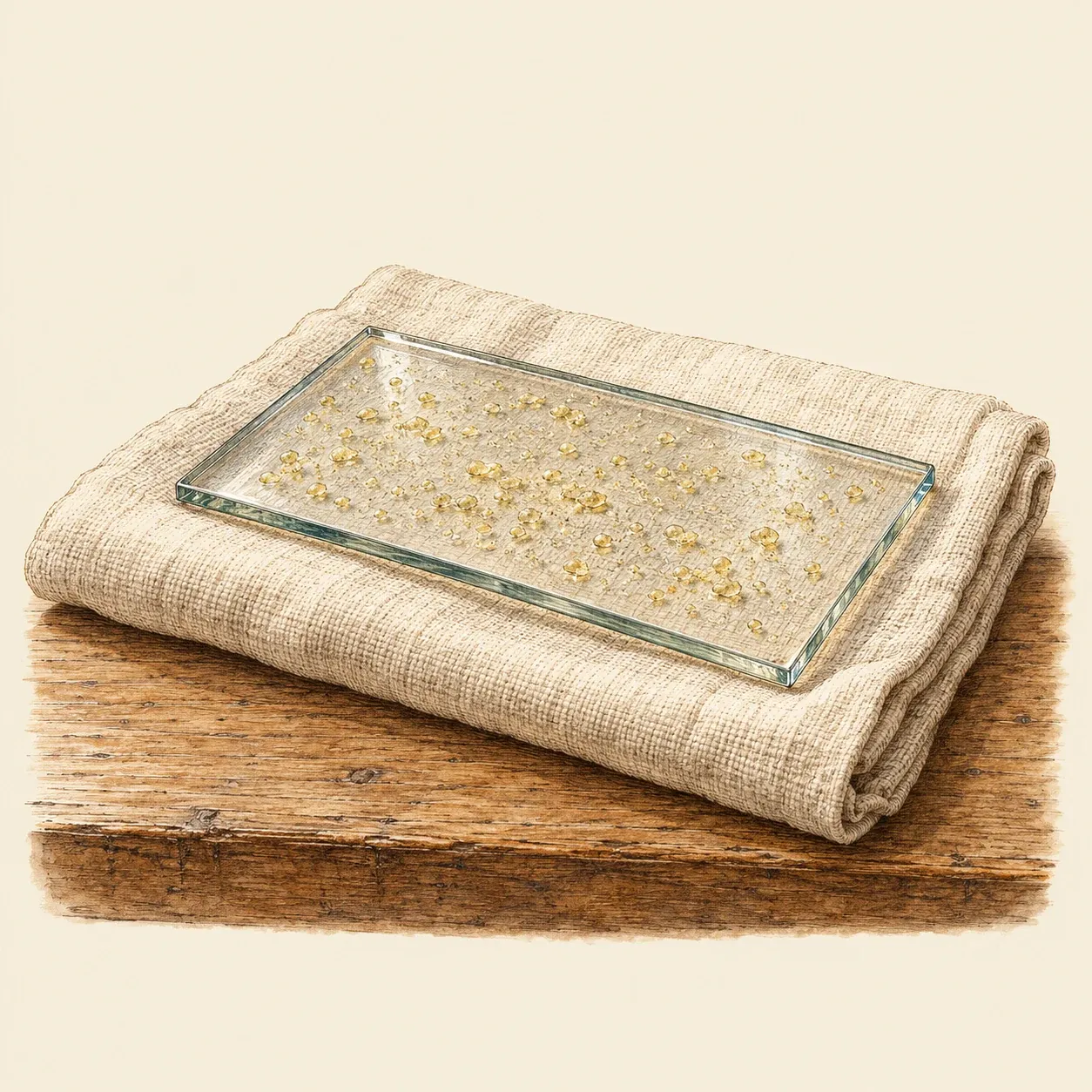 Dried venom forms small pale spots on the glass.
The collector is a flat frame that slides into the hive at its entrance, between the bottom board and the lowest box, or sits in a box under the cover at the top. Fine wires run across the frame above a pane of glass, and a small box sends a weak electric current through them. A bee walking across the wires feels a mild shock and reacts as it would to an attack: it stings whatever it is standing on. Its sting slides off the glass, the bee walks away, and a droplet of venom is left behind.
Venom is mostly water and dries quickly in the air into pale yellowish flakes. Dry venom is an irritating dust that burns the eyes and airways, and repeated contact can make a person allergic, so those who handle it wear gloves, goggles and a dust mask. The method also has a cost for the bees. The shocks alarm the whole colony, which stays agitated after the collection.
History and evolution
Earlier methods handled the bees one at a time and gave small amounts of impure venom. Electric shocks were first used for the purpose in 1954 by the chemists O. Markovič and L. Molnár, who published their work on isolating bee venom in the Czechoslovak journal Chemické zvesti. The English inventor Deryck Palmer applied for an American patent on an apparatus in which bees stood on fine charged wires over a thin sheet and stung through it.
In 1963 Allen Benton, Roger Morse and Joseph Stewart of Cornell University described in Science a collector that slid under the brood box of a hive and could be moved from one hive to the next. Most later collectors are variations on their design, and the same principle is used in many countries, with small changes for local bees.
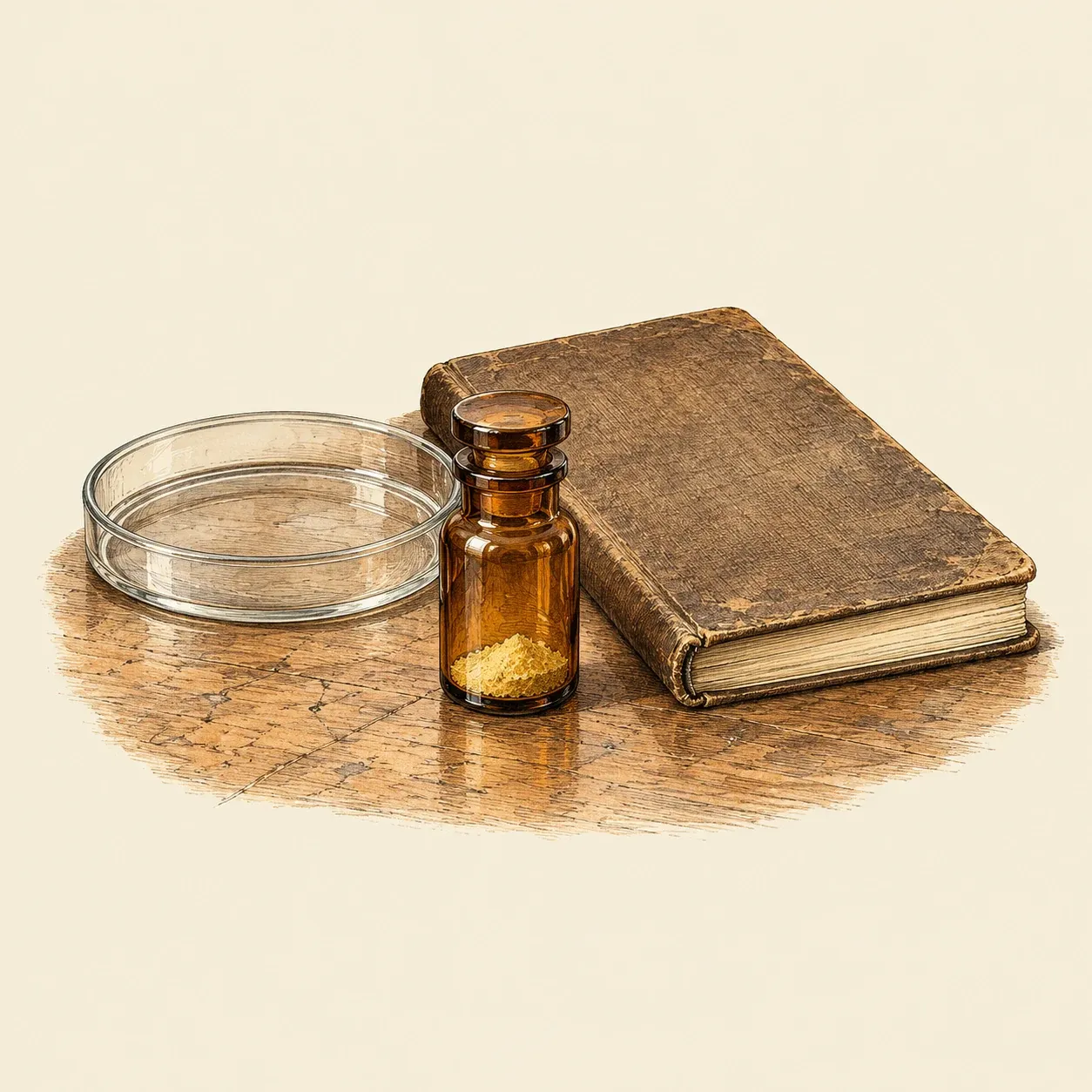 In the laboratory, dry bee venom is a pale yellow powder.
Pure venom found its main accepted medical use in the treatment of allergy. People who react dangerously to bee stings can be desensitised by doctors. A controlled trial published in 1978 by Kevin Hunt and his colleagues, Benton among them, found that pure venom protected allergic patients better than the extracts of whole bees used until then. Pure venom then took their place in treatment. Venom for these extracts must be clean, and collection on glass gives a dry product that is easy to ship and process. In 1996 a bulletin of the FAO described desensitisation as the only legally accepted medical use of bee venom in Western Europe and North America.