Composting
Letting waste rot in air into food for the soil
Contents
- 1Bay of fresh kitchen and garden waste
- 2Layer of brown material: straw and dry leaves
- 3Layer of green material: grass and peelings
- 4Hot core of the working heap
- 5Slatted sides that let air in
- 6Bay of mature compost
Composting is the controlled rotting of plant and food waste in air. Bacteria and fungi break the waste down in a heap that heats up as they work and leave a dark, crumbly compost that feeds the soil. Around 160 BCE Cato listed what a Roman farmer could make compost from and told him to keep a large dunghill.
What it is
Composting is rotting under control. Kitchen scraps, garden waste, straw, leaves and manure are piled so that air can reach them, and bacteria, fungi and other small organisms break them down into compost, a dark, crumbly material that smells of earth. Dug into fields and gardens, it gives back to the soil organic matter and nutrients taken from it by crops.
Composting needs oxygen. When air cannot get in, other microbes take over and the heap turns wet, sour and smelly. Rotting without air in a closed tank is a different process, anaerobic digestion, which yields biogas. A garden heap or bin treats the waste of one household, while municipal plants compost the separately collected biowaste of whole towns in long turned rows or in closed halls.
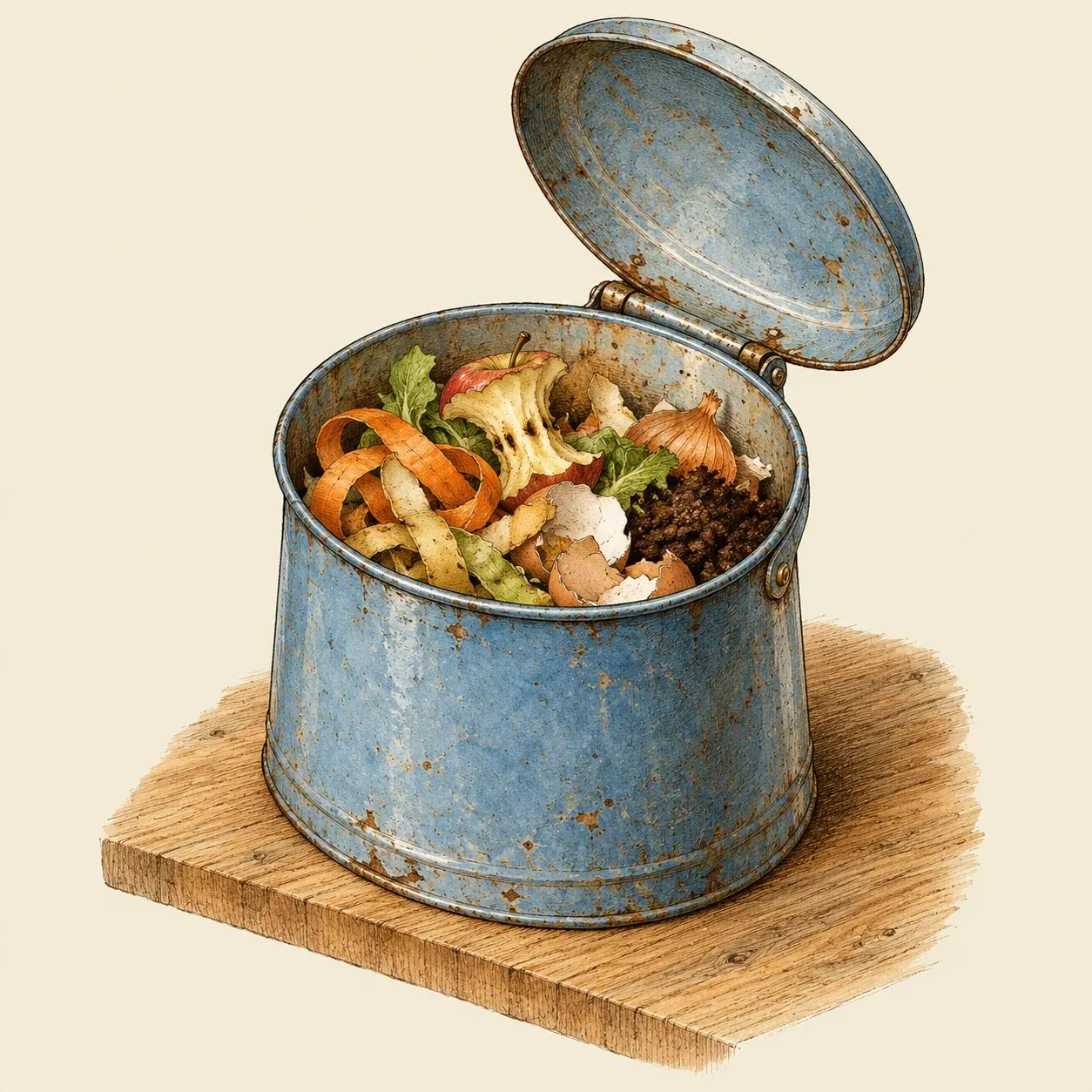 Peelings, eggshells and coffee grounds are typical greens from the kitchen.
Almost any plant matter will compost. Gardeners speak of greens, wet materials rich in nitrogen such as fruit and vegetable scraps, grass clippings and coffee grounds, and browns, dry materials rich in carbon such as dead leaves, straw, twigs, shredded paper and cardboard. The US Environmental Protection Agency advises keeping meat, fish, bones, dairy products, fats, pet waste, diseased plants and weeds with seeds out of a garden heap. Some of these attract animals, and a garden heap does not usually get hot enough to break the rest down fully.
How it works
The work is done by microbes that feed on the waste. Carbon gives them energy and nitrogen lets them multiply, so the mix matters: the ideal is about 30 parts of carbon to one of nitrogen, which in practice means mixing greens with browns. The microbes also need water, at a moisture of about 40–60%, and air in the spaces of the heap. Too wet, and water fills the spaces, the heap goes airless and smells; too dry, and the work slows down.
As the microbes multiply they give off heat, and a well-built heap warms from the inside. Its core can reach 55 °C or more, the temperature that compost rules set for destroying disease-causing organisms. If the heap gets hotter still, the microbes themselves begin to die. Large heaps are therefore turned or aerated to keep them from overheating, and turning also brings in fresh air and moves material from the cool outside to the hot centre. When the easily decomposed matter has been used up, the heat falls and curing begins, a slower stage in which the compost matures and turns dark and granular.
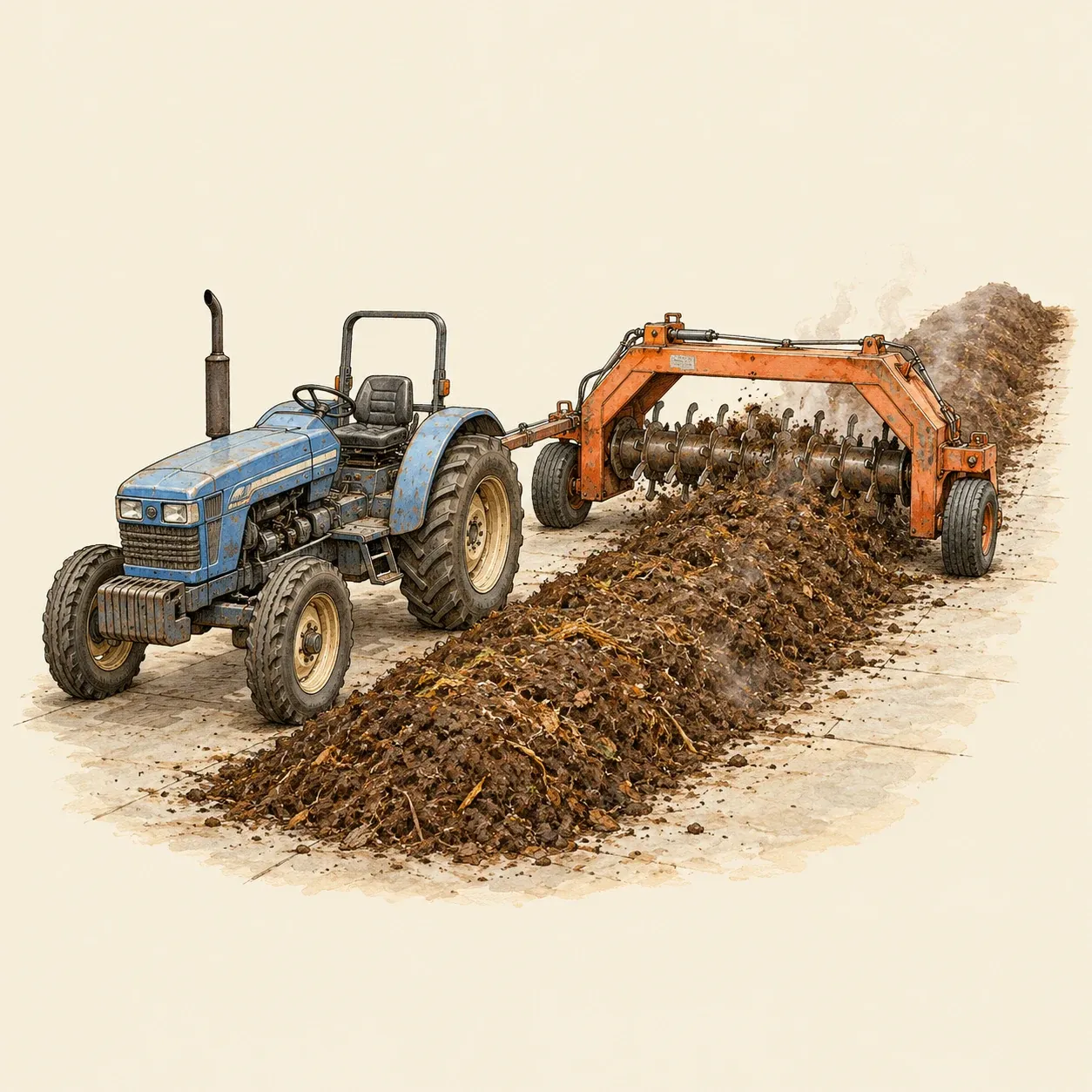 At a composting plant, machines turn long windrows to let air in and spread the heat.
Composting plants run the same process on a larger scale. Windrows, long low piles, are turned by machines. Aerated static piles stay in place while fans push or pull air through them, and in-vessel systems start the process in closed drums, tunnels or halls before the material is left to cure. Plants watch the temperature closely, because it governs both the speed of decay and the destruction of disease-causing organisms, and rules for compost that is sold or spread on farmland set how it must be treated, matured and tested. A garden heap gives no such guarantee.
How to do it
A garden bin can be built from wooden pallets or boards. Three sides and an open front, with gaps of about a finger’s width between the slats, let air in and keep the heap tidy, and a lid or an old sack keeps off heavy rain. Two or three bays side by side let you fill one, leave one to work and empty one. Stand the bin on bare soil in a sheltered spot so that worms and other soil animals can move in from below.
Start with a layer of twigs or coarse stems at the bottom for air, then add greens and browns in alternate layers, or mix them as you go. Keep the heap damp but not soaking, adding water to dry browns and more browns to a wet, smelly heap. Cover kitchen scraps with browns or a little soil so that they do not draw flies and animals. Turn the heap with a fork every few weeks, bringing the outside into the middle.
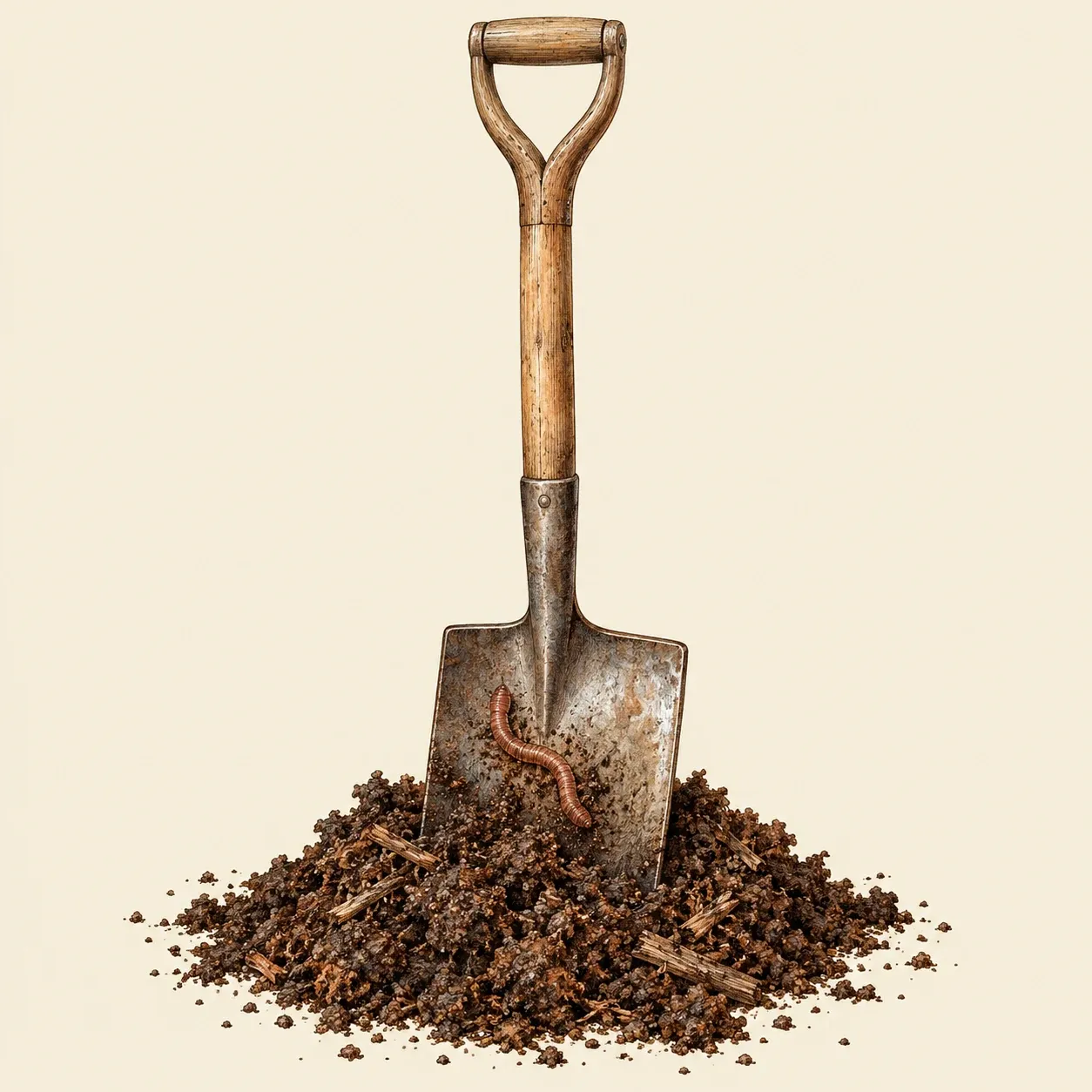 Mature compost is dark and crumbly, and the waste it came from can hardly be recognised.
When the heap no longer warms up after turning, the active stage is over. Leave the compost to cure without adding fresh waste. It is ready when it is dark and crumbly, smells of earth and the original waste can hardly be recognised. In a garden this takes months, and longer in cold weather. Sieve out the pieces that have not rotted and return them to the next heap.
Wear gloves when handling compost and wash your hands afterwards, since it is full of living microbes, and avoid breathing the dust when you turn a dry heap. Leave out meat, fish, dairy products, pet waste and diseased plants. A garden heap cannot be relied on to get hot enough to kill disease-causing organisms, so use only well-matured compost, dig it into the soil rather than spreading it on crops that are eaten raw, and keep children from playing in the heap.
History and evolution
Farm writers of antiquity already treated rotting waste as a resource. Xenophon’s Oeconomicus, a Greek dialogue on running an estate, advised throwing the weeds and refuse cleared from a field into standing water, where time would turn them into manure.
Around 160 BCE Cato listed what a Roman farmer could make compost from: straw, lupins, chaff, bean stalks, husks and the leaves of holm oak and oak. He told the farm manager to keep a large dunghill and to clean the manure of foreign matter and break it up before carting it out in autumn. Later, Varro wanted two manure pits beside the farm buildings, or one pit in two parts, one for fresh manure and the other for rotted manure ready for the fields, because manure is better well rotted than fresh. He advised shading the pit with branches and leaves so that the sun would not dry it out.
Modern composting took shape in the twentieth century. At Indore, in central India, Albert Howard and Yeshwant Wad worked out a method that they published in 1931 in The Waste Products of Agriculture. Plant wastes were mixed with dung, urine-soaked bedding, earth and wood ash in shallow pits, so that air could reach the whole mass, kept moist and turned several times while they rotted. Howard insisted that the process stay aerobic: a bad smell and flies meant that the heap had to be turned at once.
Towns also took up composting. In the Netherlands the company VAM carried household waste from The Hague by train to Wijster in Drenthe and made it into compost for the poor soils of the province, and it long remained the country’s main maker of municipal waste compost. European Union law has required since the end of 2023 that biowaste be either separated and recycled at source, by home composting for instance, or collected separately.