Condom
A thin barrier against pregnancy and infection
Contents
- 1Tank of liquid latex
- 2Glass formers on the chain
- 3Drying oven
- 4Rim rolled at the open end
- 5Electronic testing station
A condom is a thin sheath, today usually made of natural rubber latex, used during sex as a barrier. It prevents pregnancy and lowers the risk of passing on sexually transmitted infections, HIV among them. In the tenth century the Persian physician al-Akhawayni described a sheath made from an animal's gall bladder, and in the 1560s the anatomist Gabriele Falloppio described a medicated linen sheath against syphilis. Condoms are now made by the billions every year on dipping lines, and each one is tested before it is packed.
What it is
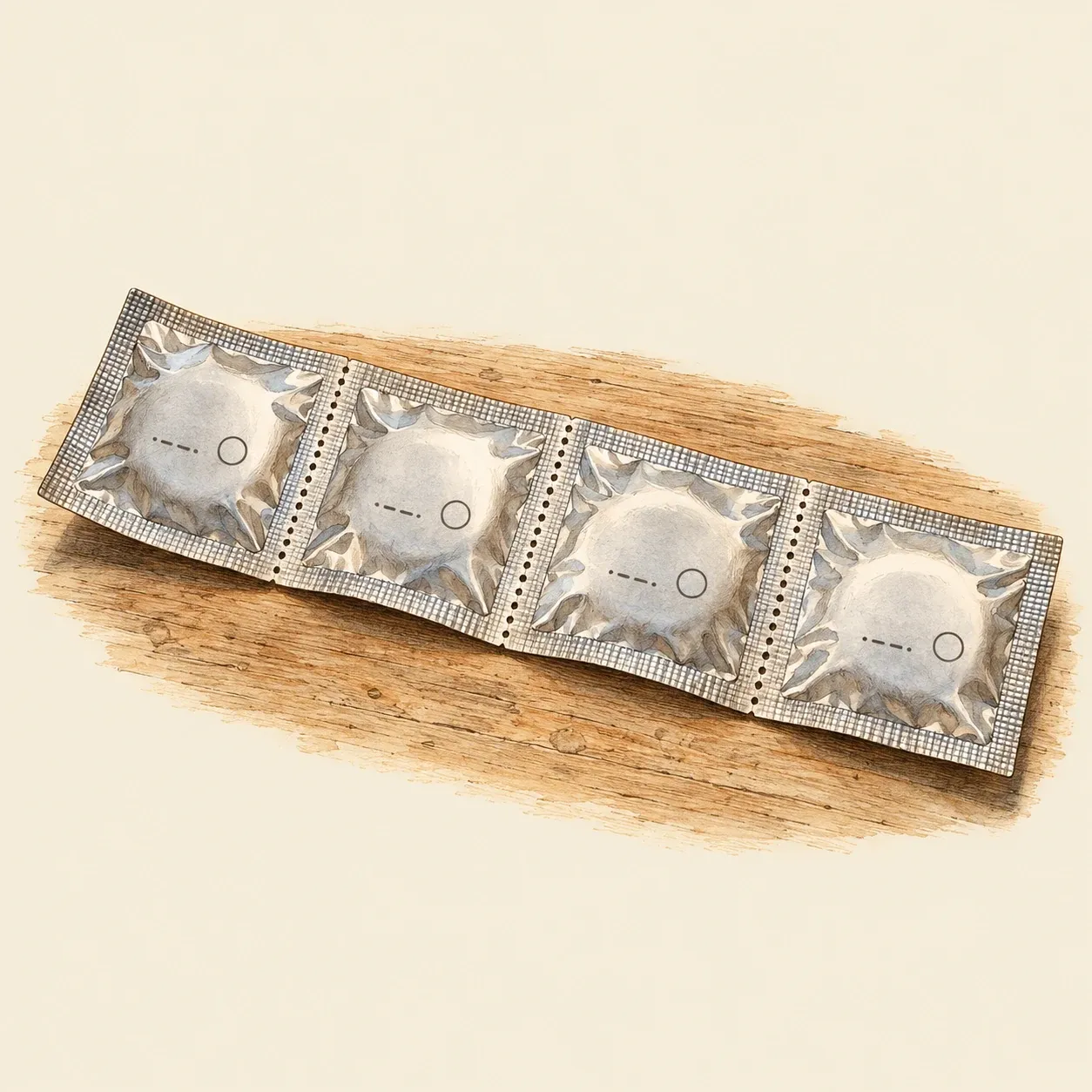 Each sachet carries the lot number and the expiry date of the condom inside.
A condom is a thin, closed sheath that is used during sex as a barrier. When it is intact and used correctly, it keeps semen and the microorganisms it may carry from passing from one partner to the other. It therefore prevents pregnancy and reduces the transmission of sexually transmitted infections, including HIV. The World Health Organization calls it a proven way to prevent both, and treats it as a medical device to be regulated as such. Most condoms are made of natural rubber latex, which is thin, strong and elastic, and factories around the world produce many billions every year. Each lot is checked against an international standard, ISO 4074. The shelf life of each condom design is set by ageing studies on representative production lots, and each sealed sachet carries the resulting expiry date, after which the latex can no longer be relied on. Only certified condoms, tested in this way, give this protection. A sheath made at home, or one that is damaged or out of date, gives no reliable protection.
How it works
A condom works only if its film has no holes and does not tear. Factories make it by dipping. Liquid latex, the milky sap of the rubber tree, is first mixed with the chemicals that will vulcanise it, the same process that turns raw rubber into a durable material. Smooth glass moulds called formers hang from a moving chain. They dip into a tank of latex, pass through an oven to dry, cool, and dip again, so the film builds up evenly in two or more layers. The open end of the film is then rolled down the former into a small rim. The condoms are soaked in water to wash out impurities and proteins that can cause allergies, blown off the formers with a jet of air, washed, powdered and dried.
Every condom is then tested electronically. It is pulled over a metal mandrel and placed in an electric field. Rubber does not conduct electricity, so a current reaching the mandrel reveals a hole, and that condom is rejected. Samples from each lot also go to the laboratory. Some are filled with water to look for leaks, or tested in a salt solution through which an electric current flows only if there is a hole. Others are inflated with air until they burst, and must hold a minimum volume and pressure before they do. The sealed sachets are checked as well, since a leaking pack lets the latex age. A lot that fails any of these tests is discarded.
History and evolution
 Falloppio’s lectures on syphilis were printed in Padua after his death.
The oldest description of such a sheath in a medical text is Persian. In the tenth century the physician al-Akhawayni Bukhari wrote a guide to medicine for students, the Hidayat, which recommends a sheath made from an animal’s gall bladder, worn on the penis to prevent pregnancy. In Europe, a sheath against disease was described by Gabriele Falloppio, professor of anatomy at Padua, who died in 1562. His lectures on the French disease, as syphilis was then called, were printed in Padua in 1563 and 1564. He recommended a small linen sheath soaked in a medicinal decoction and applied to the penis after intercourse, a medicated covering against the infection rather than a barrier worn during sex like the later membrane condoms. Other early sheaths were made of silk, or of the gut and membranes of animals, including pig’s gut and fish skin. By the eighteenth century, sheaths of linen or animal gut were on sale.
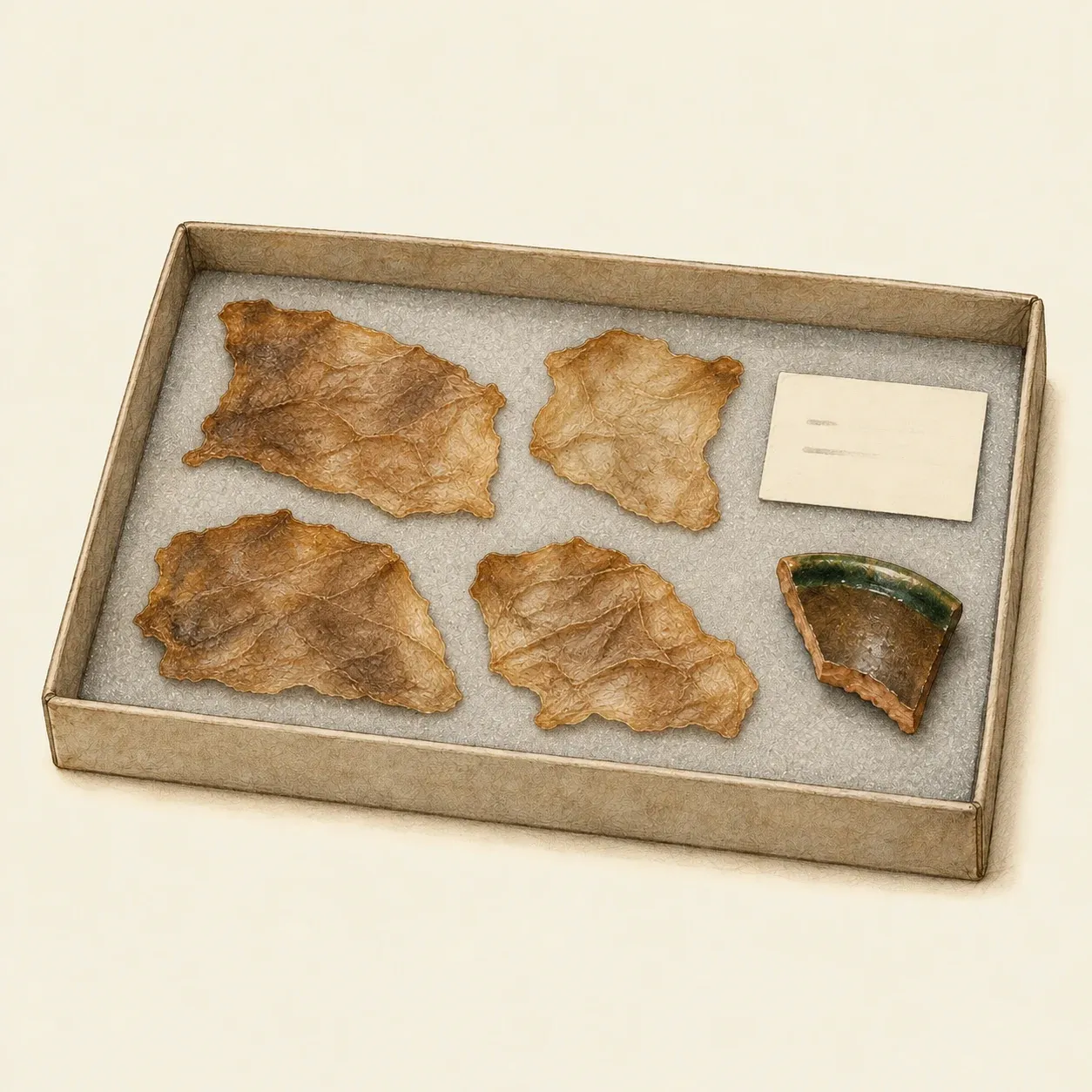 Excavated fragments of animal membrane like these are the earliest definite physical evidence of condoms in post-medieval Europe.
In England, excavations at Dudley Castle found ten condoms made of animal membrane in the latrines of the keep, which were sealed in 1647 when the castle’s defences were pulled down. A Royalist garrison had occupied the castle during the Civil War. Since the latrines were sealed in 1647, the condoms were left there before that year. The great change came with vulcanised rubber: rubber condoms appeared in the 1850s, and by 1860 they were made on a large scale. In Berlin, Julius Fromm started a one-man business in 1914 and founded Fromms Act in 1916. He dipped glass forms several times into rubber dissolved in petrol and vulcanised the film, which gave thin condoms without a seam. In 1938 the Nazi regime forced Fromm, who was Jewish, to sell his company far below its value, and he died in London just after the end of the Second World War. Liquid latex replaced dissolved rubber in the 1920s and 1930s. The World Health Organization published its first condom specification in 1989, and electronic testing of every condom is now standard practice.