Seed selection and saving
Choosing plants, keeping the next crop alive
Contents
- 1Pea plant selected for seed
- 2Pods at dry maturity
- 3Ventilated drying rack
- 4Sorted seed lot and closed dry container
- 5Separate sample for a germination test
Saving part of a harvest for sowing means choosing parent plants, allowing their seeds to mature and keeping those seeds alive in storage. Peas are an easy crop to learn on; the practice itself goes back to the first cereal farmers of Southwest Asia.
What it is
At harvest, some seeds are set aside rather than taken to the kitchen. They will provide the next crop. Seed selection and saving bring together the decisions needed to keep that seed alive and grow plants with wanted characteristics. A seed may survive storage and germinate perfectly well yet produce an unexpected plant. Its parentage matters as much as its condition.
The choice starts while the parent plants are still growing, before their harvests become an anonymous mixture. Health, maturity and the characteristics of the variety all count. Keeping only the last peas missed during picking would leave parent selection largely to chance. Peas make a good start, provided the population is identifiable, non-hybrid and open-pollinated, so that it can be followed from one season to the next.
How it works
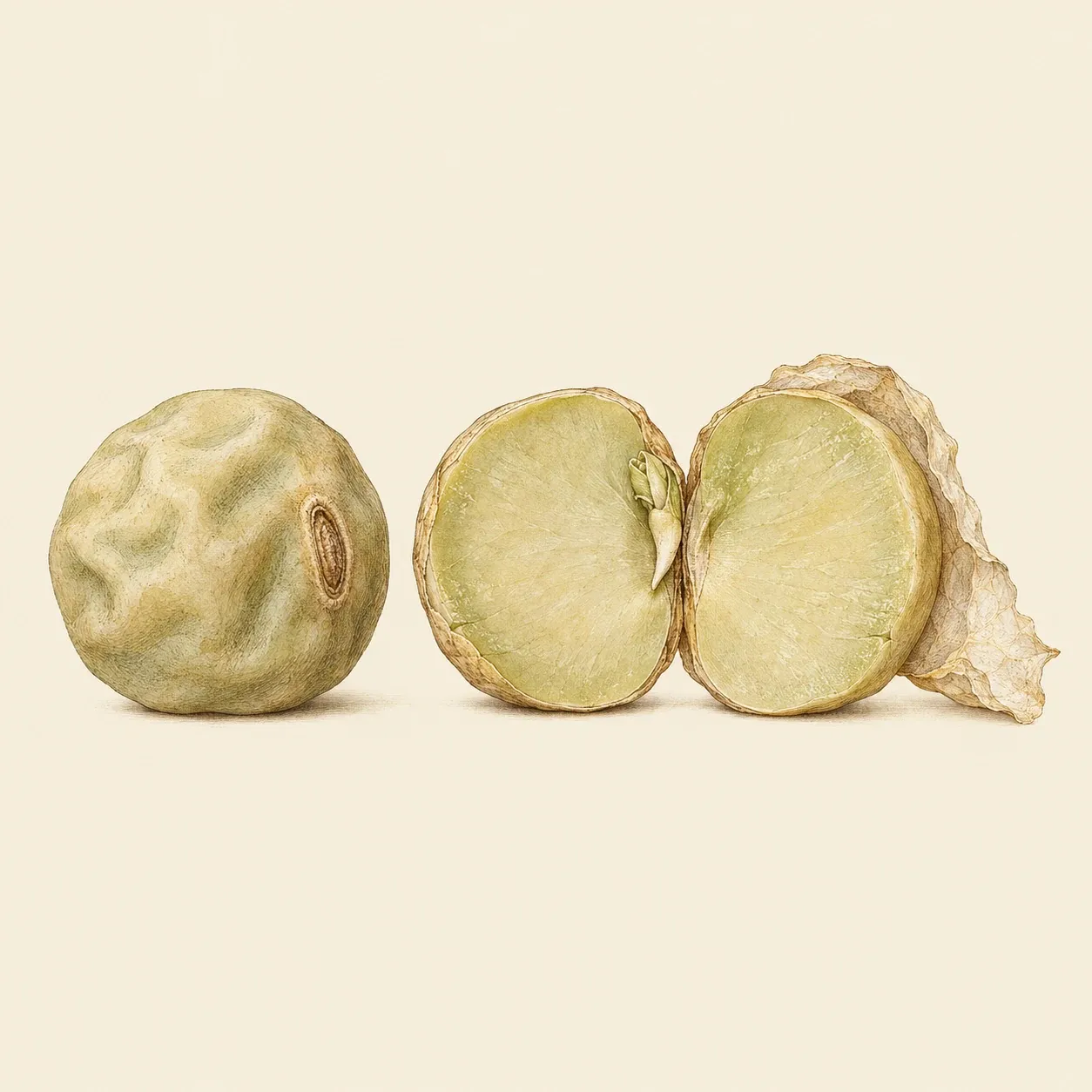 Inside the seed coat, the embryo lies with the food stored for its first growth.
Inside a seed, an embryo has stored food to support its first growth. Drying slows its activity and allows seeds of suitable species to survive an unfavourable season. Heat and moisture generally hasten the deterioration of dry vegetable seed. A container can keep outside moisture away only when its contents are sufficiently dry before sealing. Closing a jar of damp seed traps that moisture inside.
Peas mostly pollinate themselves, which makes maintaining a variety easier, though crossing is still possible. Open-pollinated does not mean self-pollinating. It describes a variety that can reproduce its characteristics under suitable conditions; its flowers may receive pollen from other plants. Maize and many squashes need different management of pollen movement and the breeding population. No single isolation distance suits every species.
Seeds saved from an F1 hybrid are not necessarily sterile. They may germinate, but the next generation can reshuffle the characteristics combined in the hybrid parent. Someone wanting to maintain a known variety should start with a non-hybrid population and track its identity. Germination alone cannot establish whether a seed will grow true to type.
How to do it
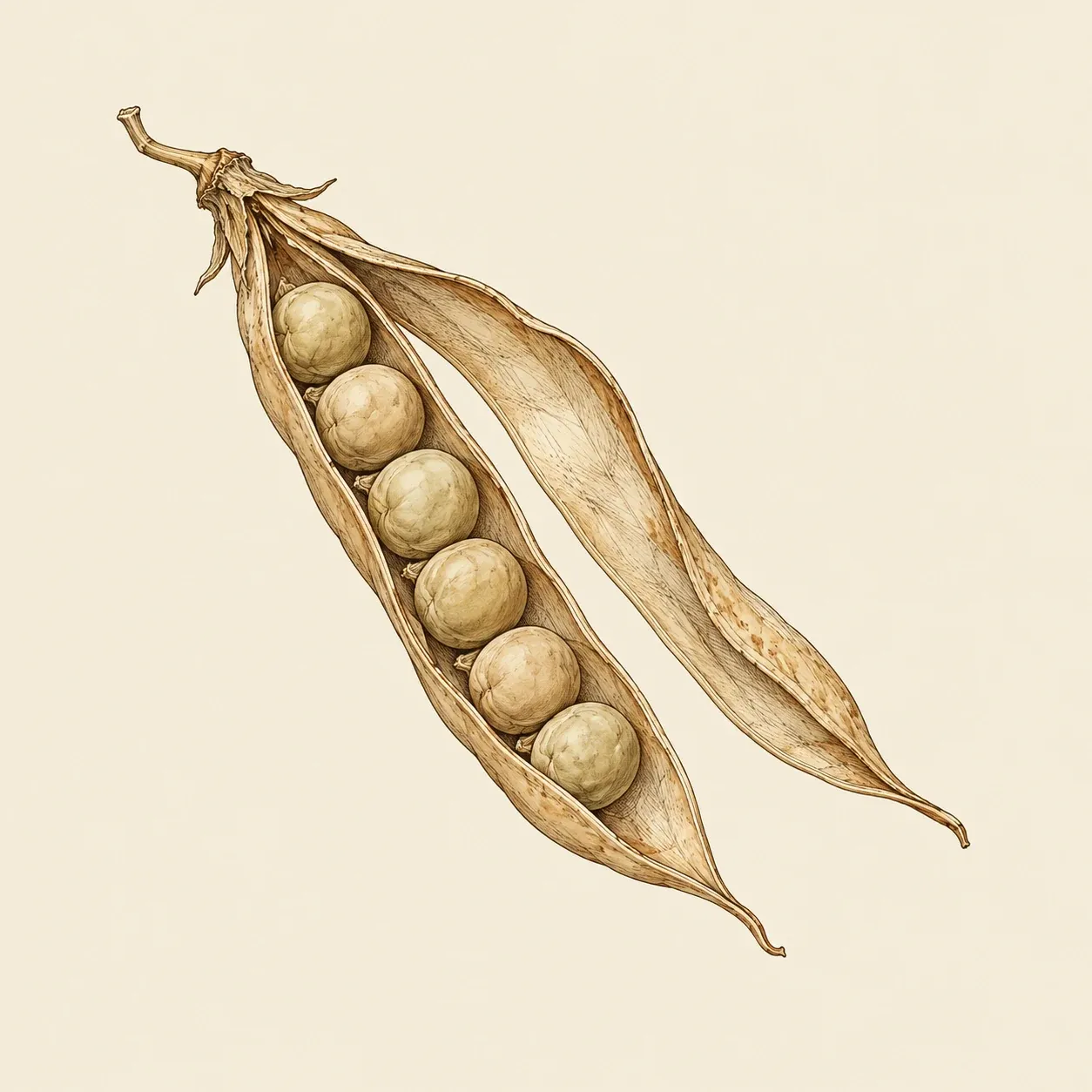 A dry pod opens to release seed for the next sowing.
Reserve several healthy plants typical of one pea variety. Mark them during growth so that not all their pods are picked while still tender. Let the pods mature on the plants until they turn brown and the seeds rattle inside. Gather them before the pods split and scatter their contents. Peas intended for eating green are harvested much earlier than peas intended to supply mature seed.
Spread the pods on a clean, ventilated surface sheltered from rain and damp. Finish drying before shelling. The time required depends on the surrounding air and the condition of the crop; elapsed days alone cannot show that a batch is dry. Do not use an oven. Remove debris and damaged seeds, keeping seed from different origins apart throughout the work.
The pea weevil lays its eggs on young pods, and its larvae grow inside the seeds, often unseen. If the crop may be infested, put the fully dry seed in an airtight jar and freeze it. Utah State University Extension advises 24 to 30 hours; other seed savers recommend 48 to 72. Let the closed jar return to room temperature before opening it, so that no moisture condenses on the cold seed.
Put dry seeds in packets labelled with species, variety and harvest year, inside a clean, tightly closed container. Keep it cool and dry. Without refrigeration, choose a stable place protected from pests, without expecting the same storage life. Reject seed from diseased plants: drying does not make it disease-free. Keep seed stocks separate from food, never eat treated seed and keep such lots away from children and animals.
Before sowing, take a small sample and place it on a moist support under conditions suitable for peas. Record how many seeds were tested and how many germinated. Keep the main stock dry and separate from the test. This method concerns vegetable seeds that tolerate drying. It cannot be extended to every tree seed or tropical plant, some of which are damaged by drying.
History and evolution
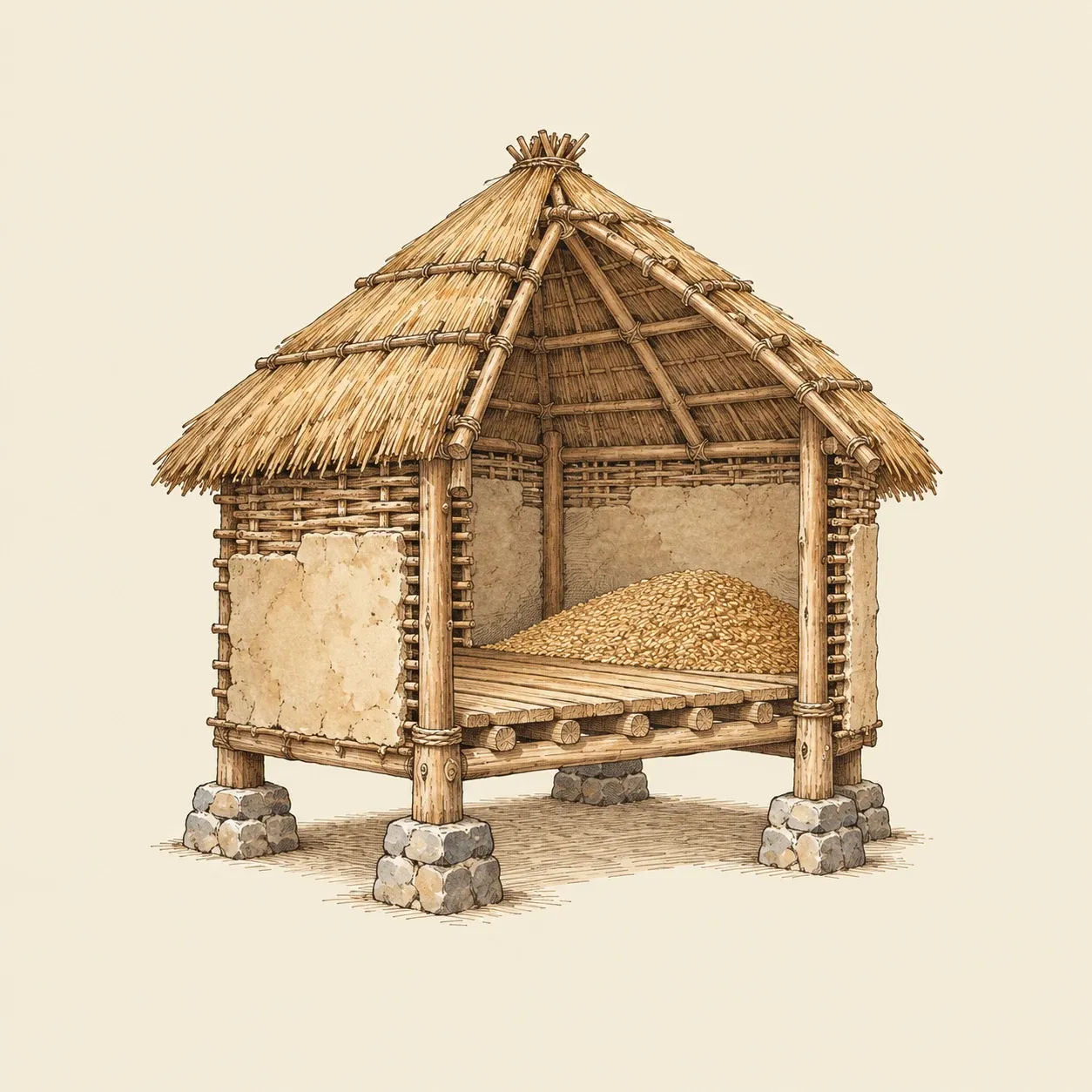 A floor on posts keeps stored seed off damp ground and lets air pass beneath it.
Around 9300 BCE, granaries at Dhra’ in the Jordan Valley held plant foods before domestication. Raised floors encouraged airflow and helped protect the stores from rodents.
Wheat and barley became crops slowly. In their 2017 study, Allaby and colleagues identify the strongest selection pressures in the wheats studied and in barley between 8500 and 7500 BCE. Each harvest and sowing shifted the populations a little, over many generations. Farmer-maintained varieties, organised plant breeding and seed banks subsequently developed other ways to maintain stocks, record their origins and check germination.