Mercury extraction
Freeing quicksilver from cinnabar
Contents
- 1Cinnabar ore
- 2Furnace
- 3Rows of clay aludels
- 4Liquid mercury
Mercury, the only metal that is liquid at room temperature, is won almost entirely from cinnabar, a red ore of mercury and sulfur that gives up its metal as a vapour when heated. The oldest known description of making it from cinnabar was written by the Greek Theophrastus in about 315 BCE. For centuries the great mines of Almadén, Idrija and Huancavelica supplied the mercury that refined American silver, at a heavy cost to the health of their workers.
What it is
Mercury is a heavy, silvery metal that stays liquid at ordinary temperatures, which earned it the old name of quicksilver. Small drops of it occur in its ore, but nearly all of it is obtained from cinnabar, a bright red compound of mercury and sulfur. Ground to powder, cinnabar is also the red pigment vermilion.
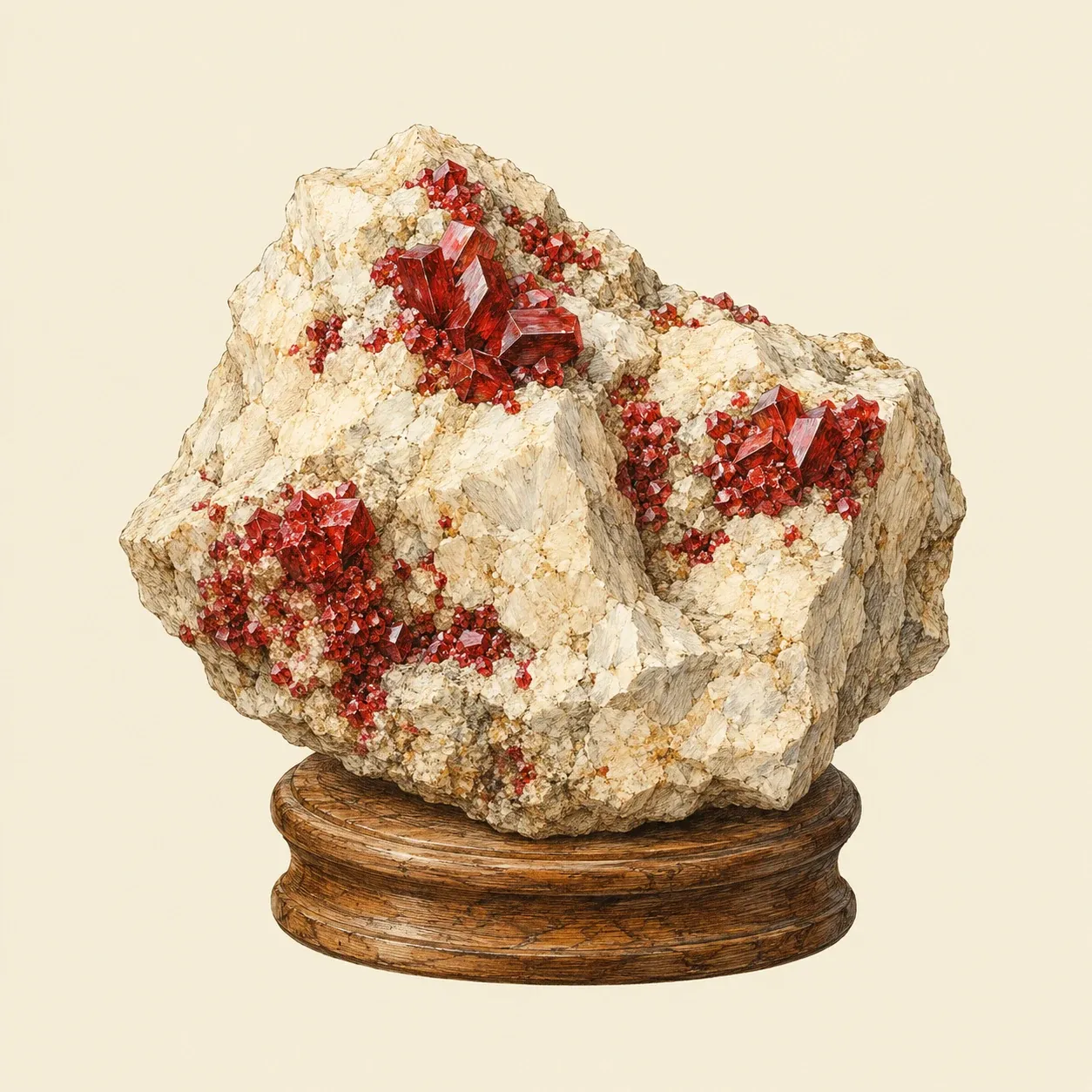 Cinnabar, the red ore of mercury and sulfur from which nearly all mercury is won.
Mercury dissolves gold and silver into soft alloys called amalgams, and this made it valuable to miners: an amalgam collects fine particles of precious metal, which are recovered when the mercury is driven off again. It also went into the backing of mirrors, into thermometers, and into many medicines and chemicals.
Its vapour is a poison. Breathed in over months or years, it damages the nervous system and the kidneys, and mercury that reaches rivers is turned into compounds that build up in fish. Extracting mercury exposes the workers and the land around the works, and the Minamata Convention on Mercury, in force since 2017, forbids opening new mines and gives existing ones fifteen years to close once a country has joined.
How it works
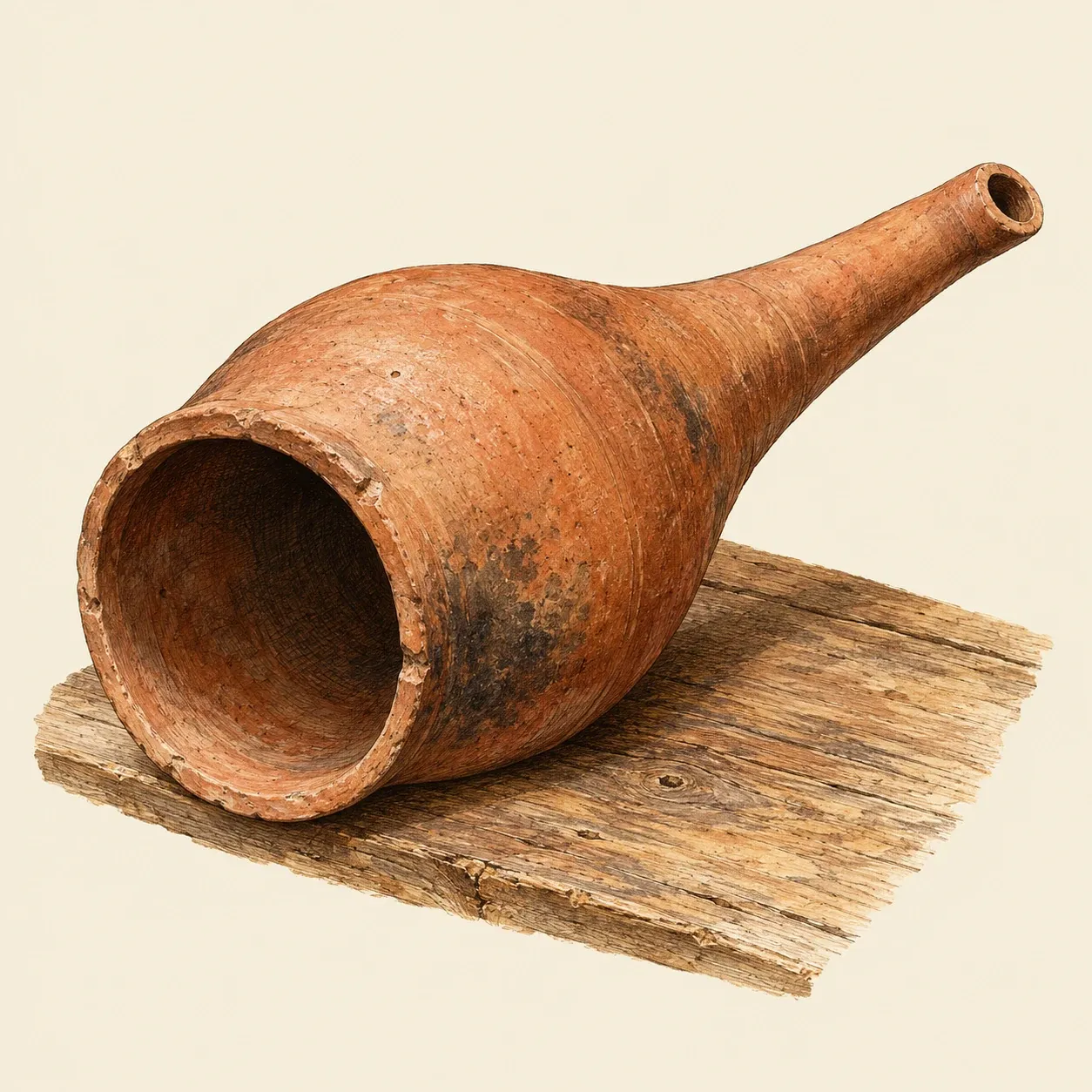 An aludel, one of the clay pipes of the seventeenth-century mercury furnaces.
Cinnabar holds its mercury firmly, but heat breaks the compound apart and releases the mercury as a vapour, which turns back into liquid metal as it cools.
Every furnace for mercury has the same two parts: a hearth that heats the ore and a condensing system that cools the vapour. In the aludel furnaces of the seventeenth century, this system was made of rows of aludels, pear-shaped pipes of fired clay. The old furnaces leaked and were often opened before they had cooled, so much of the metal escaped into the air and the furnace workers breathed its vapour. Modern plants work continuously and keep the gases inside closed equipment, but they too are run only as licensed industrial works.
History and evolution
Cinnabar was prized as a red colour long before anyone wanted its metal. Aristotle mentions the liquid metal, and his pupil Theophrastus, in his book On Stones, written in about 315 BCE, gives the oldest known description of making it from cinnabar, by a method that needed no fire. Vitruvius and Pliny the Elder, in the first centuries BCE and CE, describe mercury freed from cinnabar by heat. Pliny also records that the most prized cinnabar came to Rome under seal from Sisapo, in the province of Baetica, whose mines lay in the district of Almadén in central Spain.
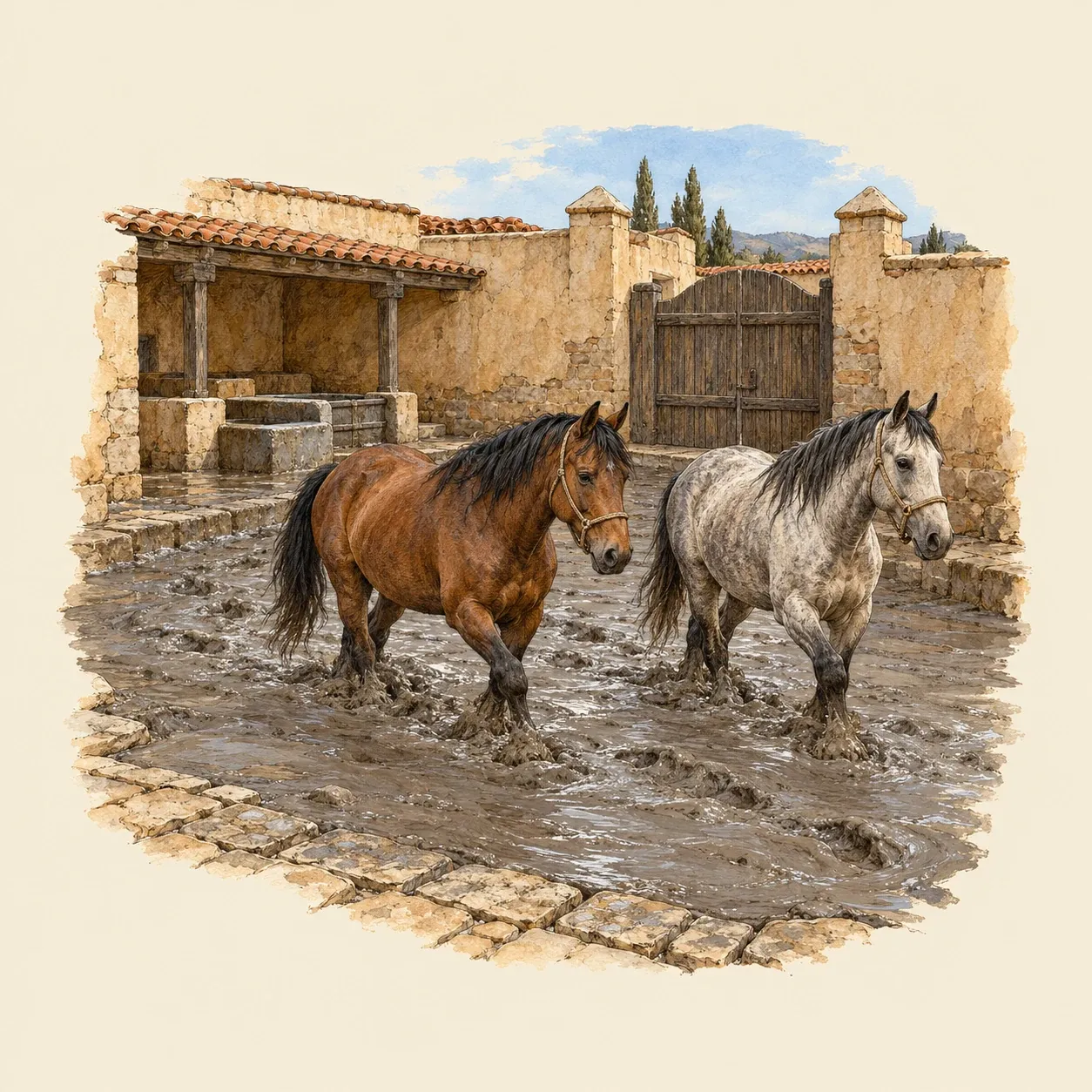 A patio yard of New Spain, where mercury drew the silver out of the ore.
Almadén was worked for more than two thousand years. In about 1490 a second great deposit was found at Idrija, in present-day Slovenia. Demand grew in the 1550s, when Bartolomé de Medina, at Pachuca in New Spain, put into large-scale use the patio process, which used mercury to draw silver out of its ore on large paved yards. In 1564 Spanish colonists began to mine cinnabar at Huancavelica, in the Andes of Peru, and the patio process reached the silver mines of Potosí in the early 1570s; from then until the early nineteenth century, mercury production was driven by American silver. At Huancavelica, in 1633, the physician and prospector Lope de Saavedra Barba built the first aludel furnace, which soon replaced the older furnaces; Juan Alonso de Bustamante brought the design to Almadén, where it first worked in 1646.
Huancavelica was worked largely by forced labour under the colonial draft called the mita. Workers and their families were poisoned by mercury vapour and cinnabar dust, and the soil and adobe houses of the town still hold mercury today. As mercury left medicine, instruments and industry, the old mines closed: Idrija produced its last mercury in 1995, and Almadén, where mining stopped in 2001, produced its last in 2003. The two sites have been on the UNESCO World Heritage List together since 2012. Most mercury mined today comes from China, while small-scale gold mining, which still uses mercury to catch gold, has become the largest source of the mercury that human activity releases into the air.