Querns and grinding
A stationary stone and a handstone turn grain into meal
Contents
- 1Stationary quern
- 2Handstone held with both hands
- 3Grain added in small amounts
- 4Dished grinding surface
- 5Collected flour and milling residues
Loading the figure…
A stationary quern supports the grain while a handstone, pushed backwards and forwards with both hands, crushes and grinds it. Gathered wild cereals can be processed this way before farming. The mechanism needs two suitable stones; using their product as food also depends on the stones being sound and clean.
What it is
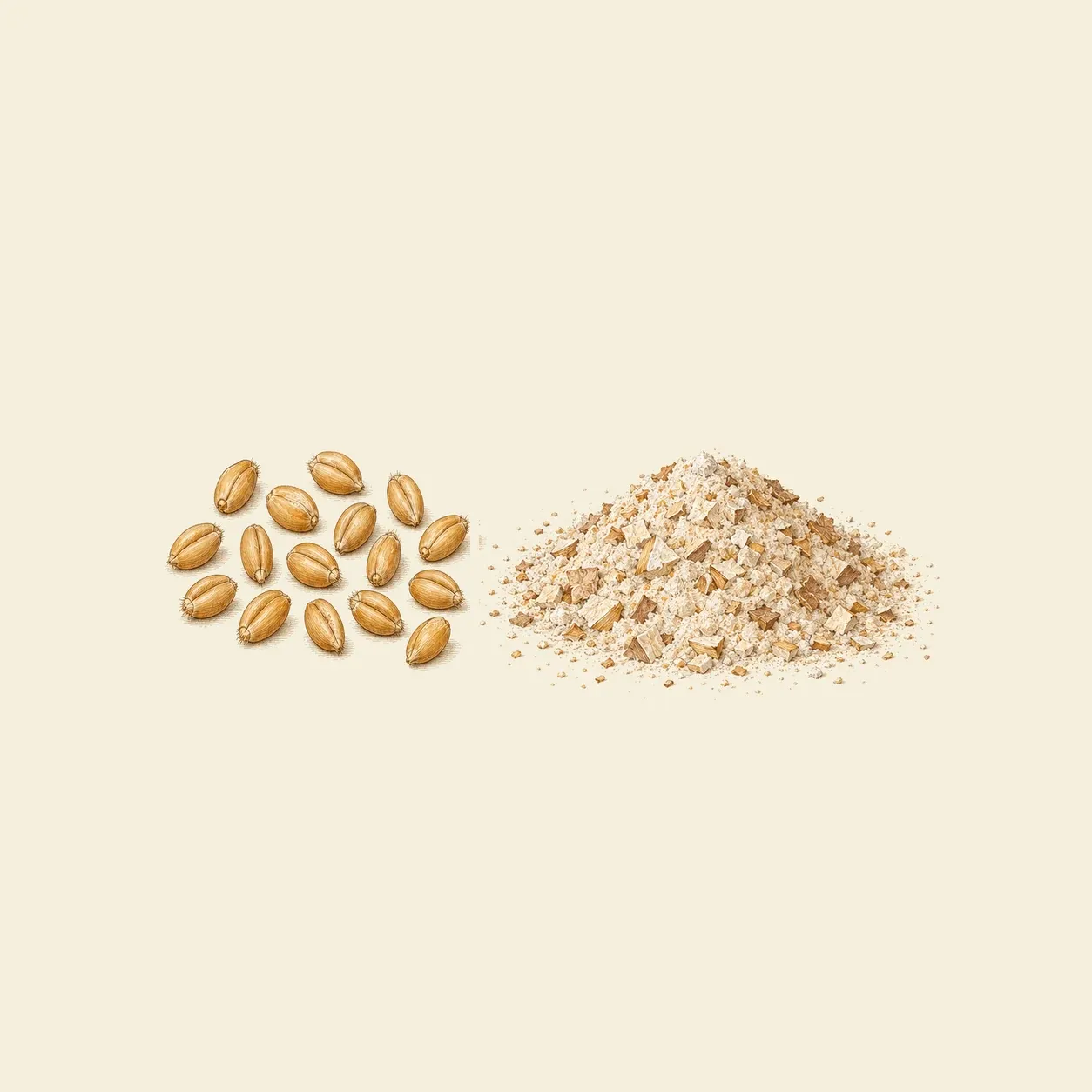 Ground on the quern, the grain becomes a mixture of broken kernels, bran and finer flour.
The quern is the lower stone, which stays still during grinding. The handstone moves over it under the operator’s hands. A saddle quern has a shallow hollow that helps contain the meal and guides the stroke, and a nearly flat surface also works. The output contains broken kernels, bran and finer flour, with their proportions changing as grinding continues.
This meal becomes an ingredient in cooked porridge or dough. Grinding does not clean a harvest or remove every husk, so those jobs come first. People can gather and grind wild grain without cultivating a field, and the technique is older than farming.
How it works
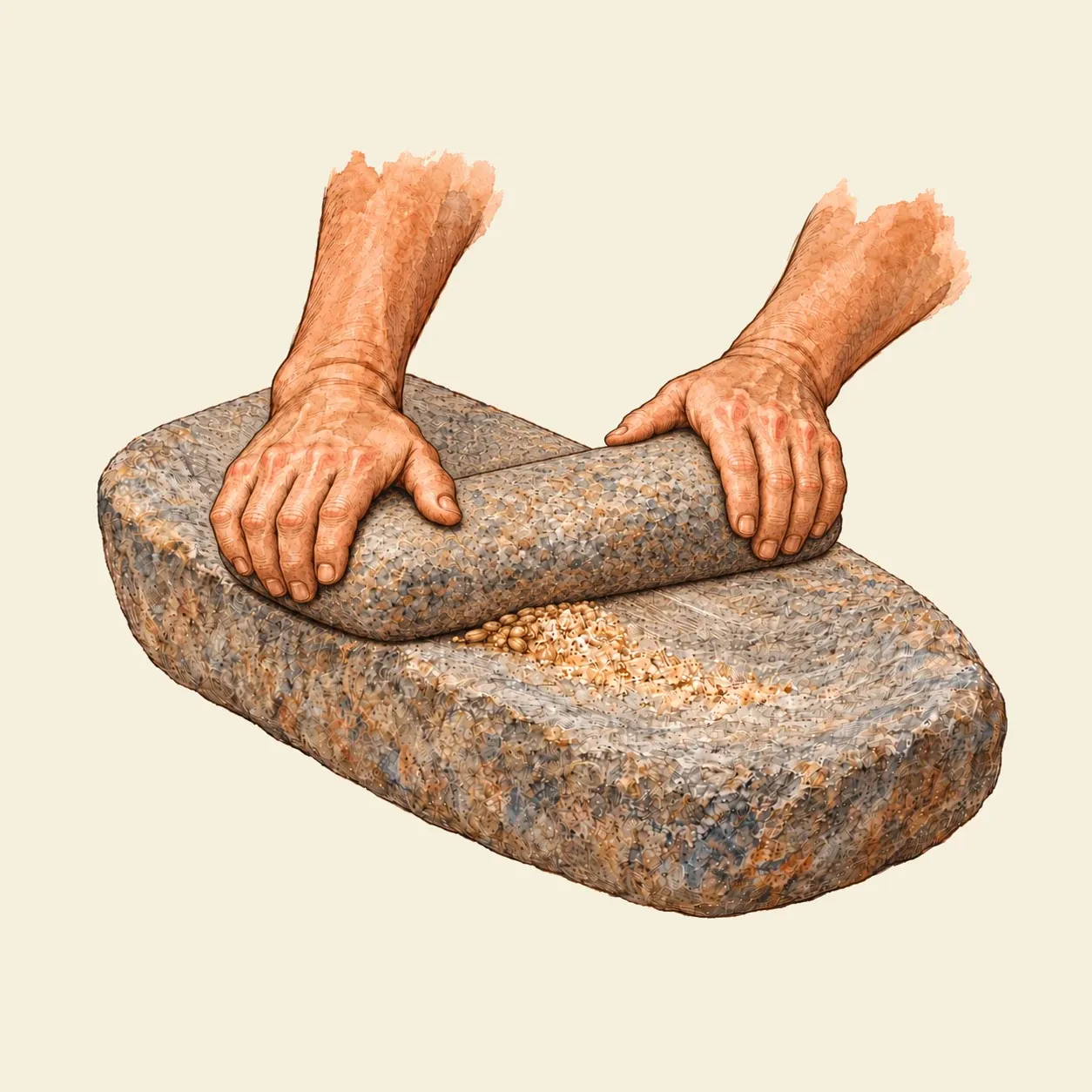 Hand pressure and sliding contact act together during the grinding stroke.
Grains are trapped between two hard surfaces. Pressure breaks their outer layers and interiors, while the moving handstone drags the fragments against rough points that wear them down further. Grinding combines crushing with abrasion. Lifting the handstone and striking turns the action into pounding and increases the risk of stone chips. With a small charge, the surfaces can catch individual grains; a thick layer tends to roll, spill or grind unevenly. Keep the stroke short enough for the handstone to remain supported, with fingers clear of the contact zone and the edges of the lower stone.
A rough surface grips grain, but a crumbling stone adds mineral particles to the meal. A heavily polished surface lets kernels slip. Passing coarse fragments through again makes a finer product, though never as even as the flour of a modern mill. Bran stays mixed into the flour unless it is sifted out afterwards.
How to do it
Select a lower stone wide enough for the working stroke and a handstone that both hands can grip securely. Reject cracked, crumbly or painted stones, and stones from polluted ground. If the identification, cleanliness or provenance of a stone is uncertain, use it only to show the mechanism and throw the product away.
Set the lower stone on a clean, firm, level support. Push against it before loading grain to check that it cannot rock or slide. Brush and wash the working faces with drinking-quality water, then let them dry. Use sound food grain that has already been cleaned; remove small stones and reject mouldy material. Wash hands and the collecting vessel too.
Place a small pinch of grain in the centre. Set the handstone on it, increase pressure gradually and push forwards and back without lifting. Stop the stone before gathering escaped kernels. Collect the meal in the clean vessel, separate the coarsest pieces and grind them again. Compare the starting grain with the result to adjust the charge and stroke.
Stop and discard the batch if the stone sheds grit or chips. Any pecking to renew the surface belongs in a separate maintenance operation, away from food preparation, with eye protection and control of silica dust. Do not dry-cut or sand stone over the work area. Remove all debris before reuse. Never taste raw flour; even clean meal requires appropriate cooking. Shared grinding equipment cannot guarantee a gluten-free product.
History and evolution
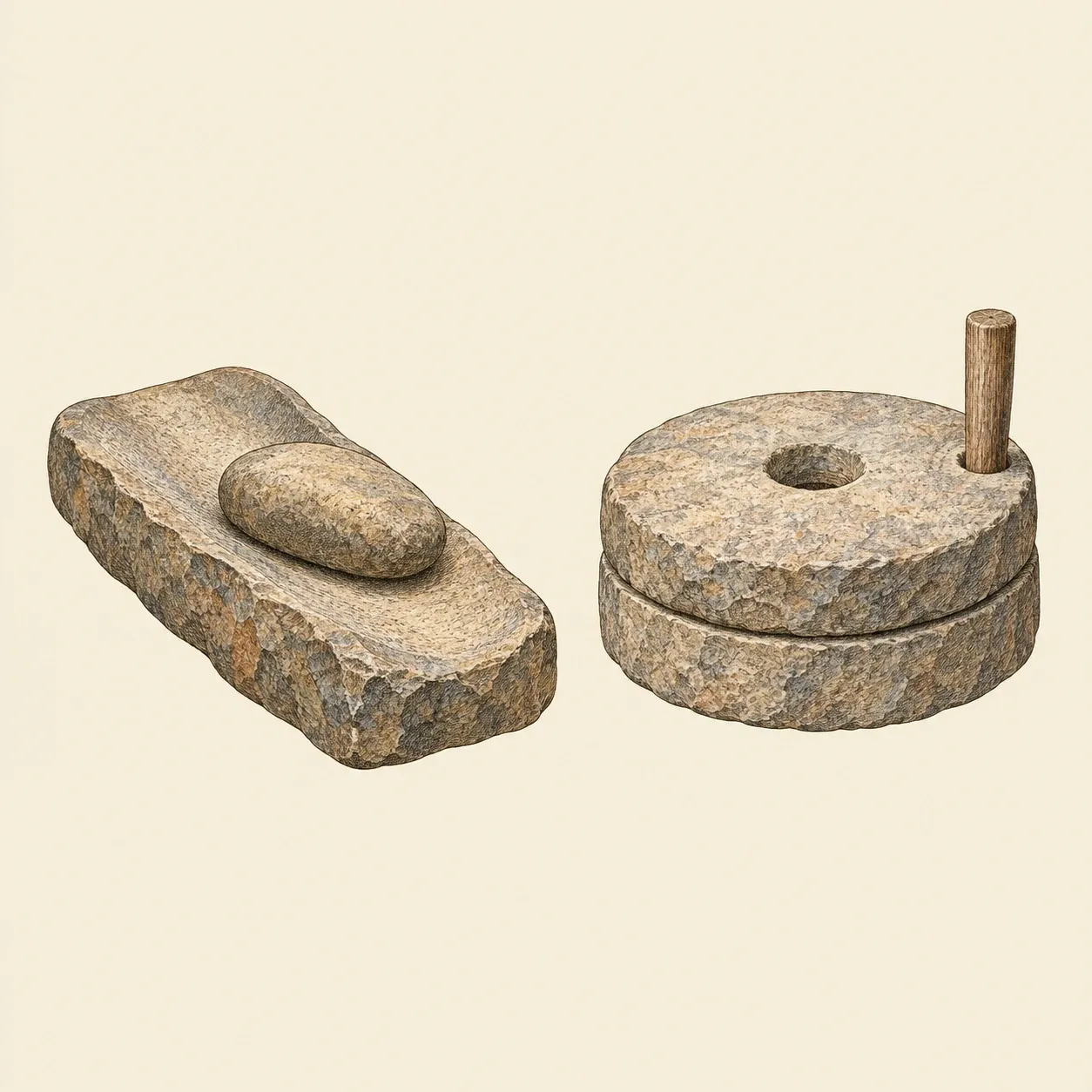 The older sliding mechanism and the later rotating upper stone use different motions.
People ground plants on stone long before farming. At Grotta Paglicci, in southern Italy, a pestle-grinder used about 32,600 years ago still carries starch from wild oats, which seem to have been heated before grinding. At Ohalo II, beside the Sea of Galilee, a camp occupied about 23,000 years ago preserved cereal grains and a grinding slab bearing starch from wild barley, wheat and oats. Studies disagree on how often that slab served: Nadel and colleagues (2012) describe routine processing of wild cereals, while the use-wear study by Dubreuil and Nadel (2015) finds flour making only occasional. A much later Neolithic quartzite fragment from Etton, held by the British Museum, is only slightly dished, and surviving querns vary widely in shape and wear.
Later rotary querns turn an upper stone instead of reversing a sliding stroke. Watermills, windmills and eventually powered mills added other ways of driving and guiding the stones. Feeding the grain and separating the ground product developed alongside the grinding mechanism, while hand grinding remained practical for small batches.