Oil and fat lamp
A wick feeds a small flame from a liquid fuel reserve
Contents
- 1Stable stone support
- 2Shallow hollow
- 3Animal fat fuel
- 4Porous woody wick
- 5Wick tip and small flame
A pool of fat, a shallow hollow and a wick can keep a small flame in one place. Paleolithic stone lamps came long before the shaped pottery reservoirs that held vegetable oil.
What it is
A fat lamp is a small hearth supplied by a reserve of animal fuel. A hollow in the stone holds the fat as it melts. A porous wick draws up some of that liquid and sustains a flame at its tip. This makes it possible to set a light beside a task without continually adding wood to a fire. The light is modest, and an open lamp needs to remain level.
Most Paleolithic lamps were of this kind: a stable stone, a shallow hollow and a small woody wick. Neither pottery nor woven cloth is necessary. Vegetable oil lamps use the same arrangement with a different fuel, often in vessels shaped to keep the filling opening separate from the flame. An open bowl and a covered reservoir behave differently when tilted, although neither is spillproof.
How it works
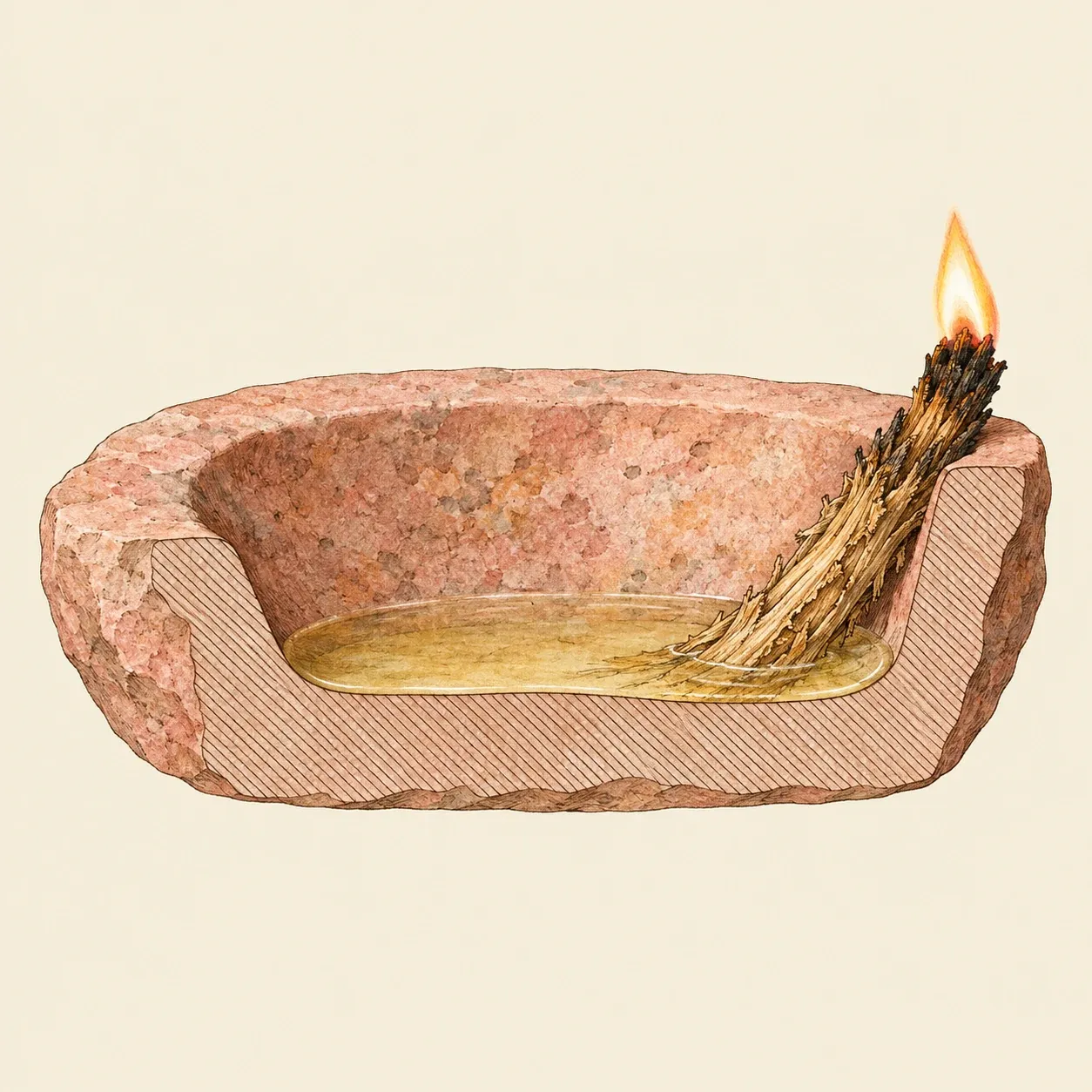 The wick connects the liquid fat reserve to the burning zone.
Heat melts the fat close to the wick. The liquid enters tiny passages in the porous material and moves through them by capillary action. Near the hot tip, the fuel vaporizes; its vapour burns with oxygen from the surrounding air. The wick concentrates this supply in a small area. The whole surface of the fat does not need to catch fire for the lamp to give light.
The exposed length of wick, its absorbency and the fluidity of the fuel all affect the flame. Poor fuel delivery can weaken it, while an unsuitable wick arrangement can increase smoke. The container holds the liquid but does not regulate combustion by itself. A visible flame also says little about whether someone can see enough detail to work on a wall or find a safe route.
A study published in 2021 tested a sandstone replica of the La Mouthe lamp, 17 cm long and 12 cm wide, with a hollow holding about 150 cm³. The researchers used bovid marrow and three woody wicks made from dried, crushed juniper.
How to do it
For a supervised modern demonstration, choose a small, dry, noncombustible bowl designed to withstand heat and sit firmly on its base. Put it on a stable, noncombustible surface outdoors, in a ventilated place sheltered from wind. Do not heat damp or cracked rock, or a stone of unknown suitability.
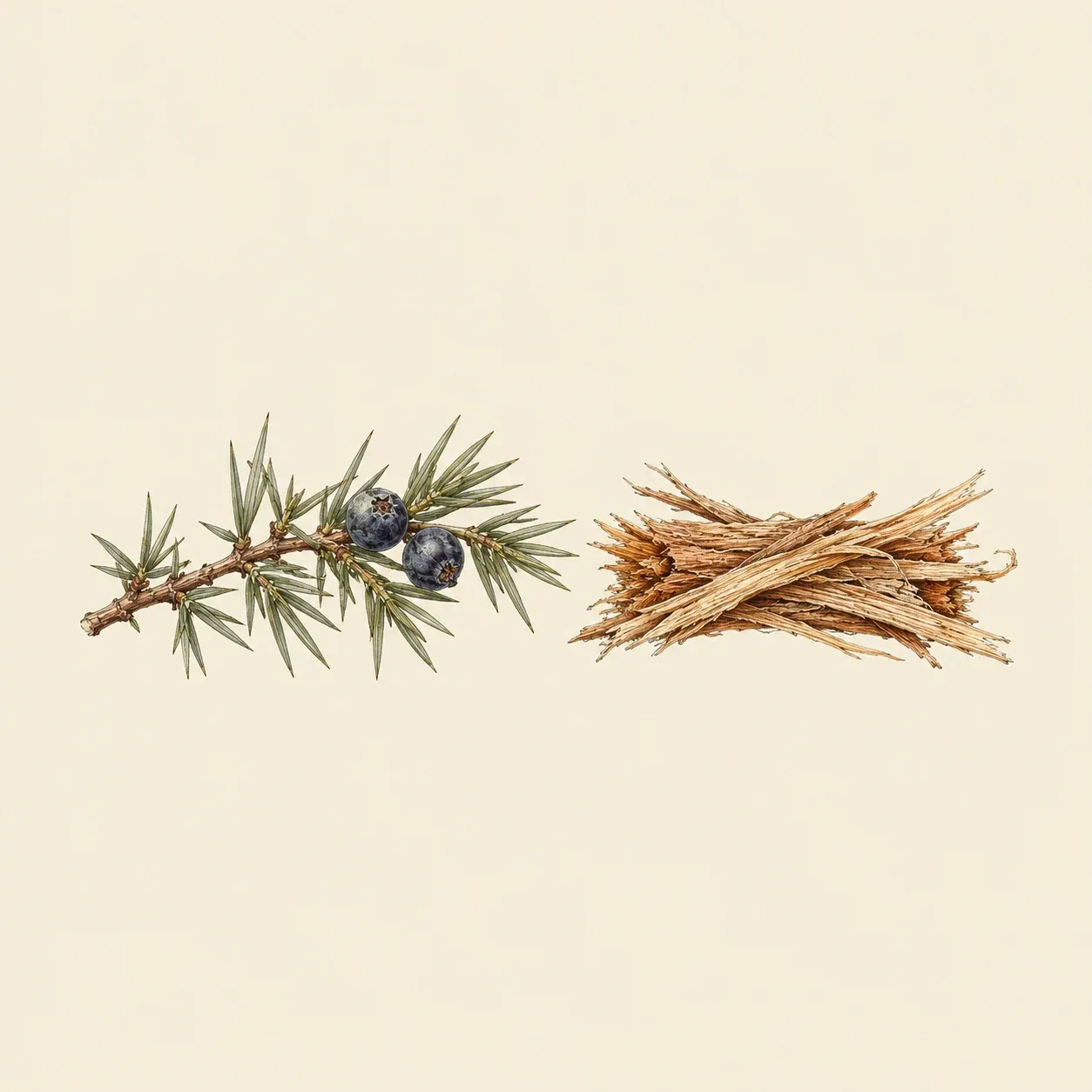 Dried juniper, crushed into fibres, makes a woody wick.
Place a small amount of clean fat in the bowl, together with a porous wick whose tip alone is exposed. Dried, crushed juniper matches the woody variant used in the experiment. Ensure contact between wick and fuel, then light it under continuous adult supervision. If it smokes, flickers badly or becomes unstable, extinguish it and let it cool before adjusting anything. Never move the hot bowl or refill it while lit.
Keep flammable materials, children and animals away. Have a means of extinguishing fat fires ready; never pour water onto burning fat. Do not add alcohol, petrol, kerosene or solvents. Smoke and carbon monoxide rule out demonstrations in caves, tents or indoor rooms. This lamp is not safe emergency lighting for an enclosed space, even when its flame appears small and manageable.
History and evolution
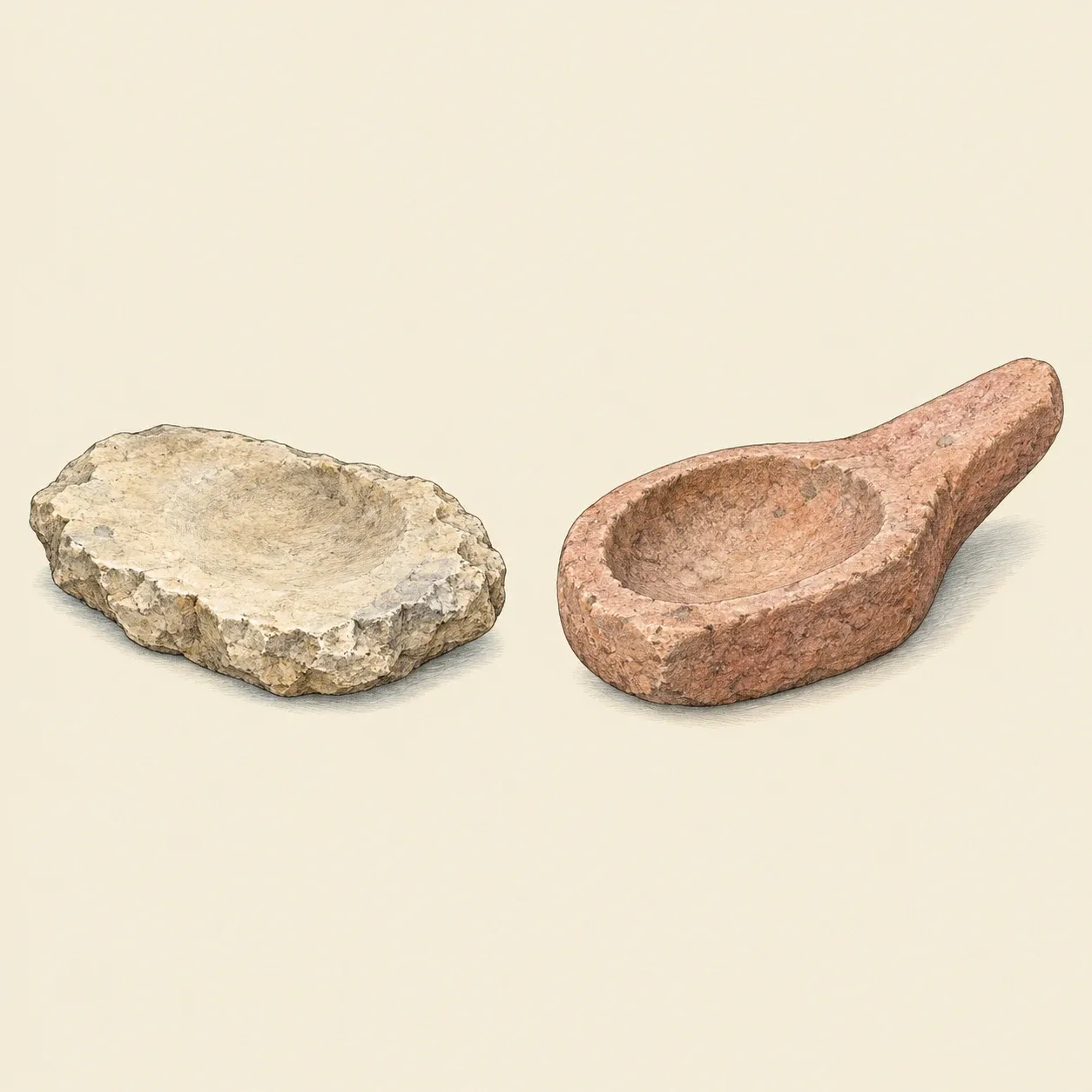 Simple supports and carefully worked lamps could be used alongside one another.
At La Mouthe, a blackened hollow in a sandstone object and the identification of animal fuel helped establish that it was a prehistoric lamp. At Lascaux, the pink sandstone lamp with its engraved handle stands beside much simpler limestone supports. Many hollow stones were never lamps. Of 302 possible examples examined by the archaeologist Sophie de Beaune, only 85 could be identified as lamps with certainty.
Lamps are older than Lascaux, whose lamp the Grand Palais RMN dates to about 18,000 BCE. In de Beaune’s surveys, the earliest lamp that specialists accept comes from Gravettian levels at Laugerie-Haute, in the Dordogne. Two objects from Aurignacian layers at La Ferrassie may be older lamps, but their use is still debated. Most of the lamps identified in France date from the Magdalenian, the period of Lascaux.
Later lamps also burned vegetable oils, whose extraction is explained in the oil press entry. Pottery allowed shaped nozzles and partly closed reservoirs that contained liquid more effectively, though they could still leak. A mould-made Roman lamp at the Metropolitan Museum has separate filling and wick holes.